
 Abibirem
 Asia
Asia Yuropu
 Amerika Anaafoɔ
 Australia ne Oceania
 Antarctica
 Pacific Po
 Atlantic Po
 India Po
 Arctic Po
 Mediterranean Po
 Po Kɔkɔɔ
 Caribbean Po
 Coral Po
 China Anaafoɔ Po
 Philippine Po
 Andaman Po
 Atifi Po
 Timor ne Arafura Po
 Bengal Ɛpo Ano
 California Ɛpo Ano
Eastern lubber grasshopper
 Ɛyɛ awuduro sɛ wodi a
The Eastern lubber grasshopper is one of the largest grasshoppers in the United States, with bright, easy-to-spot colours. It lives in the southeastern and south-central United States, including all of Florida. It is poisonous rather than venomous: it does not bite or sting, but it can harm animals that eat it.1
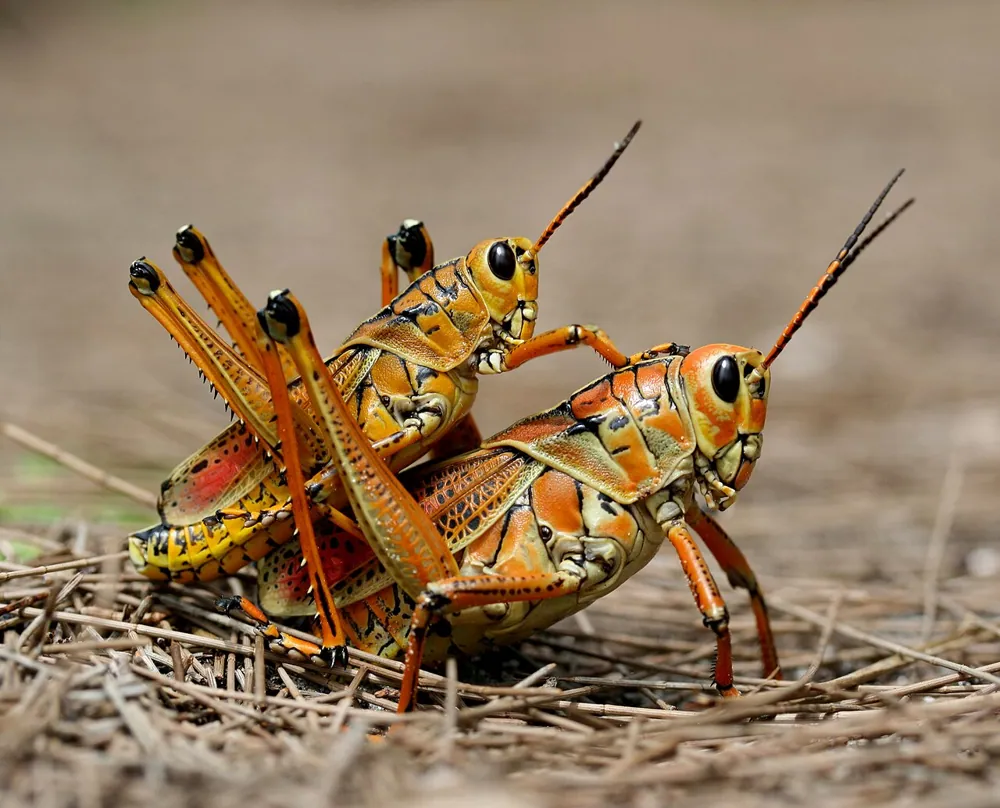
 Sɛdeɛ wobɛhunu no
- Nymphs are smaller than adults, wingless and completely black, with one or more yellow, orange or red stripes.1
- Adults are dull yellow with black spots and markings, bright orange with black markings, or entirely black with yellow or red striping.1
- Adult wings are usually much shorter than the body and cannot be used for flight.1
- Adult males are typically 4.3–5.5 cm long and females 5–7 cm long, making them very large for a grasshopper.1
Awuduro ahoɔden
Ɛyɛ asiane bere a biribi adi no nko ara.
Ne asiane ma nnipa te sɛn?
Asiane ma nnipa: Ɛnyɛ denƐte sɛ wowa wɔ anaa ɛnnu saa. Ɛkame ayɛ sɛ ɛnni asiane ma nnipa.Ɛyɛ dɛn bere a ehu aka no?
When disturbed, it shows its bright colours as a warning, releases a dark, foul-smelling and foul-tasting foamy liquid from its thorax, and gives off a loud hiss to scare would-be attackers.1
 Sɛ obi de ne nsa ka anaa ɔdi a
- Sɛ obi adi bi anaa ne ho anyɛ no dɛ bere a wadi akyi a: frɛ wo ahohiahia nɔma anaa awuduro ho mmoa adwumayɛbea (poison centre) ntɛm ara.
Di kan frɛ wo ahohiahia nɔma (112, 000, 911). Yei yɛ mmoa a ɛdi kan ho akwankyerɛ, ɛnyɛ dɔkota afotuo. Mmoa a ɛdi kan ho nsɛm titiriw
 Hwɛ wo ho so
- Mfa wo nsa nka wiram aboa biara, nkyere no na mfa no nni agorɔ, sɛ ɔyɛ ketewa mpo, na sɛ ɛte sɛ ɔrededa anaa wawu mpo a.
- Ma no kwan. Sɛ wohyia baako a, ma wo bo nnwo, san w'akyi brɛoo na ma ɔnkɔ ne kwan.
- Sɛ wode wo nsa kaa no anaa wodii a: mfa wo nsa ntwitwi w'ani anaa w'ano, hohoro wo nsa na hwehwɛ dɔkota mmoa.
Ɛnhwehwɛ wo sɛ ɛbɛpira wo. Ne ho awuduro no wɔ hɔ sɛdeɛ ɛbɛyɛ a biribiara renni no. Nsɛm pii fa ahobammɔ ho
Wiase mu baabi bɛn?
Ne kɛseɛ te sɛn?
Ne tenten te sɛn?
 ne tenten te sɛ agodeɛ blɔk 3 a wɔde to ntoatoasoɔ mu
Eastern lubber grasshopper kɛseɛ te sɛn sɛ wode toto WO ho a?
Akontabuo kɛkɛ wɔ wo browser mu. Wɔnkora hwee, na wɔmfa hwee nkɔ baabiara.
Ne ntɛm te sɛn?


Nsɛm
Most predatory birds and mammals avoid it because of its toxicity, but large predatory insects can still catch and kill adults.1
It is one of the largest grasshoppers in the United States, along with the western horse lubber grasshopper.1
Its wings are too small for flight in most adults, so it relies on its colours and defences instead.1
Adults in the black colour form are widely known as 'diablo' or 'black diablo'.1
In Louisiana it is called the 'devil's horse' or 'cheval-diable', and in Mississippi it is known as the 'giant locust'.1
Atosɛm sɛefoɔ
Atosɛm: Its bright colours are just for decoration.
Nokorɛ: The colours are a warning to predators that the grasshopper tastes unpleasant.1
Baabi a nsɛm no fi
- Romalea (Wikipedia (CC BY-SA 4.0))
- Romalea microptera (iNaturalist): din ne nkyekyɛmu.
- Venom Wiki: asiane gyinabea, kɛseɛ a ɛtaa yɛ ne ntɛm susuo no yɛ yɛn ankasa deɛ. Hwɛ sɛdeɛ yɛbu no: Sɛdeɛ yɛkyerɛ asiane gyinabea.
Nsɛm biara a ɛwɔ kratafa yi so wɔ nɔma a ɛkyerɛ ne fibea. Sɛ yɛfom biribi a, kafra, yɛyɛ mmoa ho akɔnnɔfoɔ, ɛnyɛ nyansahu nwoma. Ka kyerɛ yɛn wɔ [email protected] na yɛbɛsiesie.
 Ɔkɔm de akekantwerɛ no! Onipa baako na ɔyɛ Venom Wiki: ɛyɛ kwa, dawurubɔ nni so na biribiara nni so a ɛdi w'akyi. Akyɛdeɛ ketewa bi boa ma ɛkɔ so tena internet so.Ma akekantwere no aduane
Pii fi kuo korɔ no mu: Mmoa afoforɔ a wɔn ho yɛ awuduro
 Monarch butterflyMmoa afoforɔ a wɔn ho yɛ awuduroƐnni asiane
 Striped blister beetleMmoa afoforɔ a wɔn ho yɛ awuduroƐyɛ yaw kɛkɛMfa wo nsa nka
 Japanese pufferfishMmoa afoforɔ a wɔn ho yɛ awuduroƐkum
 Hawksbill sea turtleMmoa afoforɔ a wɔn ho yɛ awuduroƐtumi kum
 Spanish flyMmoa afoforɔ a wɔn ho yɛ awuduroƐhia dɔkotaMfa wo nsa nka
 Greenland sharkMmoa afoforɔ a wɔn ho yɛ awuduroƐyɛ yaw kɛkɛ
 Terciopelo
 Eastern coral snake
 Eastern diamondback rattlesnake
 Eyelash viper
 Timber rattlesnake
 Western diamondback rattlesnake
,_mating.jpg)