
 Abibirem
 Asia
Asia Yuropu
 Amerika Anaafoɔ
 Australia ne Oceania
 Antarctica
 Pacific Po
 Atlantic Po
 India Po
 Arctic Po
 Mediterranean Po
 Po Kɔkɔɔ
 Caribbean Po
 Coral Po
 China Anaafoɔ Po
 Philippine Po
 Andaman Po
 Atifi Po
 Timor ne Arafura Po
 Bengal Ɛpo Ano
 California Ɛpo Ano
Monarch butterfly
 Ɛyɛ awuduro sɛ wodi a
The monarch is one of the best-known butterflies in North America, with a black, orange and white pattern that is easy to spot. Its wings are poisonous if eaten, so it is a warning to predators. Some monarchs make a huge southward journey each autumn, covering thousands of miles.1


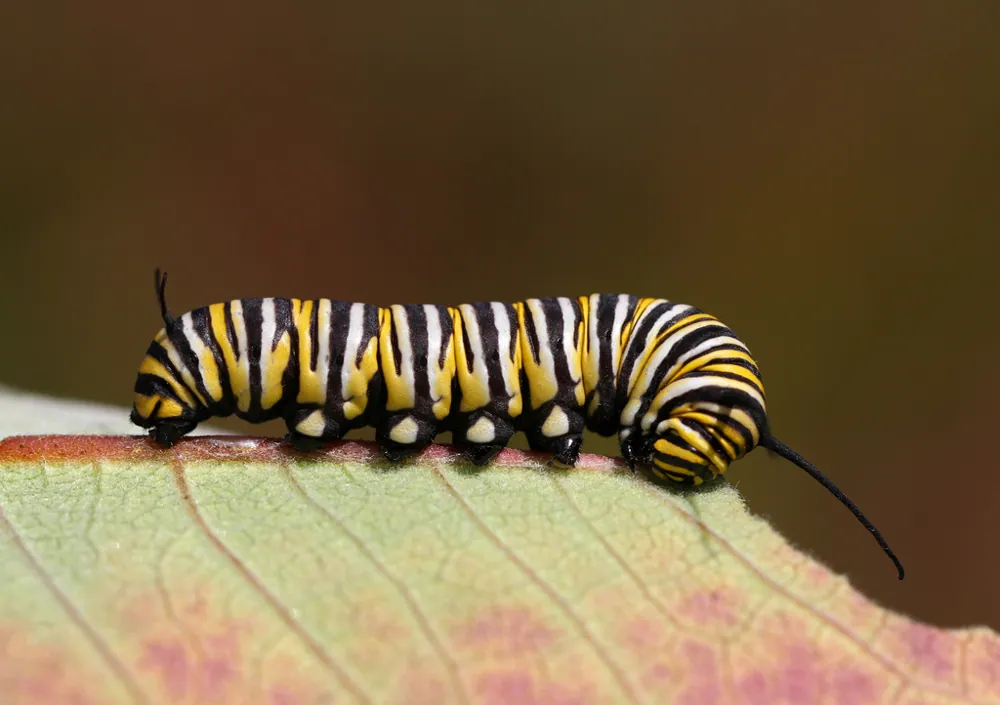
 Sɛdeɛ wobɛhunu no
- Black, orange and white wing pattern that is easy to recognise.1
- Wingspan of 8.9 to 10.2 cm.1
- Caterpillars are pale green or grey-white when very young, with a large black head.1
- Older caterpillars have white, yellow and black bands, plus black tentacles.1
Wɔtaa fa no sɛ: The viceroy butterfly is similar in colour and pattern but is much smaller. It also has an extra black stripe across each hindwing.1
Awuduro ahoɔden
Ɛyɛ asiane bere a biribi adi no nko ara.
Ne asiane ma nnipa te sɛn?
Asiane ma nnipa: Ɛnyɛ denƐte sɛ wowa wɔ anaa ɛnnu saa. Ɛkame ayɛ sɛ ɛnni asiane ma nnipa.Ɛyɛ dɛn bere a ehu aka no?
Its bright black, orange and white pattern serves as a warning coloration to predators, and the viceroy butterfly copies it.1
 Sɛ obi de ne nsa ka anaa ɔdi a
- Sɛ obi adi bi anaa ne ho anyɛ no dɛ bere a wadi akyi a: frɛ wo ahohiahia nɔma anaa awuduro ho mmoa adwumayɛbea (poison centre) ntɛm ara.
Di kan frɛ wo ahohiahia nɔma (112, 000, 911). Yei yɛ mmoa a ɛdi kan ho akwankyerɛ, ɛnyɛ dɔkota afotuo. Mmoa a ɛdi kan ho nsɛm titiriw
 Hwɛ wo ho so
- Mfa wo nsa nka wiram aboa biara, nkyere no na mfa no nni agorɔ, sɛ ɔyɛ ketewa mpo, na sɛ ɛte sɛ ɔrededa anaa wawu mpo a.
- Ma no kwan. Sɛ wohyia baako a, ma wo bo nnwo, san w'akyi brɛoo na ma ɔnkɔ ne kwan.
- Sɛ wode wo nsa kaa no anaa wodii a: mfa wo nsa ntwitwi w'ani anaa w'ano, hohoro wo nsa na hwehwɛ dɔkota mmoa.
Ɛnhwehwɛ wo sɛ ɛbɛpira wo. Ne ho awuduro no wɔ hɔ sɛdeɛ ɛbɛyɛ a biribiara renni no. Nsɛm pii fa ahobammɔ ho
Wiase mu baabi bɛn?
Ne kɛseɛ te sɛn?
Ne tenten te sɛn?
 ne tenten te sɛ agodeɛ blɔk 3 a wɔde to ntoatoasoɔ mu
 ɛbɛtumi atu atwa bɔɔlobɔ agodibea mu nyinaa wɔ anibu 42 mu
Monarch butterfly kɛseɛ te sɛn sɛ wode toto WO ho a?
Akontabuo kɛkɛ wɔ wo browser mu. Wɔnkora hwee, na wɔmfa hwee nkɔ baabiara.
Ne ntɛm te sɛn?


Nsɛm
Eastern North American monarchs migrate south each autumn to Florida and Mexico, covering thousands of miles, and return north in spring over several generations.1
A female monarch can lay eggs weighing up to her own body mass in total, even though each egg is only about 1/1000 of her mass.1
Fewer than 10% of monarch eggs and caterpillars commonly survive to adulthood, because of weather, predators, parasites and disease.1
Monarchs can develop from egg to adult in as little as 25 days in warm summer weather, but may take as long as seven weeks in cool spring conditions.1
A monarch caterpillar can travel up to 10 metres from its milkweed plant to find a safe place to pupate.1
The monarch was the first butterfly to have its genome sequenced, a draft of 273 million base pairs containing 16,866 protein-coding genes.1
Atosɛm sɛefoɔ
Atosɛm: Monarch butterflies are genetically modified organisms.
Nokorɛ: A 2015 study found genes from wasp bracoviruses in the North American monarch's genome. This led to articles calling monarchs genetically modified, but they are not genetically modified in the usual sense.1
Ma bɔre ho animdefoɔ
- Nyansahu din
- Danaus plexippus
- Kuo
- Mmoa afoforɔ a wɔn ho yɛ awuduro
- Abusua
- Nymphalidae2
- Nhyehyɛeɛ (Order)
- Lepidoptera
- Asaase akɛseɛ
- Amerika Atifi, Amerika Anaafoɔ
- Mmofra nketewa
- Females lay eggs singly, usually on the underside of young milkweed leaves, with 300 to 500 eggs over two to five weeks, and up to 1,180 eggs in total.1
- Asiane ma nnipa
- 1 / 5: Ɛnyɛ den3
Baabi a nsɛm no fi
- Monarch butterfly (Wikipedia (CC BY-SA 4.0))
- Danaus plexippus (iNaturalist): din ne nkyekyɛmu.
- Venom Wiki: asiane gyinabea, kɛseɛ a ɛtaa yɛ ne ntɛm susuo no yɛ yɛn ankasa deɛ. Hwɛ sɛdeɛ yɛbu no: Sɛdeɛ yɛkyerɛ asiane gyinabea.
Nsɛm biara a ɛwɔ kratafa yi so wɔ nɔma a ɛkyerɛ ne fibea. Sɛ yɛfom biribi a, kafra, yɛyɛ mmoa ho akɔnnɔfoɔ, ɛnyɛ nyansahu nwoma. Ka kyerɛ yɛn wɔ [email protected] na yɛbɛsiesie.
 Ɔkɔm de akekantwerɛ no! Onipa baako na ɔyɛ Venom Wiki: ɛyɛ kwa, dawurubɔ nni so na biribiara nni so a ɛdi w'akyi. Akyɛdeɛ ketewa bi boa ma ɛkɔ so tena internet so.Ma akekantwere no aduane
Pii fi kuo korɔ no mu: Mmoa afoforɔ a wɔn ho yɛ awuduro
 Striped blister beetleMmoa afoforɔ a wɔn ho yɛ awuduroƐyɛ yaw kɛkɛMfa wo nsa nka
 Eastern lubber grasshopperMmoa afoforɔ a wɔn ho yɛ awuduroƐnni asiane
 Japanese pufferfishMmoa afoforɔ a wɔn ho yɛ awuduroƐkum
 Hawksbill sea turtleMmoa afoforɔ a wɔn ho yɛ awuduroƐtumi kum
 Spanish flyMmoa afoforɔ a wɔn ho yɛ awuduroƐhia dɔkotaMfa wo nsa nka
 Greenland sharkMmoa afoforɔ a wɔn ho yɛ awuduroƐyɛ yaw kɛkɛ
 Terciopelo
 Eastern coral snake
 Eastern diamondback rattlesnake
 Eyelash viper
 Timber rattlesnake
 Western diamondback rattlesnake