
 Abibirem
 Asia
Asia Yuropu
 Amerika Anaafoɔ
 Australia ne Oceania
 Antarctica
 Pacific Po
 Atlantic Po
 India Po
 Arctic Po
 Mediterranean Po
 Po Kɔkɔɔ
 Caribbean Po
 Coral Po
 China Anaafoɔ Po
 Philippine Po
 Andaman Po
 Atifi Po
 Timor ne Arafura Po
 Bengal Ɛpo Ano
 California Ɛpo Ano
Ethiopian mountain adder
 Ka
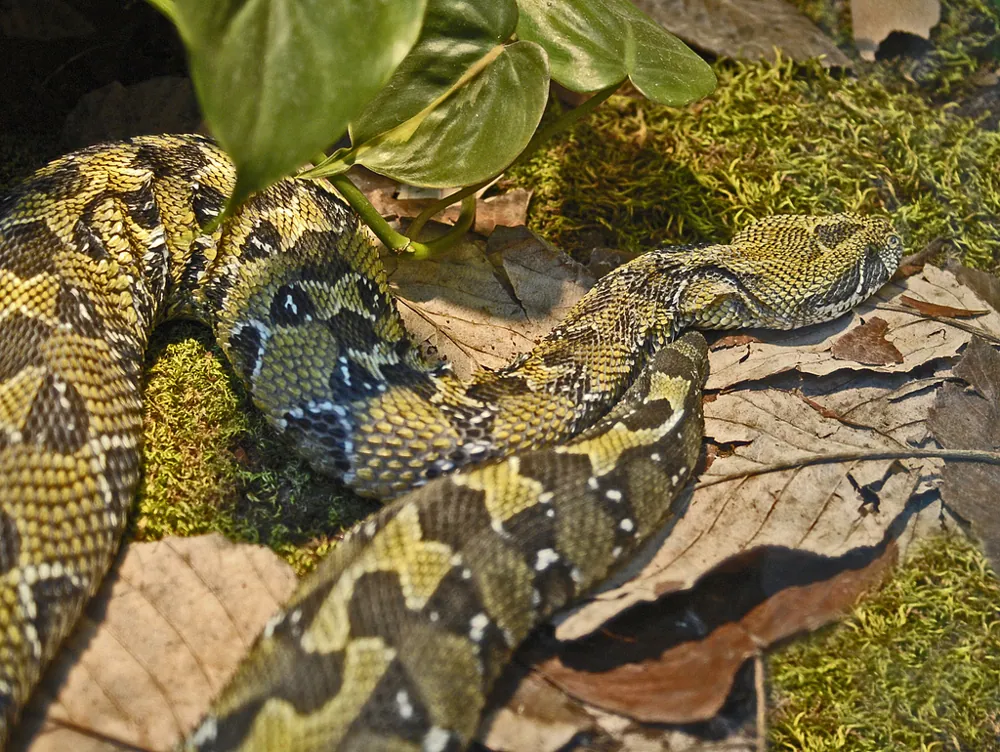
KaThe Ethiopian mountain adder is a large venomous viper that lives only in Ethiopia. It has a broad head and striking geometric patterns along its back. Scientists knew very little about it for many years, and it is still being studied.1
 Sɛdeɛ wobɛhunu no
- It is large, with a broad, flat, triangular head that is distinct from its thin neck.1
- A pattern of black hexagons or diamonds runs down the centre of the back, linked by yellow butterfly-shaped markings.1
- Black triangular spots with white centres run down the upper flanks, and greenish-grey triangles with yellow edges sit on the lower flanks.1
- The head is brown with a dark triangle between the eyes and a dark hammer shape behind it.1
- The upper lip scales are white, and the chin and throat are white with black speckling.1
Bɔre ahoɔden
Bɔre fi ne se mu ba bere a ɔka.
Ne bɔre yɛ dɛn?
Its venom was essentially unknown until recently, so its toxicity and make-up are still poorly understood. It is assumed to cause at least some of the bites reported in the densely populated areas where it lives. The venom can be neutralised by SAIMR antivenom.1
Ne asiane ma nnipa te sɛn?
Asiane ma nnipa: Asiane kɛseɛ womƐtumi kum onipa a wɔnhwɛ no yareɛ.Local people regard it as very dangerous. The only well-documented bite involved a herpetologist from Texas in 2009, who was bitten on the finger by a young captive snake and survived.1
 Asɛmpa: dɔkotafoɔ wɔ aduro (antivenom) anaa ayaresa ma yei.1
Ɛyɛ dɛn bere a ehu aka no?
In the one living specimen studied, it was less irritable than the puff adder and was not inclined to strike, but it hissed when teased and struggled furiously when restrained.1
 Sɛ ɛka a
- Ma onipa no ntena dinn na ne bo nnwo, ma nsa anaa nan a ɛkaa no no nna pɛpɛɛpɛ ne ne koma (ɛnkɔ soro, ɛnsiane fam), yi kawa ne nneɛma a ɛkyere no den, na kɔ ayaresabea ntɛm.
Di kan frɛ wo ahohiahia nɔma (112, 000, 911). Yei yɛ mmoa a ɛdi kan ho akwankyerɛ, ɛnyɛ dɔkota afotuo. Mmoa a ɛdi kan ho nsɛm titiriw
 Hwɛ wo ho so
- Mfa wo nsa nka wiram aboa biara, nkyere no na mfa no nni agorɔ, sɛ ɔyɛ ketewa mpo, na sɛ ɛte sɛ ɔrededa anaa wawu mpo a.
- Ma no kwan. Sɛ wohyia baako a, ma wo bo nnwo, san w'akyi brɛoo na ma ɔnkɔ ne kwan.
- Sɛ baako ka wo a: ma wo bo nnwo, tena dinn, frɛ wo ahohiahia nɔma (112, 000, 911) anaa kɔ ayaresabea ntɛm. Kae sɛdeɛ na ɛte, mfonini bɛboa.
Ɛnhwehwɛ wo sɛ ɛbɛpira wo. Ɛde ne bɔre kyere aduane anaa ɛbɔ ne ho ban, na ɛpɛ sɛ ɛhinta sene biribiara. Nsɛm pii fa ahobammɔ ho
Wiase mu baabi bɛn?
Ne kɛseɛ te sɛn?
Ne tenten te sɛn?
 ne tenten te sɛ fie agyinamoa 2,5 a wɔde hwene ne dua to ntoatoasoɔ mu
 ne tenten te sɛ kwadu 7 a wɔde to ntoatoasoɔ mu
 ɛbɛtumi atu mita 100 wɔ anibu 100 mu (onipa a ɔwɔ ntɛm sen biara hia 9.6)
Ethiopian mountain adder kɛseɛ te sɛn sɛ wode toto WO ho a?
Akontabuo kɛkɛ wɔ wo browser mu. Wɔnkora hwee, na wɔmfa hwee nkɔ baabiara.
Ne ntɛm te sɛn?


Nsɛm
The first specimen known to science was a road kill on the east side of the Rift Valley in Ethiopia.1
In 1995, the species was known from only three specimens.1
In 2007, an exporter transported 20 of these snakes to the United States.1
In 2014, the San Diego Zoo became the first U.S. zoo to successfully breed the species in captivity.1
Baabi a nsɛm no fi
- Bitis parviocula (Wikipedia (CC BY-SA 4.0))
- Bitis parviocula (iNaturalist): din ne nkyekyɛmu.
- Venom Wiki: asiane gyinabea, kɛseɛ a ɛtaa yɛ ne ntɛm susuo no yɛ yɛn ankasa deɛ. Hwɛ sɛdeɛ yɛbu no: Sɛdeɛ yɛkyerɛ asiane gyinabea.
Nsɛm biara a ɛwɔ kratafa yi so wɔ nɔma a ɛkyerɛ ne fibea. Sɛ yɛfom biribi a, kafra, yɛyɛ mmoa ho akɔnnɔfoɔ, ɛnyɛ nyansahu nwoma. Ka kyerɛ yɛn wɔ [email protected] na yɛbɛsiesie.
 Ɔkɔm de akekantwerɛ no! Onipa baako na ɔyɛ Venom Wiki: ɛyɛ kwa, dawurubɔ nni so na biribiara nni so a ɛdi w'akyi. Akyɛdeɛ ketewa bi boa ma ɛkɔ so tena internet so.Ma akekantwere no aduane
 Puff adder
 Gaboon viper
 Northeast African carpet viper
 West African carpet viper
 Rhinoceros viper
 West African Gaboon viper
 Black mamba
 Deathstalker
 Egyptian cobra
 Boomslang
 Fat-tailed scorpion
 Western honey bee