
 Abibirem
 Asia
Asia Yuropu
 Amerika Anaafoɔ
 Australia ne Oceania
 Antarctica
 Pacific Po
 Atlantic Po
 India Po
 Arctic Po
 Mediterranean Po
 Po Kɔkɔɔ
 Caribbean Po
 Coral Po
 China Anaafoɔ Po
 Philippine Po
 Andaman Po
 Atifi Po
 Timor ne Arafura Po
 Bengal Ɛpo Ano
 California Ɛpo Ano
Eurasian water shrew
 Ka
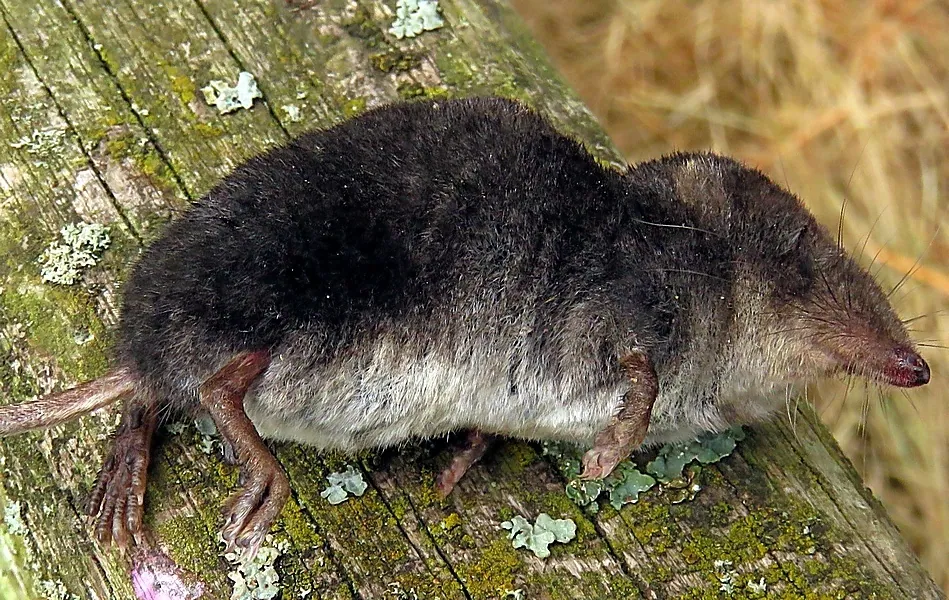
KaThe Eurasian water shrew is a small, dark mammal that lives close to fresh water across northern Europe and Asia. It is one of the few venomous mammals, and it uses its venom to paralyse the prey it catches in the water.1



 Sɛdeɛ wobɛhunu no
- Short, dark greyish-black fur on the head, back and sides1
- Dirty white underparts, sharply separated from the darker back1
- A white spot just behind the eye, and often another near the small ear1
- Black nose and a long, tapering snout1
- Sharp teeth tipped with red, and a slender tail with a keel of short white hairs underneath1
Bɔre ahoɔden
Bɔre fi ne se mu ba bere a ɔka.
Ne bɔre yɛ dɛn?
Its saliva contains a neurotoxic venom, which attacks the nerves. It delivers this venom at the base of the skull of its prey, and the venom paralyses prey even when the prey is larger than the shrew. Tests on field voles showed the venom is lethal at a minimum dose of 15 mg per kg of body weight.1
Ne asiane ma nnipa te sɛn?
Asiane ma nnipa: Ɛnyɛ denƐte sɛ wowa wɔ anaa ɛnnu saa. Ɛkame ayɛ sɛ ɛnni asiane ma nnipa.Hantaviruses have been detected in shrews in Hungary and Poland, which raises public health concerns, although how the virus spreads is largely unknown.1
Ɛyɛ dɛn bere a ehu aka no?
Its venom is thought to immobilise organisms that may threaten it.1
 Sɛ ɛka a
- Hohoro kuro no yie na hwehwɛ dɔkota mmoa.
Di kan frɛ wo ahohiahia nɔma (112, 000, 911). Yei yɛ mmoa a ɛdi kan ho akwankyerɛ, ɛnyɛ dɔkota afotuo. Mmoa a ɛdi kan ho nsɛm titiriw
 Hwɛ wo ho so
- Mfa wo nsa nka wiram aboa biara, nkyere no na mfa no nni agorɔ, sɛ ɔyɛ ketewa mpo, na sɛ ɛte sɛ ɔrededa anaa wawu mpo a.
- Ma no kwan. Sɛ wohyia baako a, ma wo bo nnwo, san w'akyi brɛoo na ma ɔnkɔ ne kwan.
- Sɛ baako ka wo a: ma wo bo nnwo, tena dinn, frɛ wo ahohiahia nɔma (112, 000, 911) anaa kɔ ayaresabea ntɛm. Kae sɛdeɛ na ɛte, mfonini bɛboa.
Ɛnhwehwɛ wo sɛ ɛbɛpira wo. Ɛde ne bɔre kyere aduane anaa ɛbɔ ne ho ban, na ɛpɛ sɛ ɛhinta sene biribiara. Nsɛm pii fa ahobammɔ ho
Wiase mu baabi bɛn?
Ne kɛseɛ te sɛn?
Ne tenten te sɛn?
Ne mu duru te sɛn?

 ne tenten te sɛ agodeɛ blɔk 3 a wɔde to ntoatoasoɔ mu
 ne mu yɛ hare araa sɛ worente nka wɔ wo nsa so
 ɛbɛtumi atu mita 100 wɔ anibu 90 mu (onipa a ɔwɔ ntɛm sen biara hia 9.6)
Eurasian water shrew kɛseɛ te sɛn sɛ wode toto WO ho a?
Akontabuo kɛkɛ wɔ wo browser mu. Wɔnkora hwee, na wɔmfa hwee nkɔ baabiara.
Ne ntɛm te sɛn?


Nsɛm
It is one of the few venomous mammals. Its venom comes from glands at the base of its lower front teeth, and grooves along the teeth channel the venom into the bite.1
Its teeth are tipped with red because of deposits of iron, which harden the enamel of the tips.1
It can dive up to two metres underwater and stay under for about twenty seconds before it must surface to breathe.1
Its short fur holds air, so its skin stays dry while it swims.1
It has a home range of about 500 square metres, but when foraging on land it can travel up to 3 km.1
Ma bɔre ho animdefoɔ
- Nyansahu din
- Neomys fodiens
- Kuo
- Nufoɔ mmoa a wɔwɔ bɔre
- Abusua
- Soricidae2
- Nhyehyɛeɛ (Order)
- Eulipotyphla
- Asaase akɛseɛ
- Yuropu, Asia
- Mmofra nketewa
- Litters of four to eight or more young are born after a 24-day gestation period, and females can have one or two litters a year.1
- Mfeɛ a ɔtena ase
- bɛyɛ mfeɛ 31
- Sɛdeɛ ɔte wɔ kwaem
- Least concern1
- Asiane ma nnipa
- 1 / 5: Ɛnyɛ den3
Baabi a nsɛm no fi
- Eurasian water shrew (Wikipedia (CC BY-SA 4.0))
- Neomys fodiens (iNaturalist): din ne nkyekyɛmu.
- Venom Wiki: asiane gyinabea, kɛseɛ a ɛtaa yɛ ne ntɛm susuo no yɛ yɛn ankasa deɛ. Hwɛ sɛdeɛ yɛbu no: Sɛdeɛ yɛkyerɛ asiane gyinabea.
Nsɛm biara a ɛwɔ kratafa yi so wɔ nɔma a ɛkyerɛ ne fibea. Sɛ yɛfom biribi a, kafra, yɛyɛ mmoa ho akɔnnɔfoɔ, ɛnyɛ nyansahu nwoma. Ka kyerɛ yɛn wɔ [email protected] na yɛbɛsiesie.
 Ɔkɔm de akekantwerɛ no! Onipa baako na ɔyɛ Venom Wiki: ɛyɛ kwa, dawurubɔ nni so na biribiara nni so a ɛdi w'akyi. Akyɛdeɛ ketewa bi boa ma ɛkɔ so tena internet so.Ma akekantwere no aduane
Pii fi kuo korɔ no mu: Nufoɔ mmoa a wɔwɔ bɔre
 Bengal slow lorisNufoɔ mmoa a wɔwɔ bɔreƐyɛ yaw kɛkɛ
 Javan slow lorisNufoɔ mmoa a wɔwɔ bɔreƐyɛ yaw kɛkɛ
 Pygmy slow lorisNufoɔ mmoa a wɔwɔ bɔreƐyɛ yaw kɛkɛ
 Sunda slow lorisNufoɔ mmoa a wɔwɔ bɔreƐyɛ yaw kɛkɛ
 Kayan River slow lorisNufoɔ mmoa a wɔwɔ bɔreƐyɛ yaw kɛkɛ
 Philippine slow lorisNufoɔ mmoa a wɔwɔ bɔreƐyɛ yaw kɛkɛ
Ɔte nso wɔ: Yuropu
 Common European adderViper ne adderƐhia dɔkota
 Spanish flyMmoa afoforɔ a wɔn ho yɛ awuduroƐhia dɔkotaMfa wo nsa nka
 Common waspWowa, kotokurodu ne kotokurodu akɛseɛƐyɛ yaw kɛkɛ
 European hornetWowa, kotokurodu ne kotokurodu akɛseɛƐyɛ yaw kɛkɛ
 Fire salamanderApɔtorɔwa a wɔn ho yɛ awuduro, apɔtorɔ ne newtƐyɛ yaw kɛkɛMfa wo nsa nka
 Western honey beeWowa, kotokurodu ne kotokurodu akɛseɛƐyɛ yaw kɛkɛ