
 Abibirem
 Asia
Asia Yuropu
 Amerika Anaafoɔ
 Australia ne Oceania
 Antarctica
 Pacific Po
 Atlantic Po
 India Po
 Arctic Po
 Mediterranean Po
 Po Kɔkɔɔ
 Caribbean Po
 Coral Po
 China Anaafoɔ Po
 Philippine Po
 Andaman Po
 Atifi Po
 Timor ne Arafura Po
 Bengal Ɛpo Ano
 California Ɛpo Ano
Kayan River slow loris
 Ka
KaThe Kayan River slow loris is a small, nocturnal primate that lives in the highlands of northern and central Borneo. It is the only primate known to have a toxic bite, which it uses to defend itself. It is classed as Vulnerable because its forest home is being lost.1



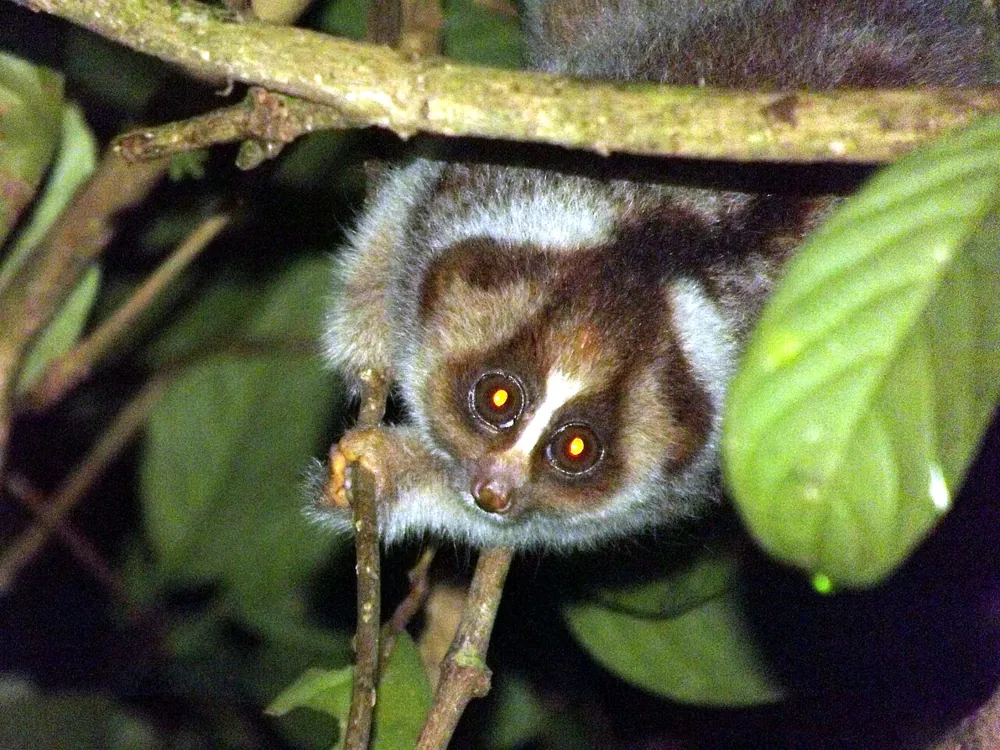
 Sɛdeɛ wobɛhunu no
- High contrast between its black and white facial markings1
- The stripe between its eyes is sometimes bulb-shaped rather than rectangular1
- The ears are always covered in hair1
- Its fur is generally longer and fluffier than that of the Bornean slow loris1
Wɔtaa fa no sɛ: It is often confused with the Bornean slow loris (N. menagensis). The Kayan River slow loris has more contrast in its facial markings, hairy ears instead of naked ears, and longer, fluffier fur.1
Bɔre ahoɔden
Bɔre fi ne se mu ba bere a ɔka.
Ne bɔre yɛ dɛn?
It has a toxic bite, which is unusual among primates. A pungent, clear, oily toxin is made in a gland on the inside of its elbow. The animal licks this gland, and the secretion mixes with its saliva to become active. The toxin is also rubbed onto its fur as protection for infants.1
Ne asiane ma nnipa te sɛn?
Asiane ma nnipa: Ɛyɛ yawƐtumi yɛ yaw paa, nanso ɛkame ayɛ sɛ ɛnyɛ asiane kɛseɛ da.Ɛyɛ dɛn bere a ehu aka no?
When threatened, it wipes the toxin from its elbow gland onto its toothcomb, and it may bite the attacker. Slow lorises can be slow to let go of a bite, which helps deliver more toxin.1
 Sɛ ɛka a
- Hohoro kuro no yie na hwehwɛ dɔkota mmoa.
Di kan frɛ wo ahohiahia nɔma (112, 000, 911). Yei yɛ mmoa a ɛdi kan ho akwankyerɛ, ɛnyɛ dɔkota afotuo. Mmoa a ɛdi kan ho nsɛm titiriw
 Hwɛ wo ho so
- Mfa wo nsa nka wiram aboa biara, nkyere no na mfa no nni agorɔ, sɛ ɔyɛ ketewa mpo, na sɛ ɛte sɛ ɔrededa anaa wawu mpo a.
- Ma no kwan. Sɛ wohyia baako a, ma wo bo nnwo, san w'akyi brɛoo na ma ɔnkɔ ne kwan.
- Sɛ baako ka wo a: ma wo bo nnwo, tena dinn, frɛ wo ahohiahia nɔma (112, 000, 911) anaa kɔ ayaresabea ntɛm. Kae sɛdeɛ na ɛte, mfonini bɛboa.
Ɛnhwehwɛ wo sɛ ɛbɛpira wo. Ɛde ne bɔre kyere aduane anaa ɛbɔ ne ho ban, na ɛpɛ sɛ ɛhinta sene biribiara. Nsɛm pii fa ahobammɔ ho
Wiase mu baabi bɛn?
Ne kɛseɛ te sɛn?
Ne tenten te sɛn?
Ne mu duru te sɛn?

 ne tenten te sɛ agodeɛ blɔk 9 a wɔde to ntoatoasoɔ mu
 ɛbɛtumi atu mita 100 wɔ anibu 180 mu (onipa a ɔwɔ ntɛm sen biara hia 9.6)
Kayan River slow loris kɛseɛ te sɛn sɛ wode toto WO ho a?
Akontabuo kɛkɛ wɔ wo browser mu. Wɔnkora hwee, na wɔmfa hwee nkɔ baabiara.
Ne ntɛm te sɛn?


Nsɛm
It is one of the few primates known to have a toxic bite, and this is a unique feature among primates.1
Its face mask may help it recognise other lorises of its own kind, and it may also make its eyes look bigger than they really are, which can deter predators.1
It has a toothcomb, a set of specialised lower front teeth that it uses for grooming.1
Its population is estimated to have fallen by more than 30% over about 21 to 24 years.1
Atosɛm sɛefoɔ
Atosɛm: The Kayan River slow loris was always known as a separate species.
Nokorɛ: Until 2013 its museum specimens were identified as the Bornean slow loris. A study of facial markings then showed it was a distinct species.1
Baabi a nsɛm no fi
- Nycticebus kayan (Wikipedia (CC BY-SA 4.0))
- Nycticebus kayan (iNaturalist): din ne nkyekyɛmu.
- Venom Wiki: asiane gyinabea, kɛseɛ a ɛtaa yɛ ne ntɛm susuo no yɛ yɛn ankasa deɛ. Hwɛ sɛdeɛ yɛbu no: Sɛdeɛ yɛkyerɛ asiane gyinabea.
Nsɛm biara a ɛwɔ kratafa yi so wɔ nɔma a ɛkyerɛ ne fibea. Sɛ yɛfom biribi a, kafra, yɛyɛ mmoa ho akɔnnɔfoɔ, ɛnyɛ nyansahu nwoma. Ka kyerɛ yɛn wɔ [email protected] na yɛbɛsiesie.
 Ɔkɔm de akekantwerɛ no! Onipa baako na ɔyɛ Venom Wiki: ɛyɛ kwa, dawurubɔ nni so na biribiara nni so a ɛdi w'akyi. Akyɛdeɛ ketewa bi boa ma ɛkɔ so tena internet so.Ma akekantwere no aduane
Pii fi kuo korɔ no mu: Nufoɔ mmoa a wɔwɔ bɔre
 Bengal slow lorisNufoɔ mmoa a wɔwɔ bɔreƐyɛ yaw kɛkɛ
 Javan slow lorisNufoɔ mmoa a wɔwɔ bɔreƐyɛ yaw kɛkɛ
 Pygmy slow lorisNufoɔ mmoa a wɔwɔ bɔreƐyɛ yaw kɛkɛ
 Sunda slow lorisNufoɔ mmoa a wɔwɔ bɔreƐyɛ yaw kɛkɛ
 Philippine slow lorisNufoɔ mmoa a wɔwɔ bɔreƐyɛ yaw kɛkɛ
 Eurasian water shrewNufoɔ mmoa a wɔwɔ bɔreƐnni asiane
 Deathstalker
 Indian cobra
 Indian saw-scaled viper
 King cobra
 Puff adder
 Russell ɔnanka