
 Abibirem
 Asia
Asia Yuropu
 Amerika Anaafoɔ
 Australia ne Oceania
 Antarctica
 Pacific Po
 Atlantic Po
 India Po
 Arctic Po
 Mediterranean Po
 Po Kɔkɔɔ
 Caribbean Po
 Coral Po
 China Anaafoɔ Po
 Philippine Po
 Andaman Po
 Atifi Po
 Timor ne Arafura Po
 Bengal Ɛpo Ano
 California Ɛpo Ano
Bengal slow loris
 Ka
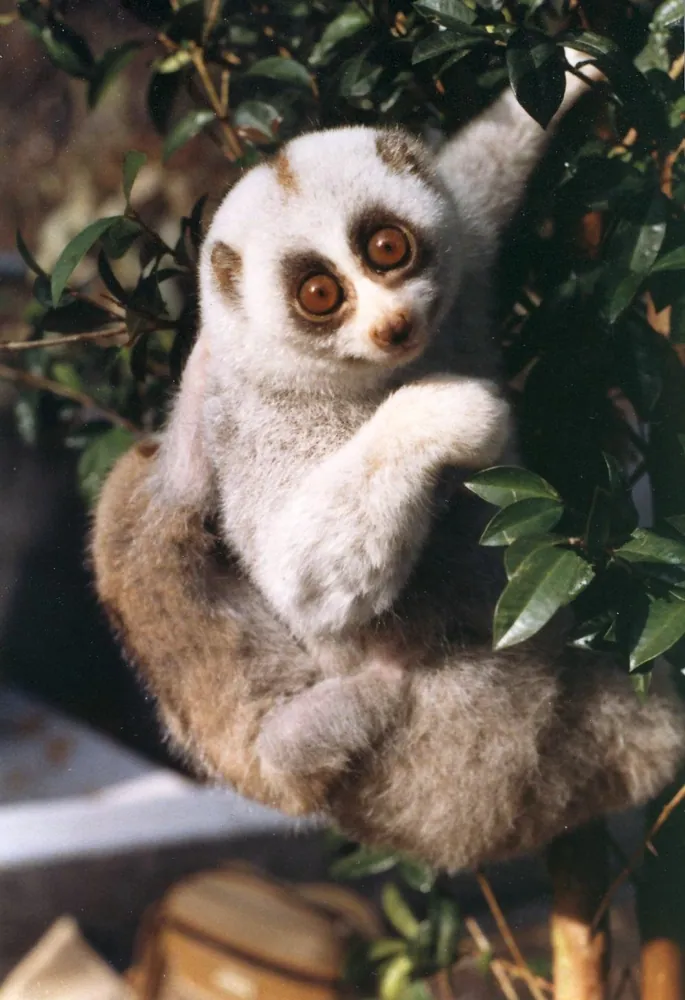
KaThe Bengal slow loris is a small, nocturnal primate with big eyes and dense, woolly fur. It lives in forests across South and Southeast Asia, and it is the largest of the slow loris species. It is endangered, mainly because it is sold in animal markets and used in traditional medicine.1



 Sɛdeɛ wobɛhunu no
- Dense, woolly brown-grey fur on its back, with white fur on its underside1
- A dark stripe running up to the top of its head, which does not reach the ears1
- Pale forearms and feet, with limbs that vary from brown to nearly white1
- A round head, flat face, large eyes that show a bright orange eye shine, and short ears1
- Body and head length of 26 to 38 cm1
Wɔtaa fa no sɛ: The Sunda slow loris is similar in size but is smaller and tawny- or golden-brown, without the pale head, nape and shoulders. The pygmy slow loris is much smaller, with dark brown fur, longer ears and no dark dorsal stripe.1
Bɔre ahoɔden
Bɔre fi ne se mu ba bere a ɔka.
Ne bɔre yɛ dɛn?
A small gland on the inside of the elbow produces a pungent, clear, oily toxin. The animal wipes this fluid onto its toothcomb as a defence. The main chemical in it is m-cresol, a phenolic compound, and the mixture contains several dozen volatile chemicals.1
Ne asiane ma nnipa te sɛn?
Asiane ma nnipa: Ɛyɛ yawƐtumi yɛ yaw paa, nanso ɛkame ayɛ sɛ ɛnyɛ asiane kɛseɛ da. Sɛ ɛka a
- Hohoro kuro no yie na hwehwɛ dɔkota mmoa.
Di kan frɛ wo ahohiahia nɔma (112, 000, 911). Yei yɛ mmoa a ɛdi kan ho akwankyerɛ, ɛnyɛ dɔkota afotuo. Mmoa a ɛdi kan ho nsɛm titiriw
 Hwɛ wo ho so
- Mfa wo nsa nka wiram aboa biara, nkyere no na mfa no nni agorɔ, sɛ ɔyɛ ketewa mpo, na sɛ ɛte sɛ ɔrededa anaa wawu mpo a.
- Ma no kwan. Sɛ wohyia baako a, ma wo bo nnwo, san w'akyi brɛoo na ma ɔnkɔ ne kwan.
- Sɛ baako ka wo a: ma wo bo nnwo, tena dinn, frɛ wo ahohiahia nɔma (112, 000, 911) anaa kɔ ayaresabea ntɛm. Kae sɛdeɛ na ɛte, mfonini bɛboa.
Ɛnhwehwɛ wo sɛ ɛbɛpira wo. Ɛde ne bɔre kyere aduane anaa ɛbɔ ne ho ban, na ɛpɛ sɛ ɛhinta sene biribiara. Nsɛm pii fa ahobammɔ ho
Wiase mu baabi bɛn?
Ne kɛseɛ te sɛn?
Ne tenten te sɛn?
Ne mu duru te sɛn?

 ne tenten te sɛ agodeɛ blɔk 12 a wɔde to ntoatoasoɔ mu
 ne mu duru bɛyɛ sɛ fie agyinamoa
 ɛbɛtumi atu mita 100 wɔ anibu 180 mu (onipa a ɔwɔ ntɛm sen biara hia 9.6)
Bengal slow loris kɛseɛ te sɛn sɛ wode toto WO ho a?
Akontabuo kɛkɛ wɔ wo browser mu. Wɔnkora hwee, na wɔmfa hwee nkɔ baabiara.
Ne ntɛm te sɛn?


Nsɛm
Its toxin may carry information about a loris's sex, age, health and social status, so it may act as a form of scent communication.1
It is the largest species of slow loris.1
Its second hind toe has a curved toilet-claw that it uses for scratching and grooming, while its other nails are straight.1
It has an excellent night vision, helped by a tapetum lucidum, a reflective layer in the eye.1
Females can have a new offspring every 12 to 18 months, and could even become pregnant again when the previous young is about six months old.1
It is an important seed disperser and pollinator, and it is also prey for several carnivores.1
Ma bɔre ho animdefoɔ
- Nyansahu din
- Nycticebus bengalensis
- Kuo
- Nufoɔ mmoa a wɔwɔ bɔre
- Abusua
- Lorisidae2
- Nhyehyɛeɛ (Order)
- Primates
- Asaase akɛseɛ
- Asia
- Mmofra nketewa
- It usually gives birth to a single offspring after a six-month pregnancy, and twins are rare. The mother carries the young for about three months, and it becomes independent at around three months of age.1
- Mfeɛ a ɔtena ase
- bɛyɛ mfeɛ 201
- Sɛdeɛ ɔte wɔ kwaem
- Endangered1
- Asiane ma nnipa
- 2 / 5: Ɛyɛ yaw3
Baabi a nsɛm no fi
- Bengal slow loris (Wikipedia (CC BY-SA 4.0))
- Nycticebus bengalensis (iNaturalist): din ne nkyekyɛmu.
- Venom Wiki: asiane gyinabea, kɛseɛ a ɛtaa yɛ ne ntɛm susuo no yɛ yɛn ankasa deɛ. Hwɛ sɛdeɛ yɛbu no: Sɛdeɛ yɛkyerɛ asiane gyinabea.
Nsɛm biara a ɛwɔ kratafa yi so wɔ nɔma a ɛkyerɛ ne fibea. Sɛ yɛfom biribi a, kafra, yɛyɛ mmoa ho akɔnnɔfoɔ, ɛnyɛ nyansahu nwoma. Ka kyerɛ yɛn wɔ [email protected] na yɛbɛsiesie.
 Ɔkɔm de akekantwerɛ no! Onipa baako na ɔyɛ Venom Wiki: ɛyɛ kwa, dawurubɔ nni so na biribiara nni so a ɛdi w'akyi. Akyɛdeɛ ketewa bi boa ma ɛkɔ so tena internet so.Ma akekantwere no aduane
Pii fi kuo korɔ no mu: Nufoɔ mmoa a wɔwɔ bɔre
 Javan slow lorisNufoɔ mmoa a wɔwɔ bɔreƐyɛ yaw kɛkɛ
 Pygmy slow lorisNufoɔ mmoa a wɔwɔ bɔreƐyɛ yaw kɛkɛ
 Sunda slow lorisNufoɔ mmoa a wɔwɔ bɔreƐyɛ yaw kɛkɛ
 Kayan River slow lorisNufoɔ mmoa a wɔwɔ bɔreƐyɛ yaw kɛkɛ
 Philippine slow lorisNufoɔ mmoa a wɔwɔ bɔreƐyɛ yaw kɛkɛ
 Eurasian water shrewNufoɔ mmoa a wɔwɔ bɔreƐnni asiane
 Deathstalker
 Indian cobra
 Indian saw-scaled viper
 King cobra
 Puff adder
 Russell ɔnanka