
 Abibirem
 Asia
Asia Yuropu
 Amerika Anaafoɔ
 Australia ne Oceania
 Antarctica
 Pacific Po
 Atlantic Po
 India Po
 Arctic Po
 Mediterranean Po
 Po Kɔkɔɔ
 Caribbean Po
 Coral Po
 China Anaafoɔ Po
 Philippine Po
 Andaman Po
 Atifi Po
 Timor ne Arafura Po
 Bengal Ɛpo Ano
 California Ɛpo Ano
European paper wasp
 Ɛwɔ
ƐwɔThe European paper wasp is a yellow and black social wasp that builds nests from chewed plant fibre mixed with saliva, which looks like grey paper. It lives in warm, temperate parts of Europe, North Africa and Asia, and it has spread to many other continents. It matters because it has become a common invasive species in North America.1

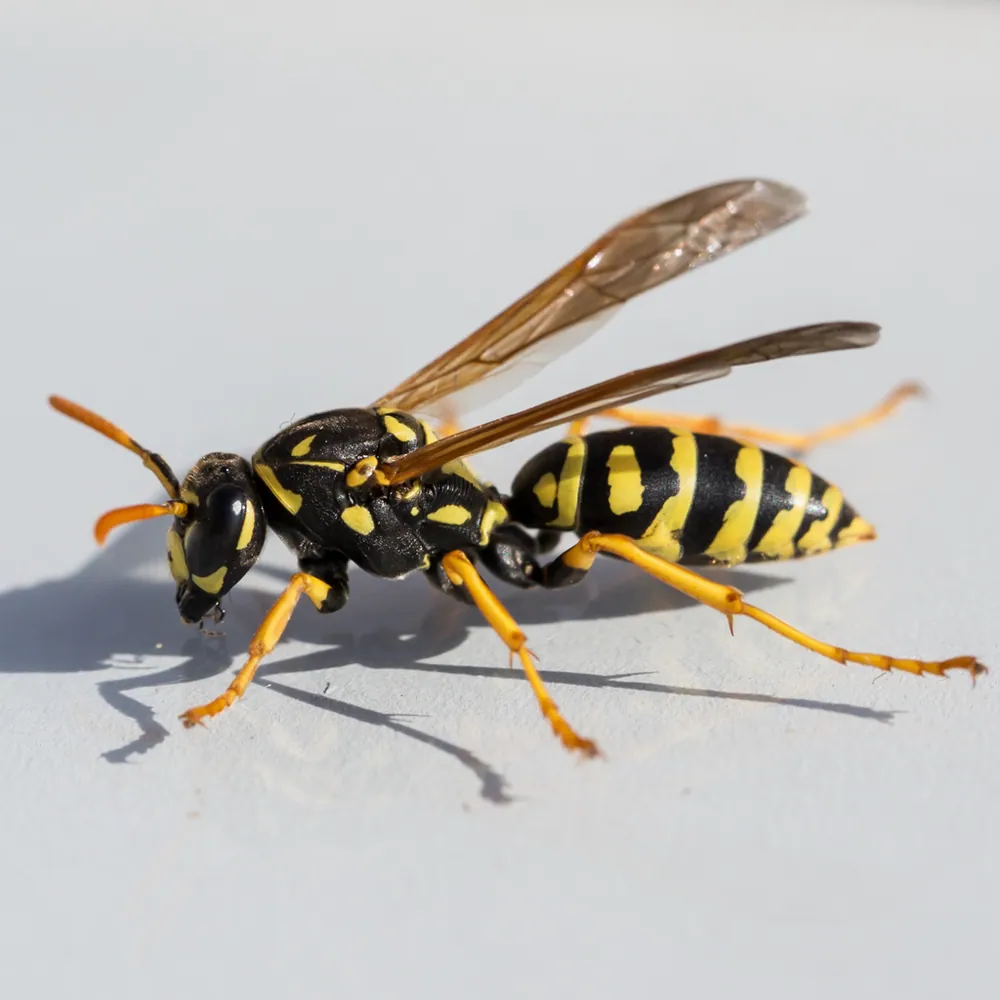
 Sɛdeɛ wobɛhunu no
- Its body is coloured entirely yellow and black.1
- The female's mandible (jaw) is black and sometimes has a yellow spot.1
- The outer half of the antennae (feelers) is orange-yellow.1
- Wings are about 8.5 to 13 mm long, with little variation between individuals.1
- Males have curled antennae and no stinger.1
Wɔtaa fa no sɛ: Its yellow and black body is similar to that of Vespula germanica, one of the most common and defensive wasps in its native range. In older literature it was often confused with Polistes gallicus, which is now recognised as a separate species.1
Bɔre ahoɔden
Bɔre fi ne dua ano nsɔe (stinger) mu ba.
Ne asiane ma nnipa te sɛn?
Asiane ma nnipa: Ɛyɛ yawƐtumi yɛ yaw paa, nanso ɛkame ayɛ sɛ ɛnyɛ asiane kɛseɛ da.Ɛyɛ dɛn bere a ehu aka no?
Its bright yellow and black colouring is a warning colour, and its nests are built in well-protected places to help it avoid predators.1
 Sɛ ɛwɔ a
- Fa biribi twitwiw wowa no dua (stinger) no fi mu, na dwo baabi no.
- Sɛ onipa no ntumi nhome yie, n'anim anaa ne mene mu hono, anaa ɛyɛ no sɛ ɔrebɛtɔ piti a, ɛyɛ allergy ahohiahia: frɛ wo ahohiahia nɔma na fa n'adrenaline pen (auto-injector) wɔ no sɛ ɔwɔ bi a.
Di kan frɛ wo ahohiahia nɔma (112, 000, 911). Yei yɛ mmoa a ɛdi kan ho akwankyerɛ, ɛnyɛ dɔkota afotuo. Mmoa a ɛdi kan ho nsɛm titiriw
 Hwɛ wo ho so
- Mfa wo nsa nka wiram aboa biara, nkyere no na mfa no nni agorɔ, sɛ ɔyɛ ketewa mpo, na sɛ ɛte sɛ ɔrededa anaa wawu mpo a.
- Ma no kwan. Sɛ wohyia baako a, ma wo bo nnwo, san w'akyi brɛoo na ma ɔnkɔ ne kwan.
- Sɛ baako wɔ wo a: ma wo bo nnwo, tena dinn, frɛ wo ahohiahia nɔma (112, 000, 911) anaa kɔ ayaresabea ntɛm. Kae sɛdeɛ na ɛte, mfonini bɛboa.
Ɛnhwehwɛ wo sɛ ɛbɛpira wo. Ɛde ne bɔre kyere aduane anaa ɛbɔ ne ho ban, na ɛpɛ sɛ ɛhinta sene biribiara. Nsɛm pii fa ahobammɔ ho
Wiase mu baabi bɛn?
Ne kɛseɛ te sɛn?
Ne tenten te sɛn?
 ɛyɛ ketewa araa sɛ ɛbɛtumi atena wo nsateaa ano
 ɛbɛtumi atu atwa bɔɔlobɔ agodibea mu nyinaa wɔ anibu 15 mu
European paper wasp kɛseɛ te sɛn sɛ wode toto WO ho a?
Akontabuo kɛkɛ wɔ wo browser mu. Wɔnkora hwee, na wɔmfa hwee nkɔ baabiara.
Ne ntɛm te sɛn?


Nsɛm
Its colonies can include many unrelated wasps: about 35% of the wasps in a colony are unrelated, which is unusual for social insects.1
Males' abdominal spots vary in size, location and pattern, and they signal social rank within the colony.1
If the queen is removed from a nest, the second most dominant female takes over her role.1
In spring, some North American colonies have been seen with more than 80 wasps joining to reuse and expand an old nest.1
The first North American record was in Massachusetts in the late 1970s, and it had spread across the northeastern USA by 1995.1
Atosɛm sɛefoɔ
Atosɛm: The species name is sometimes spelled "dominulus", as authors wrongly assumed the name was an adjective.
Nokorɛ: Dominula is a noun meaning "little mistress", so under the International Code of Zoological Nomenclature it does not change when the species moves genus.1
Ma bɔre ho animdefoɔ
Baabi a nsɛm no fi
- European paper wasp (Wikipedia (CC BY-SA 4.0))
- Polistes dominula (iNaturalist): din ne nkyekyɛmu.
- Venom Wiki: asiane gyinabea, kɛseɛ a ɛtaa yɛ ne ntɛm susuo no yɛ yɛn ankasa deɛ. Hwɛ sɛdeɛ yɛbu no: Sɛdeɛ yɛkyerɛ asiane gyinabea.
Nsɛm biara a ɛwɔ kratafa yi so wɔ nɔma a ɛkyerɛ ne fibea. Sɛ yɛfom biribi a, kafra, yɛyɛ mmoa ho akɔnnɔfoɔ, ɛnyɛ nyansahu nwoma. Ka kyerɛ yɛn wɔ [email protected] na yɛbɛsiesie.
 Ɔkɔm de akekantwerɛ no! Onipa baako na ɔyɛ Venom Wiki: ɛyɛ kwa, dawurubɔ nni so na biribiara nni so a ɛdi w'akyi. Akyɛdeɛ ketewa bi boa ma ɛkɔ so tena internet so.Ma akekantwere no aduane
Pii fi kuo korɔ no mu: Wowa, kotokurodu ne kotokurodu akɛseɛ
 Asian giant hornetWowa, kotokurodu ne kotokurodu akɛseɛƐtumi kum
 Common waspWowa, kotokurodu ne kotokurodu akɛseɛƐyɛ yaw kɛkɛ
 European hornetWowa, kotokurodu ne kotokurodu akɛseɛƐyɛ yaw kɛkɛ
 Western honey beeWowa, kotokurodu ne kotokurodu akɛseɛƐyɛ yaw kɛkɛ
 Giant honey beeWowa, kotokurodu ne kotokurodu akɛseɛƐhia dɔkota
 Asian hornetWowa, kotokurodu ne kotokurodu akɛseɛƐyɛ yaw kɛkɛ
Ɔte nso wɔ: Yuropu
 Common European adderViper ne adderƐhia dɔkota
 Spanish flyMmoa afoforɔ a wɔn ho yɛ awuduroƐhia dɔkotaMfa wo nsa nka
 Fire salamanderApɔtorɔwa a wɔn ho yɛ awuduro, apɔtorɔ ne newtƐyɛ yaw kɛkɛMfa wo nsa nka
 Blunt-nosed viperViper ne adderƐtumi kum
 Nose-horned viperViper ne adderƐtumi kum
 Ottoman viperViper ne adderƐtumi kum