
 Abibirem
 Asia
Asia Yuropu
 Amerika Anaafoɔ
 Australia ne Oceania
 Antarctica
 Pacific Po
 Atlantic Po
 India Po
 Arctic Po
 Mediterranean Po
 Po Kɔkɔɔ
 Caribbean Po
 Coral Po
 China Anaafoɔ Po
 Philippine Po
 Andaman Po
 Atifi Po
 Timor ne Arafura Po
 Bengal Ɛpo Ano
 California Ɛpo Ano
Giant honey bee
 Ɛwɔ
ƐwɔThe giant honey bee is a large honey bee that lives in South and Southeast Asia. It builds its nests in open, high places, such as tree branches, cliff overhangs and buildings. It is known for fierce defence when its nest is disturbed.1


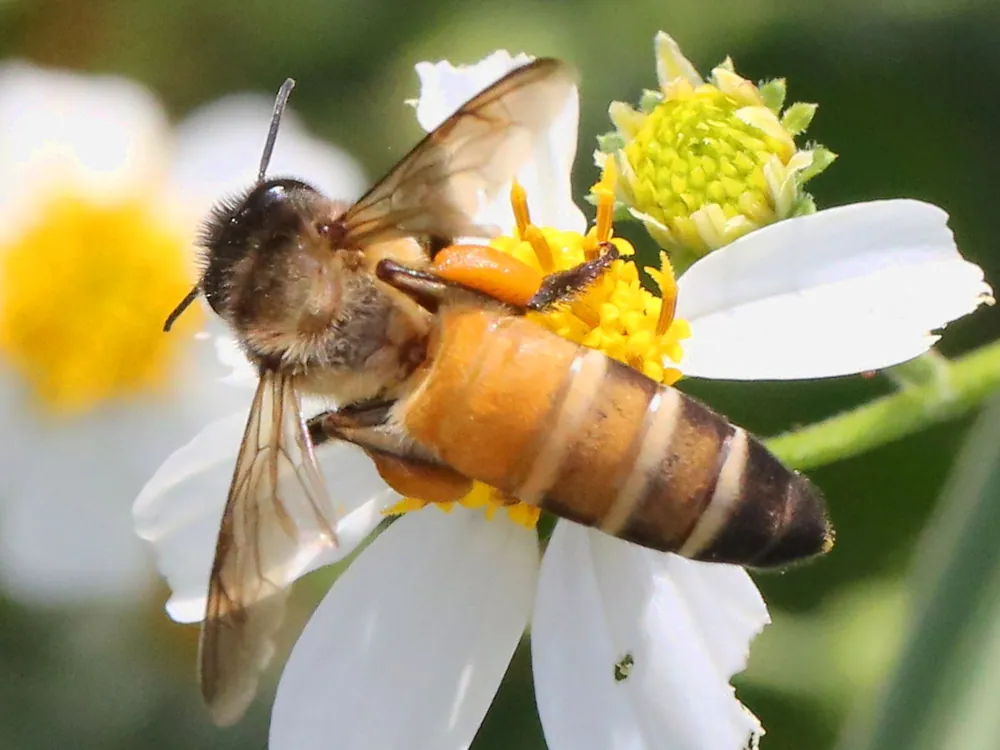
 Sɛdeɛ wobɛhunu no
- Typically 17 to 20 mm long1
- Builds a single vertical comb of wax, hanging from above1
- The comb is covered by a dense mass of bees in several layers1
- Nests can reach up to 1 metre across and are often grouped, with up to 200 colonies in one tree1
- Aggressive when its nest is disturbed1
Wɔtaa fa no sɛ: The Himalayan giant honey bee (A. laboriosa) is very similar in shape. It has a darker abdomen and longer thoracic hair, and is now treated as a separate species from the giant honey bee.1
Bɔre ahoɔden
Bɔre fi ne dua ano nsɔe (stinger) mu ba.
Ne asiane ma nnipa te sɛn?
Asiane ma nnipa: Ɛyɛ denSɛ ɛwɔ wo a, kɔ dɔkota nkyɛn. Ɛntaa nkum obi koraa.This bee is known for aggressive defensive behaviour and vicious attacks when disturbed. Workers also attack bees from other colonies, so it is wise to keep well away from nests.1
Ɛyɛ dɛn bere a ehu aka no?
When disturbed, colonies defend their nest aggressively, and they attack intruders from other colonies.1
 Sɛ ɛwɔ a
- Fa biribi twitwiw wowa no dua (stinger) no fi mu, na dwo baabi no.
- Sɛ onipa no ntumi nhome yie, n'anim anaa ne mene mu hono, anaa ɛyɛ no sɛ ɔrebɛtɔ piti a, ɛyɛ allergy ahohiahia: frɛ wo ahohiahia nɔma na fa n'adrenaline pen (auto-injector) wɔ no sɛ ɔwɔ bi a.
Di kan frɛ wo ahohiahia nɔma (112, 000, 911). Yei yɛ mmoa a ɛdi kan ho akwankyerɛ, ɛnyɛ dɔkota afotuo. Mmoa a ɛdi kan ho nsɛm titiriw
 Hwɛ wo ho so
- Mfa wo nsa nka wiram aboa biara, nkyere no na mfa no nni agorɔ, sɛ ɔyɛ ketewa mpo, na sɛ ɛte sɛ ɔrededa anaa wawu mpo a.
- Ma no kwan. Sɛ wohyia baako a, ma wo bo nnwo, san w'akyi brɛoo na ma ɔnkɔ ne kwan.
- Sɛ baako wɔ wo a: ma wo bo nnwo, tena dinn, frɛ wo ahohiahia nɔma (112, 000, 911) anaa kɔ ayaresabea ntɛm. Kae sɛdeɛ na ɛte, mfonini bɛboa.
Ɛnhwehwɛ wo sɛ ɛbɛpira wo. Ɛde ne bɔre kyere aduane anaa ɛbɔ ne ho ban, na ɛpɛ sɛ ɛhinta sene biribiara. Nsɛm pii fa ahobammɔ ho
Wiase mu baabi bɛn?
Ne kɛseɛ te sɛn?
Ne tenten te sɛn?
 ne tenten bɛyɛ sɛ paper clip
 ɛbɛtumi atu atwa bɔɔlobɔ agodibea mu nyinaa wɔ anibu 15 mu
Giant honey bee kɛseɛ te sɛn sɛ wode toto WO ho a?
Akontabuo kɛkɛ wɔ wo browser mu. Wɔnkora hwee, na wɔmfa hwee nkɔ baabiara.
Ne ntɛm te sɛn?


Nsɛm
Unlike most honey bees, this species forages at night, and it is the only bee of its genus known to do so.1
The queen mates with many drones, and the Himalayan subspecies has the highest levels of polyandry of any social insect.1
Each colony can have up to 100,000 bees, and colonies are only a few centimetres apart in large groups.1
Colonies migrate between nesting sites with the seasons, usually staying about 3 to 4 months at each site.1
Bees use a waggle dance to show other bees the distance, direction and value of a food source.1
Indigenous peoples have traditionally harvested the honey and beeswax of this bee, a practice known as honey hunting.1
Ma bɔre ho animdefoɔ
- Nyansahu din
- Apis dorsata
- Kuo
- Wowa, kotokurodu ne kotokurodu akɛseɛ
- Abusua
- Apidae2
- Nhyehyɛeɛ (Order)
- Hymenoptera
- Asaase akɛseɛ
- Asia
- Mmofra nketewa
- New colonies form when a queen flies away from the nest slowly, with a swarm of workers following her, usually in October or November.1
- Asiane ma nnipa
- 3 / 5: Ɛyɛ den3
Baabi a nsɛm no fi
- Apis dorsata (Wikipedia (CC BY-SA 4.0))
- Apis dorsata (iNaturalist): din ne nkyekyɛmu.
- Venom Wiki: asiane gyinabea, kɛseɛ a ɛtaa yɛ ne ntɛm susuo no yɛ yɛn ankasa deɛ. Hwɛ sɛdeɛ yɛbu no: Sɛdeɛ yɛkyerɛ asiane gyinabea.
Nsɛm biara a ɛwɔ kratafa yi so wɔ nɔma a ɛkyerɛ ne fibea. Sɛ yɛfom biribi a, kafra, yɛyɛ mmoa ho akɔnnɔfoɔ, ɛnyɛ nyansahu nwoma. Ka kyerɛ yɛn wɔ [email protected] na yɛbɛsiesie.
 Ɔkɔm de akekantwerɛ no! Onipa baako na ɔyɛ Venom Wiki: ɛyɛ kwa, dawurubɔ nni so na biribiara nni so a ɛdi w'akyi. Akyɛdeɛ ketewa bi boa ma ɛkɔ so tena internet so.Ma akekantwere no aduane
Pii fi kuo korɔ no mu: Wowa, kotokurodu ne kotokurodu akɛseɛ
 Asian giant hornetWowa, kotokurodu ne kotokurodu akɛseɛƐtumi kum
 Common waspWowa, kotokurodu ne kotokurodu akɛseɛƐyɛ yaw kɛkɛ
 European hornetWowa, kotokurodu ne kotokurodu akɛseɛƐyɛ yaw kɛkɛ
 Western honey beeWowa, kotokurodu ne kotokurodu akɛseɛƐyɛ yaw kɛkɛ
 Asian hornetWowa, kotokurodu ne kotokurodu akɛseɛƐyɛ yaw kɛkɛ
 European paper waspWowa, kotokurodu ne kotokurodu akɛseɛƐyɛ yaw kɛkɛ
 Deathstalker
 Indian cobra
 Indian saw-scaled viper
 King cobra
 Puff adder
 Russell ɔnanka