
 Abibirem
 Asia
Asia Yuropu
 Amerika Anaafoɔ
 Australia ne Oceania
 Antarctica
 Pacific Po
 Atlantic Po
 India Po
 Arctic Po
 Mediterranean Po
 Po Kɔkɔɔ
 Caribbean Po
 Coral Po
 China Anaafoɔ Po
 Philippine Po
 Andaman Po
 Atifi Po
 Timor ne Arafura Po
 Bengal Ɛpo Ano
 California Ɛpo Ano
Himalayan newt
 Awuduro wɔ ne honam muƆdi: NamNe ho yɛ awuduro, onni bɔre
The Himalayan newt is a newt with blackish brown skin and a row of knobs along its back. It lives in mountain areas of the Indian subcontinent and Southeast Asia. It is a striking animal, and some of its kind were only recently named as separate species.1



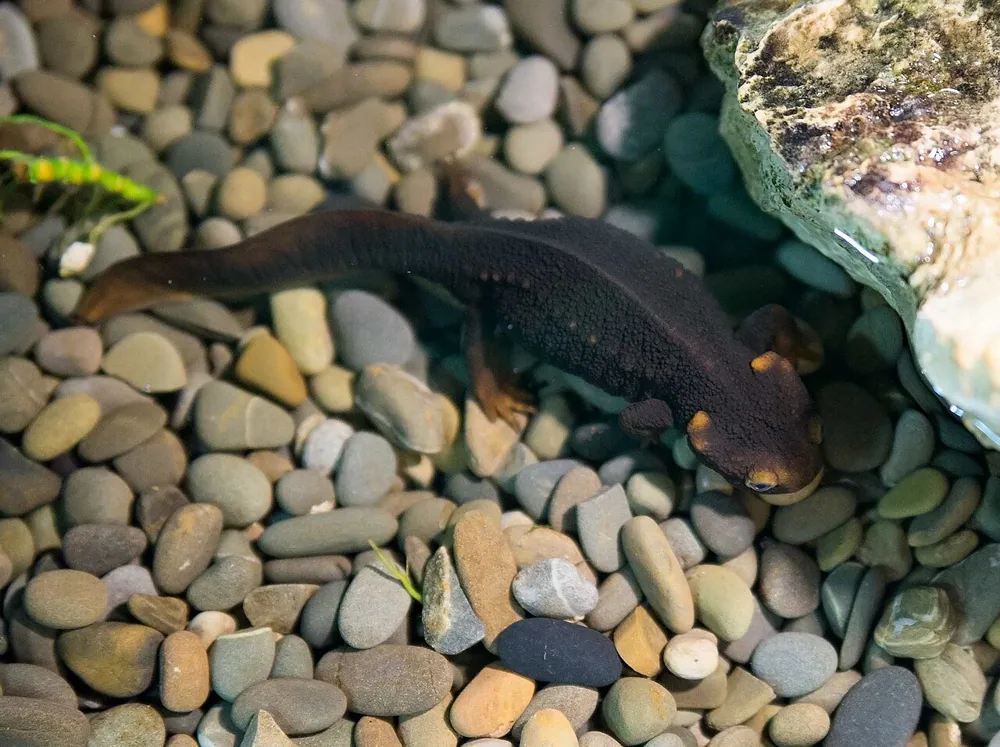
 Sɛdeɛ wobɛhunu no
- Uniformly blackish brown body, slightly paler on the lips, snout, chin, throat and underside of the limbs1
- Lower edge of the tail is orange-yellow1
- Rough skin with a prominent ridge along the back, formed of knobs1
- A series of 15 or 16 knob-like glands along each side, the last three behind the front leg1
- Flattened tail with an upper and lower crest that meet at the tip, used for swimming1
Awuduro ahoɔden
Ne honam yɛ awuduro. Ɛyɛ asiane sɛ wode wo nsa bɛka, wobɛtaforɔ anaa wobɛdi.
Ne asiane ma nnipa te sɛn?
Asiane ma nnipa: Ɛyɛ yawƐtumi yɛ yaw paa, nanso ɛkame ayɛ sɛ ɛnyɛ asiane kɛseɛ da. Sɛ obi de ne nsa ka anaa ɔdi a
- Sɛ obi de ne nsa aka bi a: hohoro ne nsa yie na mfa nsa nka ani anaa ano. Sɛ abofra anaa fie aboa bi taforɔɔ bi anaa ɔdii bi a: frɛ awuduro ho mmoa adwumayɛbea (poison centre) anaa wo ahohiahia nɔma.
Di kan frɛ wo ahohiahia nɔma (112, 000, 911). Yei yɛ mmoa a ɛdi kan ho akwankyerɛ, ɛnyɛ dɔkota afotuo. Mmoa a ɛdi kan ho nsɛm titiriw
 Hwɛ wo ho so
- Mfa wo nsa nka wiram aboa biara, nkyere no na mfa no nni agorɔ, sɛ ɔyɛ ketewa mpo, na sɛ ɛte sɛ ɔrededa anaa wawu mpo a.
- Ma no kwan. Sɛ wohyia baako a, ma wo bo nnwo, san w'akyi brɛoo na ma ɔnkɔ ne kwan.
- Sɛ wode wo nsa kaa no anaa wodii a: mfa wo nsa ntwitwi w'ani anaa w'ano, hohoro wo nsa na hwehwɛ dɔkota mmoa.
Ɛnhwehwɛ wo sɛ ɛbɛpira wo. Ne ho awuduro no wɔ hɔ sɛdeɛ ɛbɛyɛ a biribiara renni no. Nsɛm pii fa ahobammɔ ho
Wiase mu baabi bɛn?
Ne kɛseɛ te sɛn?
Ne tenten te sɛn?
 ne tenten te sɛ agodeɛ blɔk 6 a wɔde to ntoatoasoɔ mu
Himalayan newt kɛseɛ te sɛn sɛ wode toto WO ho a?
Akontabuo kɛkɛ wɔ wo browser mu. Wɔnkora hwee, na wɔmfa hwee nkɔ baabiara.
Ne ntɛm te sɛn?


Nsɛm
It can reach a length of 20 cm, which is about 7.9 inches.1
Courtship and mating happen at night, during the breeding season in May and June. The male moves around the female while bending, pushing and curving its tail.1
It has five toes on each foot, and its legs are moderately long with webbing between the fingers and toes.1
Baabi a nsɛm no fi
- Tylototriton verrucosus (Wikipedia (CC BY-SA 4.0))
- Tylototriton verrucosus (iNaturalist): din ne nkyekyɛmu.
- Venom Wiki: asiane gyinabea, kɛseɛ a ɛtaa yɛ ne ntɛm susuo no yɛ yɛn ankasa deɛ. Hwɛ sɛdeɛ yɛbu no: Sɛdeɛ yɛkyerɛ asiane gyinabea.
Nsɛm biara a ɛwɔ kratafa yi so wɔ nɔma a ɛkyerɛ ne fibea. Sɛ yɛfom biribi a, kafra, yɛyɛ mmoa ho akɔnnɔfoɔ, ɛnyɛ nyansahu nwoma. Ka kyerɛ yɛn wɔ [email protected] na yɛbɛsiesie.
 Ɔkɔm de akekantwerɛ no! Onipa baako na ɔyɛ Venom Wiki: ɛyɛ kwa, dawurubɔ nni so na biribiara nni so a ɛdi w'akyi. Akyɛdeɛ ketewa bi boa ma ɛkɔ so tena internet so.Ma akekantwere no aduane
Pii fi kuo korɔ no mu: Apɔtorɔwa a wɔn ho yɛ awuduro, apɔtorɔ ne newt
 Japanese fire-bellied newtApɔtorɔwa a wɔn ho yɛ awuduro, apɔtorɔ ne newtƐhia dɔkotaMfa wo nsa nka
 Common toadApɔtorɔwa a wɔn ho yɛ awuduro, apɔtorɔ ne newtƐyɛ yaw kɛkɛMfa wo nsa nka
 Oriental fire-bellied toadApɔtorɔwa a wɔn ho yɛ awuduro, apɔtorɔ ne newtƐnni asiane
 Asian common toadApɔtorɔwa a wɔn ho yɛ awuduro, apɔtorɔ ne newtƐhia dɔkotaMfa wo nsa nka
 Asiatic toadApɔtorɔwa a wɔn ho yɛ awuduro, apɔtorɔ ne newtƐyɛ yaw kɛkɛMfa wo nsa nka
 Emperor newtApɔtorɔwa a wɔn ho yɛ awuduro, apɔtorɔ ne newtƐyɛ yaw kɛkɛMfa wo nsa nka
 Deathstalker
 Indian cobra
 Indian saw-scaled viper
 King cobra
 Puff adder
 Russell ɔnanka