
 Abibirem
 Asia
Asia Yuropu
 Amerika Anaafoɔ
 Australia ne Oceania
 Antarctica
 Pacific Po
 Atlantic Po
 India Po
 Arctic Po
 Mediterranean Po
 Po Kɔkɔɔ
 Caribbean Po
 Coral Po
 China Anaafoɔ Po
 Philippine Po
 Andaman Po
 Atifi Po
 Timor ne Arafura Po
 Bengal Ɛpo Ano
 California Ɛpo Ano
Javan spitting cobra
 Ɔpete anaa ɔtu
The Javan spitting cobra is a venomous snake that lives on the islands of Java, Bali and other Lesser Sunda Islands in Indonesia. It is named for its habit of spraying venom at a threat instead of only biting. It is a medium to large snake, and adults can grow to nearly 2 metres long.1



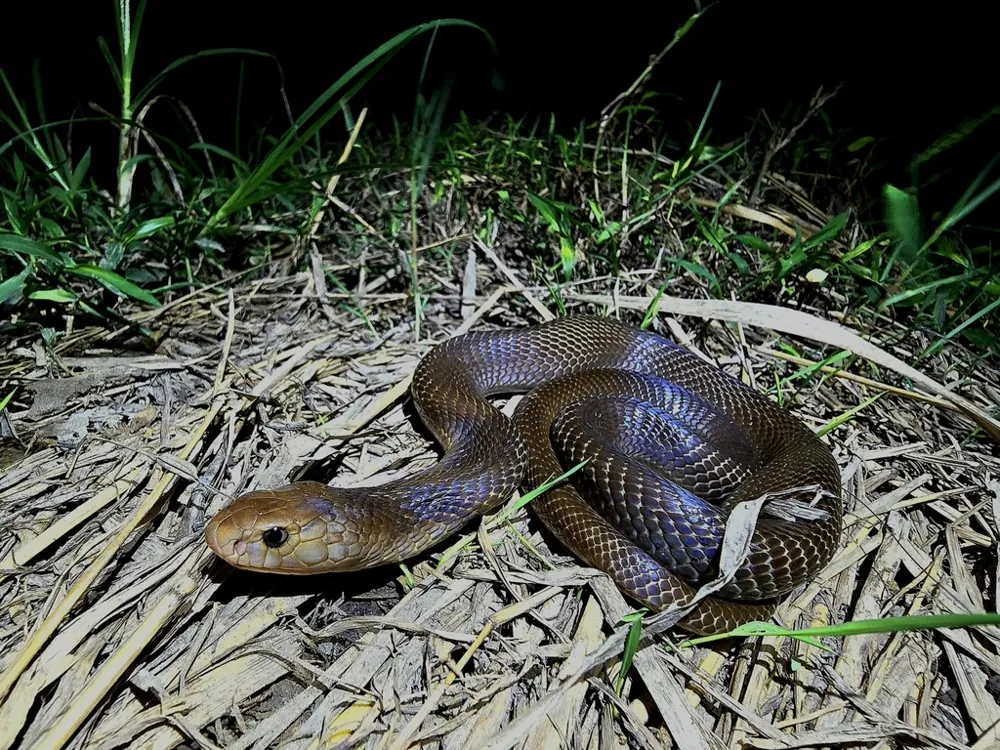
 Sɛdeɛ wobɛhunu no
- Adults are usually a uniform yellowish, brown or blackish colour.1
- Juveniles often have throat bands and lateral throat spots.1
- When a hood mark is present, it is most often chevron-shaped (V-shaped).1
- It has smooth, very oblique dorsal scales and expands a hood when threatened.1
- The average adult length is 1.3 metres, with a maximum of around 1.85 metres.1
Bɔre ahoɔden
Ɛpete anaa ɛtu nsuo bi a ɛhye honam gu wɔn a wɔto hyɛ no so.
Ne bɔre yɛ dɛn?
Its venom contains mainly cardiotoxins, which act on the heart, and smaller amounts of neurotoxins, which act on the nerves. Its venom has a strong anticoagulant effect, meaning it weakens the blood's ability to clot. The venom may be potent but may not be particularly rapid-acting.1
Ne asiane ma nnipa te sɛn?
Asiane ma nnipa: Asiane kɛseɛ womƐtumi kum onipa a wɔnhwɛ no yareɛ.Very few human deaths are attributed to this species.1
Ɛyɛ dɛn bere a ehu aka no?
It is very defensive and readily spits venom when it feels threatened, and its hood expands as a warning.1
 Sɛ ɛka anaa ɛtu bɔre a
- Ma onipa no ntena dinn na ne bo nnwo, yi kawa ne nneɛma a ɛkyere no den, na kɔ ayaresabea ntɛm: antivenom ne ayaresa no.
- Sɛ ɛtu bɔre gu n'ani mu a, fa nsuo kronkron pii hohoro n'ani ntɛm ara.
Di kan frɛ wo ahohiahia nɔma (112, 000, 911). Yei yɛ mmoa a ɛdi kan ho akwankyerɛ, ɛnyɛ dɔkota afotuo. Mmoa a ɛdi kan ho nsɛm titiriw
 Hwɛ wo ho so
- Mfa wo nsa nka wiram aboa biara, nkyere no na mfa no nni agorɔ, sɛ ɔyɛ ketewa mpo, na sɛ ɛte sɛ ɔrededa anaa wawu mpo a.
- Ma no kwan. Sɛ wohyia baako a, ma wo bo nnwo, san w'akyi brɛoo na ma ɔnkɔ ne kwan.
- Sɛ baako ka wo anaa ɛtu bɔre gu w'ani mu a: ma wo bo nnwo, tena dinn, frɛ wo ahohiahia nɔma (112, 000, 911) anaa kɔ ayaresabea ntɛm. Kae sɛdeɛ na ɛte, mfonini bɛboa.
Ɛnhwehwɛ wo sɛ ɛbɛpira wo. Ɛde ne bɔre kyere aduane anaa ɛbɔ ne ho ban, na ɛpɛ sɛ ɛhinta sene biribiara. Nsɛm pii fa ahobammɔ ho
Wiase mu baabi bɛn?
Ne kɛseɛ te sɛn?
Ne tenten te sɛn?
 ne tenten te sɛ fie agyinamoa 4 a wɔde hwene ne dua to ntoatoasoɔ mu
 ne tenten te sɛ kwadu 10 a wɔde to ntoatoasoɔ mu
 ɛbɛtumi atu mita 100 wɔ anibu 48 mu (onipa a ɔwɔ ntɛm sen biara hia 9.6)
Javan spitting cobra kɛseɛ te sɛn sɛ wode toto WO ho a?
Akontabuo kɛkɛ wɔ wo browser mu. Wɔnkora hwee, na wɔmfa hwee nkɔ baabiara.
Ne ntɛm te sɛn?


Nsɛm
It is one of the few cobras that can spit venom at a threat, and it does so readily.1
Cardiotoxins make up about 60% of its venom by dry weight, while neurotoxins make up only about 4.5%.1
The Komodo dragon preys on this cobra, which makes it easy prey for that lizard.1
Hatchlings are completely independent from birth, so no parent cares for them.1
Atosɛm sɛefoɔ
Atosɛm: Komodo specimens are reluctant to spit.
Nokorɛ: Field observations suggest the opposite: they do spit.1
Ma bɔre ho animdefoɔ
- Nyansahu din
- Naja sputatrix
- Kuo
- Cobra, mamba ne krait
- Abusua
- Elapidae2
- Nhyehyɛeɛ (Order)
- Squamata
- Asaase akɛseɛ
- Asia
- Mmofra nketewa
- Females lay about 16 eggs on average, with clutches of 13 to 19 eggs, and the incubation period is about 88 days. Hatchlings are completely independent from birth.1
- Sɛdeɛ ɔte wɔ kwaem
- CITES Appendix II (not threatened with extinction now, but may become so unless trade is strictly regulated; commonly harvested for skins and occasionally found in the pet trade)1
- Asiane ma nnipa
- 4 / 5: Asiane kɛseɛ wom3
Baabi a nsɛm no fi
- Javan spitting cobra (Wikipedia (CC BY-SA 4.0))
- Naja sputatrix (iNaturalist): din ne nkyekyɛmu.
- Venom Wiki: asiane gyinabea, kɛseɛ a ɛtaa yɛ ne ntɛm susuo no yɛ yɛn ankasa deɛ. Hwɛ sɛdeɛ yɛbu no: Sɛdeɛ yɛkyerɛ asiane gyinabea.
Nsɛm biara a ɛwɔ kratafa yi so wɔ nɔma a ɛkyerɛ ne fibea. Sɛ yɛfom biribi a, kafra, yɛyɛ mmoa ho akɔnnɔfoɔ, ɛnyɛ nyansahu nwoma. Ka kyerɛ yɛn wɔ [email protected] na yɛbɛsiesie.
 Ɔkɔm de akekantwerɛ no! Onipa baako na ɔyɛ Venom Wiki: ɛyɛ kwa, dawurubɔ nni so na biribiara nni so a ɛdi w'akyi. Akyɛdeɛ ketewa bi boa ma ɛkɔ so tena internet so.Ma akekantwere no aduane
 Indian cobra
 King cobra
 Caspian cobra
 Common krait
 Malayan krait
 Many-banded krait
 Deathstalker
 Indian saw-scaled viper
 Puff adder
 Russell ɔnanka
 Asian giant hornet
 Komodo dragon