
 Abibirem
 Asia
Asia Yuropu
 Amerika Anaafoɔ
 Australia ne Oceania
 Antarctica
 Pacific Po
 Atlantic Po
 India Po
 Arctic Po
 Mediterranean Po
 Po Kɔkɔɔ
 Caribbean Po
 Coral Po
 China Anaafoɔ Po
 Philippine Po
 Andaman Po
 Atifi Po
 Timor ne Arafura Po
 Bengal Ɛpo Ano
 California Ɛpo Ano
Moroccan flic-flac spider
 Ka
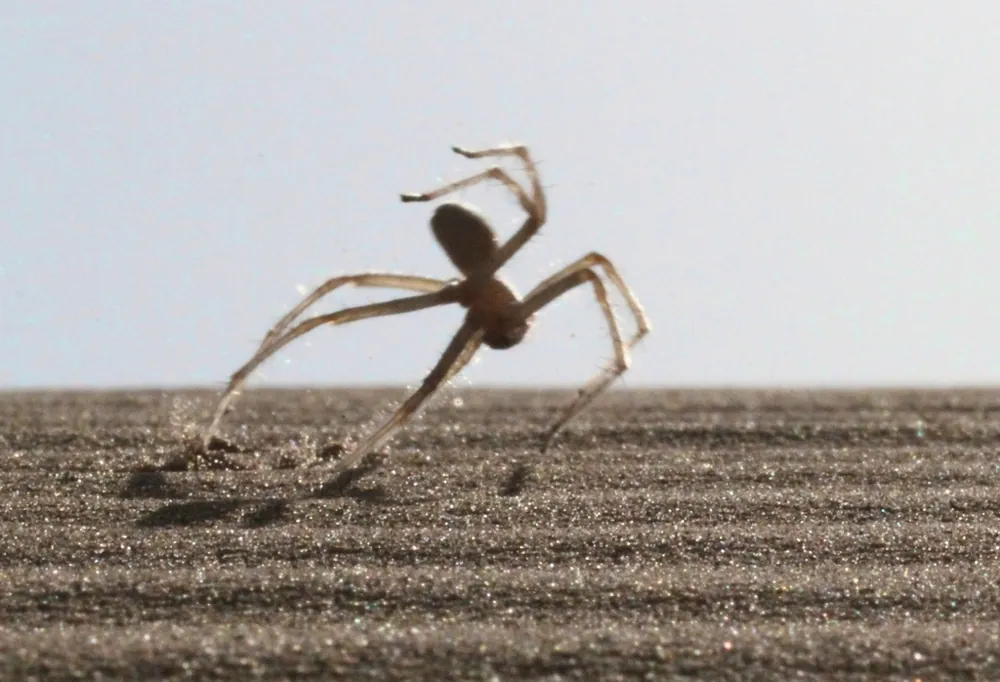
KaThe Moroccan flic-flac spider is a medium-sized huntsman spider that lives in the sand dunes of the Erg Chebbi desert in Morocco. When threatened, it escapes by doing forward or backward flips, like a gymnast's cartwheel. It is the only spider known to move this way.1

 Sɛdeɛ wobɛhunu no
- Medium-sized huntsman spider, with males 13.8 to 19.0 mm long and females 19 to 19.5 mm long1
- White body with black scopulae (hair pads) on the underside of its legs1
- Yellow colouring on the upper part of the abdomen and on the femora (the thigh segments of the legs)1
- Active at night, and escapes by flipping forward or backward1
Wɔtaa fa no sɛ: It was first confused with the Tunisian spider Cebrennus villosus. Scientists later found small differences in the genitalia of the two species, and the flic-flac movement is distinctive to the Moroccan spider.1
Bɔre ahoɔden
Bɔre fi ne se mu ba bere a ɔka.
Ne asiane ma nnipa te sɛn?
Asiane ma nnipa: Ɛnyɛ denƐte sɛ wowa wɔ anaa ɛnnu saa. Ɛkame ayɛ sɛ ɛnni asiane ma nnipa.Ɛyɛ dɛn bere a ehu aka no?
When provoked or threatened, it flips forward or backward and can double its normal walking speed to escape.1
 Sɛ ɛka a
- Hohoro baabi a ɛkaa no na fa ice pack hyɛ so ma yaw no. Hwehwɛ dɔkota mmoa sɛ yaw no mu yɛ den, ɛtrɛtrɛw anaa onipa no ho ntɔ no a.
Di kan frɛ wo ahohiahia nɔma (112, 000, 911). Yei yɛ mmoa a ɛdi kan ho akwankyerɛ, ɛnyɛ dɔkota afotuo. Mmoa a ɛdi kan ho nsɛm titiriw
 Hwɛ wo ho so
- Mfa wo nsa nka wiram aboa biara, nkyere no na mfa no nni agorɔ, sɛ ɔyɛ ketewa mpo, na sɛ ɛte sɛ ɔrededa anaa wawu mpo a.
- Ma no kwan. Sɛ wohyia baako a, ma wo bo nnwo, san w'akyi brɛoo na ma ɔnkɔ ne kwan.
- Sɛ baako ka wo a: ma wo bo nnwo, tena dinn, frɛ wo ahohiahia nɔma (112, 000, 911) anaa kɔ ayaresabea ntɛm. Kae sɛdeɛ na ɛte, mfonini bɛboa.
Ɛnhwehwɛ wo sɛ ɛbɛpira wo. Ɛde ne bɔre kyere aduane anaa ɛbɔ ne ho ban, na ɛpɛ sɛ ɛhinta sene biribiara. Nsɛm pii fa ahobammɔ ho
Wiase mu baabi bɛn?
Ne kɛseɛ te sɛn?
Ne tenten te sɛn?
 ɛyɛ tiaa sen wo nsateaa ketewa
 ɛbɛtumi atu mita 100 wɔ anibu 50 mu (onipa a ɔwɔ ntɛm sen biara hia 9.6)
Moroccan flic-flac spider kɛseɛ te sɛn sɛ wode toto WO ho a?
Akontabuo kɛkɛ wɔ wo browser mu. Wɔnkora hwee, na wɔmfa hwee nkɔ baabiara.
Ne ntɛm te sɛn?


Nsɛm
It is the only spider known to use this unusual rolling, flic-flac style of movement.1
It actively flips itself off the ground, so it can move both uphill and downhill, even on a 40 percent incline. Another huntsman spider from the Namib Desert moves by passive cartwheeling instead.1
Its movement inspired a biomimetic robot called Tabbot, about 25 cm long. The name comes from the Berber word 'tabacha', meaning spider.1
It builds long vertical tubes of sand and silk, using its feelers (pedipalps) and bristles.1
Baabi a nsɛm no fi
- Cebrennus rechenbergi (Wikipedia (CC BY-SA 4.0))
- Cebrennus rechenbergi (iNaturalist): din ne nkyekyɛmu.
- Venom Wiki: asiane gyinabea, kɛseɛ a ɛtaa yɛ ne ntɛm susuo no yɛ yɛn ankasa deɛ. Hwɛ sɛdeɛ yɛbu no: Sɛdeɛ yɛkyerɛ asiane gyinabea.
Nsɛm biara a ɛwɔ kratafa yi so wɔ nɔma a ɛkyerɛ ne fibea. Sɛ yɛfom biribi a, kafra, yɛyɛ mmoa ho akɔnnɔfoɔ, ɛnyɛ nyansahu nwoma. Ka kyerɛ yɛn wɔ [email protected] na yɛbɛsiesie.
 Ɔkɔm de akekantwerɛ no! Onipa baako na ɔyɛ Venom Wiki: ɛyɛ kwa, dawurubɔ nni so na biribiara nni so a ɛdi w'akyi. Akyɛdeɛ ketewa bi boa ma ɛkɔ so tena internet so.Ma akekantwere no aduane
 Mediterranean black widow
 Six-eyed sand spider
 Brown widow
 Noble false widow
 Darwin's bark spider
 Wasp spider
 Black mamba
 Deathstalker
 Egyptian cobra
 Puff adder
 Boomslang
 Fat-tailed scorpion