
 Abibirem
 Asia
Asia Yuropu
 Amerika Anaafoɔ
 Australia ne Oceania
 Antarctica
 Pacific Po
 Atlantic Po
 India Po
 Arctic Po
 Mediterranean Po
 Po Kɔkɔɔ
 Caribbean Po
 Coral Po
 China Anaafoɔ Po
 Philippine Po
 Andaman Po
 Atifi Po
 Timor ne Arafura Po
 Bengal Ɛpo Ano
 California Ɛpo Ano
Palestine viper
 Ka
KaThe Palestine viper is a venomous snake found in the Levant, the region around the eastern Mediterranean. It is considered a leading cause of snakebite within its range, so knowing what it looks like is important. It is also special because it lays eggs, unlike most other vipers.1
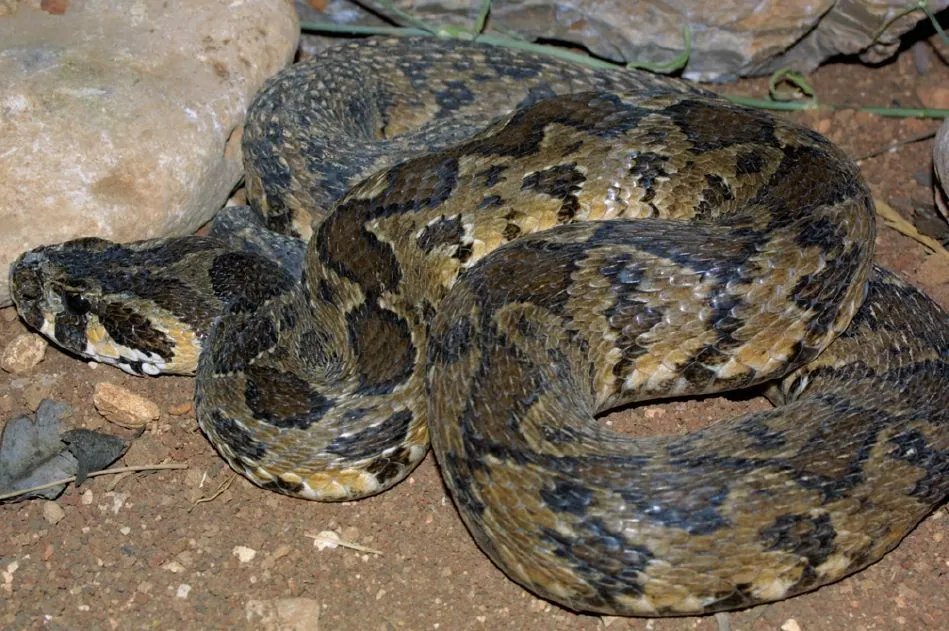
 Sɛdeɛ wobɛhunu no
- The head is triangular and clearly separate from the neck, covered in small scales.1
- The upper body has large dark, diamond-shaped (rhomboid) blotches, sometimes forming a zig-zag pattern.1
- It usually measures 70 to 90 cm in total length (body plus tail), and can reach 130 cm.1
Wɔtaa fa no sɛ: The harmless coin-marked snake lives in the same areas and is similar in length, colouring and defensive behaviour, so people often confuse the two. This resemblance is probably a case of Batesian mimicry, where a harmless animal copies a dangerous one.1
Bɔre ahoɔden
Bɔre fi ne se mu ba bere a ɔka.
Ne bɔre yɛ dɛn?
Its venom contains several groups of active compounds, including neurotoxins (which attack the nerves) and hemorrhagins (which damage blood vessels and cause bleeding). Other compounds include angioneurin growth factors and integrin inhibitors. Its LD50, a standard measure of how toxic a venom is, is 0.34 mg/kg.1
Ne asiane ma nnipa te sɛn?
Asiane ma nnipa: Asiane kɛseɛ womƐtumi kum onipa a wɔnhwɛ no yareɛ.It is considered a leading cause of snakebite within its range. About 0.5% to 2% of people who are bitten die. At least 7 people are reported to have died from its bite in Israel in the 21st century so far.1
 Asɛmpa: dɔkotafoɔ wɔ aduro (antivenom) anaa ayaresa ma yei.1
 Sɛ ɛka a
- Ma onipa no ntena dinn na ne bo nnwo, ma nsa anaa nan a ɛkaa no no nna pɛpɛɛpɛ ne ne koma (ɛnkɔ soro, ɛnsiane fam), yi kawa ne nneɛma a ɛkyere no den, na kɔ ayaresabea ntɛm.
Di kan frɛ wo ahohiahia nɔma (112, 000, 911). Yei yɛ mmoa a ɛdi kan ho akwankyerɛ, ɛnyɛ dɔkota afotuo. Mmoa a ɛdi kan ho nsɛm titiriw
 Hwɛ wo ho so
- Mfa wo nsa nka wiram aboa biara, nkyere no na mfa no nni agorɔ, sɛ ɔyɛ ketewa mpo, na sɛ ɛte sɛ ɔrededa anaa wawu mpo a.
- Ma no kwan. Sɛ wohyia baako a, ma wo bo nnwo, san w'akyi brɛoo na ma ɔnkɔ ne kwan.
- Sɛ baako ka wo a: ma wo bo nnwo, tena dinn, frɛ wo ahohiahia nɔma (112, 000, 911) anaa kɔ ayaresabea ntɛm. Kae sɛdeɛ na ɛte, mfonini bɛboa.
Ɛnhwehwɛ wo sɛ ɛbɛpira wo. Ɛde ne bɔre kyere aduane anaa ɛbɔ ne ho ban, na ɛpɛ sɛ ɛhinta sene biribiara. Nsɛm pii fa ahobammɔ ho
Wiase mu baabi bɛn?
Ne kɛseɛ te sɛn?
Ne tenten te sɛn?
 ne tenten te sɛ fie agyinamoa 2,5 a wɔde hwene ne dua to ntoatoasoɔ mu
 ne tenten te sɛ kwadu 7 a wɔde to ntoatoasoɔ mu
 ɛbɛtumi atu mita 100 wɔ anibu 100 mu (onipa a ɔwɔ ntɛm sen biara hia 9.6)
Palestine viper kɛseɛ te sɛn sɛ wode toto WO ho a?
Akontabuo kɛkɛ wɔ wo browser mu. Wɔnkora hwee, na wɔmfa hwee nkɔ baabiara.
Ne ntɛm te sɛn?


Nsɛm
In the 1991 Gulf War, the code phrase "Nahash Tsefa" (Viper Snake) was broadcast on radio and TV to tell Israelis to put on their gas masks during missile attacks from Iraq.1
In 2018 it was chosen as the national snake of Israel, after a public campaign.1
The Israeli Air Force named its Bell AH-1 Cobra helicopter Tzefa, and the IDF's paratroopers battalion #202 is called the Tzefa Battalion.1
Some modern scholars think the tsefa snake mentioned in the Hebrew Bible is this species.1
A list of venomous snakes in the Brooklyn Papyrus, from the first millennium BC in ancient Egypt, probably includes it.1
Ma bɔre ho animdefoɔ
- Nyansahu din
- Daboia palaestinae
- Kuo
- Viper ne adder
- Abusua
- Viperidae2
- Nhyehyɛeɛ (Order)
- Squamata
- Asaase akɛseɛ
- Asia
- Mmofra nketewa
- Unlike most vipers, which give birth to live young, it lays eggs around August. The eggs hatch 1.5 to 2 months later, and the young can already bite and kill prey.1
- Sɛdeɛ ɔte wɔ kwaem
- Least Concern1
- Asiane ma nnipa
- 4 / 5: Asiane kɛseɛ wom3
Baabi a nsɛm no fi
- Daboia palaestinae (Wikipedia (CC BY-SA 4.0))
- Daboia palaestinae (iNaturalist): din ne nkyekyɛmu.
- Venom Wiki: asiane gyinabea, kɛseɛ a ɛtaa yɛ ne ntɛm susuo no yɛ yɛn ankasa deɛ. Hwɛ sɛdeɛ yɛbu no: Sɛdeɛ yɛkyerɛ asiane gyinabea.
Nsɛm biara a ɛwɔ kratafa yi so wɔ nɔma a ɛkyerɛ ne fibea. Sɛ yɛfom biribi a, kafra, yɛyɛ mmoa ho akɔnnɔfoɔ, ɛnyɛ nyansahu nwoma. Ka kyerɛ yɛn wɔ [email protected] na yɛbɛsiesie.
 Ɔkɔm de akekantwerɛ no! Onipa baako na ɔyɛ Venom Wiki: ɛyɛ kwa, dawurubɔ nni so na biribiara nni so a ɛdi w'akyi. Akyɛdeɛ ketewa bi boa ma ɛkɔ so tena internet so.Ma akekantwere no aduane
 Indian saw-scaled viper
 Puff adder
 Russell ɔnanka
 Common European adder
 Eastern Russell's viper
 Northeast African carpet viper
 Deathstalker
 Indian cobra
 King cobra
 Asian giant hornet
 Komodo dragon
 Spanish fly