
 Abibirem
 Asia
Asia Yuropu
 Amerika Anaafoɔ
 Australia ne Oceania
 Antarctica
 Pacific Po
 Atlantic Po
 India Po
 Arctic Po
 Mediterranean Po
 Po Kɔkɔɔ
 Caribbean Po
 Coral Po
 China Anaafoɔ Po
 Philippine Po
 Andaman Po
 Atifi Po
 Timor ne Arafura Po
 Bengal Ɛpo Ano
 California Ɛpo Ano
Philippine cobra
 Ka
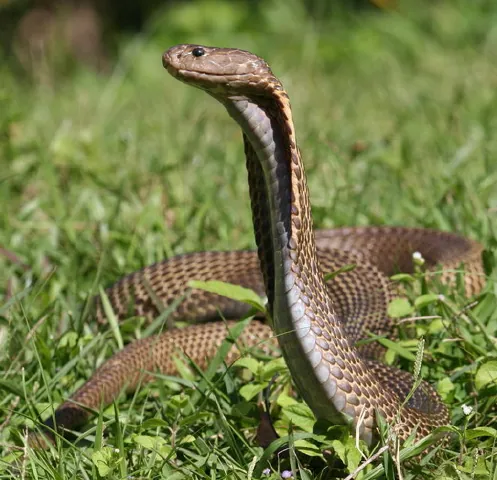
KaThe Philippine cobra is a stocky, highly venomous snake that lives in the northern parts of the Philippines. It is a type of spitting cobra, and its bite can cause serious breathing problems very quickly. It is important to know it because it lives close to people, in farms, villages and near water.1



 Sɛdeɛ wobɛhunu no
Bɔre ahoɔden
Bɔre fi ne se mu ba bere a ɔka.
Ne bɔre yɛ dɛn?
Its venom is a potent neurotoxin, which attacks the nerves and stops nerve signals from reaching the muscles. This can cause respiratory paralysis, meaning the victim can no longer breathe properly. Symptoms can include headache, nausea, vomiting, abdominal pain, diarrhoea, dizziness and difficulty breathing. In some cases, breathing stopped within 30 minutes of the bite.1
Ne asiane ma nnipa te sɛn?
Asiane ma nnipa: ƐkumMmoa a asiane wɔ wɔn ho sen biara wɔ wiase no mu baako.Bites cause severe neurotoxicity that comes on quickly, with little or no swelling at the bite site. In a study of 39 patients bitten by this snake in 1988, 19 developed complete respiratory failure and there were two deaths. Both people who died were already in a critical state when they reached hospital.1
Ɛyɛ dɛn bere a ehu aka no?
When threatened, it forms a hood, and females can spit venom at a target up to 3 metres away.1
 Sɛ ɛka anaa ɛtu bɔre a
- Ma onipa no ntena dinn na ne bo nnwo, yi kawa ne nneɛma a ɛkyere no den, na kɔ ayaresabea ntɛm: antivenom ne ayaresa no.
- Sɛ ɛtu bɔre gu n'ani mu a, fa nsuo kronkron pii hohoro n'ani ntɛm ara.
Di kan frɛ wo ahohiahia nɔma (112, 000, 911). Yei yɛ mmoa a ɛdi kan ho akwankyerɛ, ɛnyɛ dɔkota afotuo. Mmoa a ɛdi kan ho nsɛm titiriw
 Hwɛ wo ho so
- Mfa wo nsa nka wiram aboa biara, nkyere no na mfa no nni agorɔ, sɛ ɔyɛ ketewa mpo, na sɛ ɛte sɛ ɔrededa anaa wawu mpo a.
- Ma no kwan. Sɛ wohyia baako a, ma wo bo nnwo, san w'akyi brɛoo na ma ɔnkɔ ne kwan.
- Sɛ baako ka wo anaa ɛtu bɔre gu w'ani mu a: ma wo bo nnwo, tena dinn, frɛ wo ahohiahia nɔma (112, 000, 911) anaa kɔ ayaresabea ntɛm. Kae sɛdeɛ na ɛte, mfonini bɛboa.
Ɛnhwehwɛ wo sɛ ɛbɛpira wo. Ɛde ne bɔre kyere aduane anaa ɛbɔ ne ho ban, na ɛpɛ sɛ ɛhinta sene biribiara. Nsɛm pii fa ahobammɔ ho
Wiase mu baabi bɛn?
Ne kɛseɛ te sɛn?
Ne tenten te sɛn?
 ne tenten te sɛ fie agyinamoa 3 a wɔde hwene ne dua to ntoatoasoɔ mu
 ne tenten te sɛ kwadu 9 a wɔde to ntoatoasoɔ mu
 ɛbɛtumi atu mita 100 wɔ anibu 52 mu (onipa a ɔwɔ ntɛm sen biara hia 9.6)
Philippine cobra kɛseɛ te sɛn sɛ wode toto WO ho a?
Akontabuo kɛkɛ wɔ wo browser mu. Wɔnkora hwee, na wɔmfa hwee nkɔ baabiara.
Ne ntɛm te sɛn?


Nsɛm
Only female Philippine cobras have been reported to spit their venom, and they can hit a target up to 3 metres away.1
Its venom is considered one of the most toxic among cobra species, although toxicity can vary between individual snakes.1
Research has found that its venom is purely a neurotoxin, with no cardiotoxins and no obvious tissue-destroying components.1
Large rats sometimes fight back after being bitten. They can injure the snake's eyes, and this can leave it blind.1
Baabi a nsɛm no fi
- Philippine cobra (Wikipedia (CC BY-SA 4.0))
- Naja philippinensis (iNaturalist): din ne nkyekyɛmu.
- Venom Wiki: asiane gyinabea, kɛseɛ a ɛtaa yɛ ne ntɛm susuo no yɛ yɛn ankasa deɛ. Hwɛ sɛdeɛ yɛbu no: Sɛdeɛ yɛkyerɛ asiane gyinabea.
Nsɛm biara a ɛwɔ kratafa yi so wɔ nɔma a ɛkyerɛ ne fibea. Sɛ yɛfom biribi a, kafra, yɛyɛ mmoa ho akɔnnɔfoɔ, ɛnyɛ nyansahu nwoma. Ka kyerɛ yɛn wɔ [email protected] na yɛbɛsiesie.
 Ɔkɔm de akekantwerɛ no! Onipa baako na ɔyɛ Venom Wiki: ɛyɛ kwa, dawurubɔ nni so na biribiara nni so a ɛdi w'akyi. Akyɛdeɛ ketewa bi boa ma ɛkɔ so tena internet so.Ma akekantwere no aduane
 Indian cobra
 King cobra
 Caspian cobra
 Common krait
 Malayan krait
 Many-banded krait
 Deathstalker
 Indian saw-scaled viper
 Puff adder
 Russell ɔnanka
 Asian giant hornet
 Komodo dragon