
 Abibirem
 Asia
Asia Yuropu
 Amerika Anaafoɔ
 Australia ne Oceania
 Antarctica
 Pacific Po
 Atlantic Po
 India Po
 Arctic Po
 Mediterranean Po
 Po Kɔkɔɔ
 Caribbean Po
 Coral Po
 China Anaafoɔ Po
 Philippine Po
 Andaman Po
 Atifi Po
 Timor ne Arafura Po
 Bengal Ɛpo Ano
 California Ɛpo Ano
Rhombic night adder
 Ka
KaThe rhombic night adder is a venomous snake found across much of Sub-Saharan Africa. It is the largest snake in its genus, Causus, and it has a striking threat display that makes it look more dangerous than its venom usually makes it.1


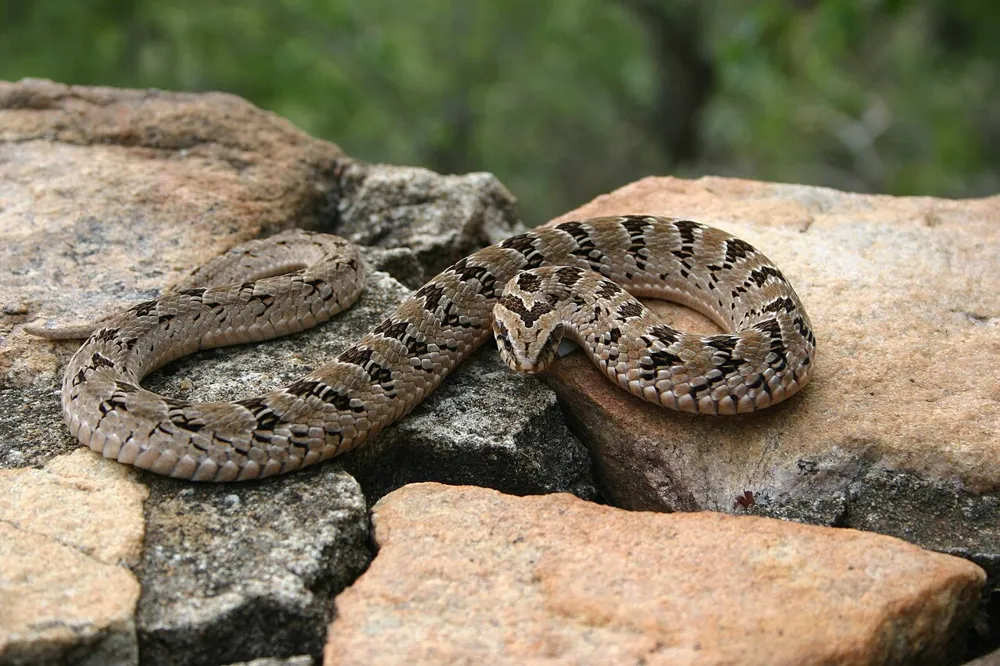
 Sɛdeɛ wobɛhunu no
- The main colour is usually a shade of brown, sometimes pinkish or greyish, and occasionally olive green.1
- It has 20 to 30 rhombic (diamond-shaped) blotches with pale edges running along its back.1
- Oblique black bars on its sides are each topped by one or two black spots with pale centres, which look like eyes.1
- The head has a V-shaped mark that may be solid black, or brown with a black outline.1
- Northern populations may have no pattern at all, which makes them harder to identify.1
Wɔtaa fa no sɛ: The common egg-eater (Dasypeltis scabra) is compared with this snake. Its colour pattern and behaviour may be a form of defensive mimicry, meaning it may resemble another animal to stay safe.1
Bɔre ahoɔden
Bɔre fi ne se mu ba bere a ɔka.
Ne bɔre yɛ dɛn?
The venom is low in toxicity. Bites usually cause pain and minor swelling, with little tissue death (necrosis), and these symptoms usually fade within 2 to 3 days. Bites can still be serious, as in at least one case where a child needed a fasciotomy, a surgical operation to relieve pressure in a limb.1
Ne asiane ma nnipa te sɛn?
Asiane ma nnipa: Ɛyɛ yawƐtumi yɛ yaw paa, nanso ɛkame ayɛ sɛ ɛnyɛ asiane kɛseɛ da.Most individuals are docile and seldom bite unless severely provoked. Bites can be serious, but there are no modern, well-documented cases of deaths from this species.1
Ɛyɛ dɛn bere a ehu aka no?
When seriously disturbed, it coils up, inflates its body so the dark markings stand out, hisses and puffs loudly, flattens the front of its body and neck, and strikes frantically.1
 Sɛ ɛka a
- Ma onipa no ntena dinn na ne bo nnwo, ma nsa anaa nan a ɛkaa no no nna pɛpɛɛpɛ ne ne koma (ɛnkɔ soro, ɛnsiane fam), yi kawa ne nneɛma a ɛkyere no den, na kɔ ayaresabea ntɛm.
Di kan frɛ wo ahohiahia nɔma (112, 000, 911). Yei yɛ mmoa a ɛdi kan ho akwankyerɛ, ɛnyɛ dɔkota afotuo. Mmoa a ɛdi kan ho nsɛm titiriw
 Hwɛ wo ho so
- Mfa wo nsa nka wiram aboa biara, nkyere no na mfa no nni agorɔ, sɛ ɔyɛ ketewa mpo, na sɛ ɛte sɛ ɔrededa anaa wawu mpo a.
- Ma no kwan. Sɛ wohyia baako a, ma wo bo nnwo, san w'akyi brɛoo na ma ɔnkɔ ne kwan.
- Sɛ baako ka wo a: ma wo bo nnwo, tena dinn, frɛ wo ahohiahia nɔma (112, 000, 911) anaa kɔ ayaresabea ntɛm. Kae sɛdeɛ na ɛte, mfonini bɛboa.
Ɛnhwehwɛ wo sɛ ɛbɛpira wo. Ɛde ne bɔre kyere aduane anaa ɛbɔ ne ho ban, na ɛpɛ sɛ ɛhinta sene biribiara. Nsɛm pii fa ahobammɔ ho
Wiase mu baabi bɛn?
Ne kɛseɛ te sɛn?
Ne tenten te sɛn?
 ne tenten te sɛ fie agyinamoa 2 a wɔde hwene ne dua to ntoatoasoɔ mu
 ne tenten te sɛ kwadu 5 a wɔde to ntoatoasoɔ mu
 ɛbɛtumi atu mita 100 wɔ anibu 110 mu (onipa a ɔwɔ ntɛm sen biara hia 9.6)
Rhombic night adder kɛseɛ te sɛn sɛ wode toto WO ho a?
Akontabuo kɛkɛ wɔ wo browser mu. Wɔnkora hwee, na wɔmfa hwee nkɔ baabiara.
Ne ntɛm te sɛn?


Nsɛm
Atosɛm sɛefoɔ
Atosɛm: Its bite is deadly.
Nokorɛ: There are no modern, well-documented cases of deaths from this species. Bites usually cause pain and minor swelling that fade within 2 to 3 days, although bites can still be serious.1
Ma bɔre ho animdefoɔ
- Nyansahu din
- Causus rhombeatus
- Kuo
- Viper ne adder
- Abusua
- Viperidae2
- Nhyehyɛeɛ (Order)
- Squamata
- Asaase akɛseɛ
- Abibirem
- Mmofra nketewa
- Females lay an average clutch of 24 eggs, which take about four months to hatch. The hatchlings are 10 to 12.5 cm long and feed on tiny frogs and toads.1
- Asiane ma nnipa
- 2 / 5: Ɛyɛ yaw3
Baabi a nsɛm no fi
- Causus rhombeatus (Wikipedia (CC BY-SA 4.0))
- Causus rhombeatus (iNaturalist): din ne nkyekyɛmu.
- Venom Wiki: asiane gyinabea, kɛseɛ a ɛtaa yɛ ne ntɛm susuo no yɛ yɛn ankasa deɛ. Hwɛ sɛdeɛ yɛbu no: Sɛdeɛ yɛkyerɛ asiane gyinabea.
Nsɛm biara a ɛwɔ kratafa yi so wɔ nɔma a ɛkyerɛ ne fibea. Sɛ yɛfom biribi a, kafra, yɛyɛ mmoa ho akɔnnɔfoɔ, ɛnyɛ nyansahu nwoma. Ka kyerɛ yɛn wɔ [email protected] na yɛbɛsiesie.
 Ɔkɔm de akekantwerɛ no! Onipa baako na ɔyɛ Venom Wiki: ɛyɛ kwa, dawurubɔ nni so na biribiara nni so a ɛdi w'akyi. Akyɛdeɛ ketewa bi boa ma ɛkɔ so tena internet so.Ma akekantwere no aduane
 Puff adder
 Gaboon viper
 Northeast African carpet viper
 West African carpet viper
 Rhinoceros viper
 West African Gaboon viper
 Black mamba
 Deathstalker
 Egyptian cobra
 Boomslang
 Fat-tailed scorpion
 Western honey bee