
 Bitten or stung?
 All animals
 Pick a continent
 Africa
 Asia
 Europe
 South America
 Australia & Oceania
 Antarctica
 Pacific Ocean
 Atlantic Ocean
 Indian Ocean
 Arctic Ocean
 Mediterranean Sea
 Red Sea
 Caribbean Sea
 Coral Sea
 South China Sea
 Philippine Sea
 Andaman Sea
 North Sea
 Timor & Arafura Sea
 Bay of Bengal
 Gulf of California
 Games
 Venom battle
 Animal race
 Field notebook
 Venom TOP lists
 Stay safe
 Surprise me

Black long-spined urchin
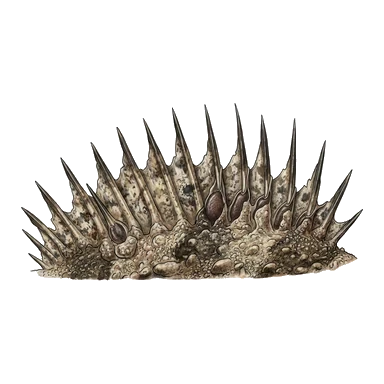 Venomous spines
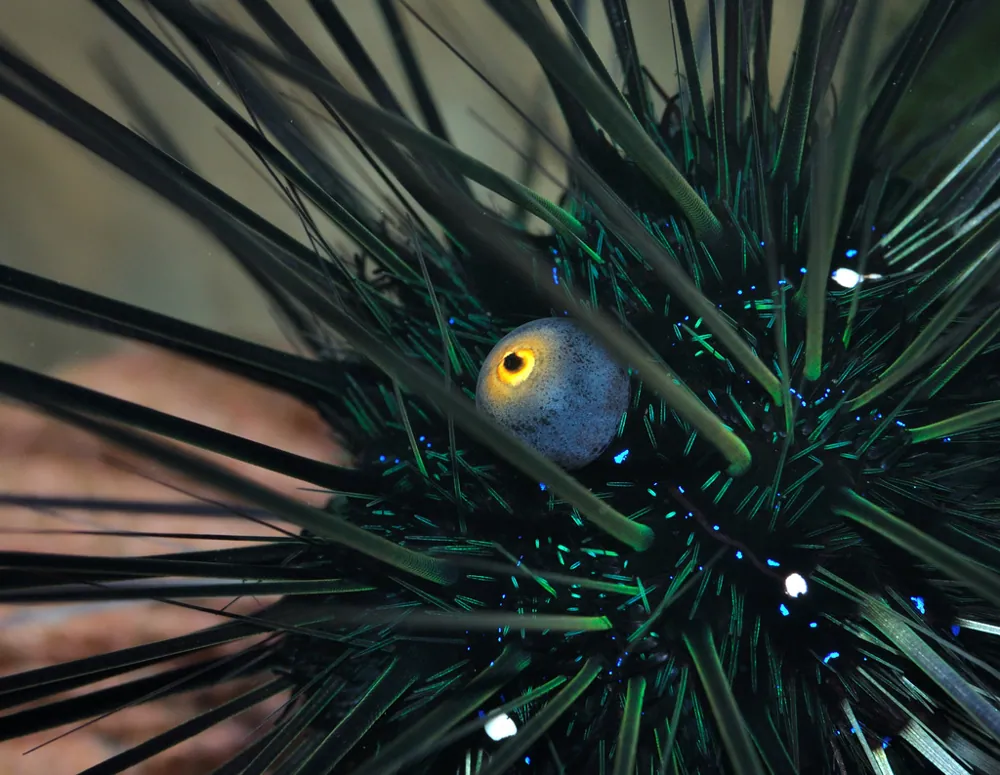
The black long-spined urchin is a sea urchin with very long, hollow spines. It lives on coral reefs, sand flats and seagrass beds across the Indo-Pacific, and it is one of the most widespread sea urchins in that region. Its spines can deliver a mild venom, so it is best to watch where you put your feet.1
 How to recognise it
- Black, near-spherical body (test) with extremely long, narrow, hollow spines, often black but sometimes brown-banded1
- Five white spots on the body, which separate it from other Diadema species1
- A bright orange ring around the periproctal cone (the 'anal cone'), which is often mistaken for an eye1
- Bluish spots on the genital plates and a line of blue spots along the body1
- Adults are no more than 70 mm across the body and about 40 mm high1
Often confused with: Other Diadema species are similar in shape and spines, but they lack the five white spots that mark this species. Its orange ring and blue spots also help to tell it apart.1
Venom power
Sharp spines carry the venom. Stepping on it or grabbing it hurts.
What does its venom do?
The spines are hollow and contain a mild venom. The toxin mostly causes swelling and pain, which spreads gradually over several hours. The venom is not fatal to humans. The spines themselves are a bigger problem, because they are brittle and needle-like, break off in flesh and are difficult to remove.1
How dangerous is it to people?
Danger to people: PainfulIt can really hurt, but it is almost never serious.The venom is only mild, and the species is not considered a serious threat to humans. Stepping on it can cause painful wounds from its spines.1
What does it do when it is scared?
When threatened by a sudden impact or by spines snapping, it rapidly flips its body over and 'runs' on the tips of its longest spines.1
 If its spines stab you
Call your emergency number at once if the person has trouble breathing, swelling of the face or throat, or feels faint.
- Put the wound in hot water, as hot as the person can stand without burning, and get medical help to remove spines. Do not dig for them yourself.
This is general first aid guidance, not medical advice. Based on the first aid guidelines of the World Health Organization and the Australian Resuscitation Council. Facts come from public sources and may contain mistakes. When in doubt, always get medical help. First aid basics
 Stay safe
- Never touch, catch or tease a wild animal, even a small one, and even if it looks asleep or dead.
- Give it space. If you meet one, stay calm, step back slowly and let it go its own way.
- If it hurts you: wash the spot, stay calm and get medical help if the pain is strong or spreads, or the person feels unwell.
It is not out to get you. It uses its venom to catch food or to protect itself, and it would much rather hide. More about staying safe
Where in the world?
How big is it?
How long is it?
How heavy is it?

 about as long as a bank card
 slower than a garden snail
How big is Black long-spined urchin compared to you?
Just maths in your browser. Nothing is saved or sent anywhere.
How fast is it?

Facts
It can move 760 mm in just 7 seconds by rolling and walking on the tips of its spines.1
It has no eyes, but it has a diffuse light-sensing system that lets it detect light levels and the size and colour of objects.1
In 2006, living specimens were found off Turkey, making it the first invasive Erythrean sea urchin recorded in the Mediterranean.1
Goose barnacles of the genus Microlepas are known to live on it as parasites.1
It is considered one of the oldest living species in its genus, Diadema.1
Myth buster
Myth: Black long-spined urchins are deadly and their stings can kill people.
Truth: Their venom is mild and is not fatal to humans. The main problems are pain, swelling and spines that break off in the skin.1
For venom experts
- Scientific name
- Diadema setosum
- Group
- Urchins, stars & worms
- Also called
- Black Longspine Urchin, Orange ring sea urchin, Needle Urchin1
- Family
- Diadematidae2
- Order
- Diadematoida
- Continents
- Indian Ocean, Pacific Ocean, Red Sea, Coral Sea, Philippine Sea, Arabian Sea & Persian Gulf, Timor & Arafura Sea, Bay of Bengal, The oceans
- Babies
- It is a broadcast spawner, releasing eggs and sperm into the water. Spawning happens seasonally or year-round depending on the location, and in some places it follows the full moon.1
- Danger to people
- 2 / 5: Painful3
Where the facts come from
- Diadema setosum (Wikipedia (CC BY-SA 4.0))
- Diadema setosum (iNaturalist): names and classification.
- Venom Wiki: the danger level, the typical size and the speed guess are our own. See how we work them out: How we rate danger.
Every fact on this page has a number that points to its source. If we got something wrong, sorry, we are animal fans, not a science journal. Tell us at [email protected] and we will fix it.
Get the Venom Wiki app
Every creature, every picture and the games in your pocket, even without internet.


 Support Venom Wiki Venom Wiki is a one-man project: free, with no ads and no cookies. A small tip helps keep it online.Feed the scorpion
More from the same group: Urchins, stars & worms
 Crown-of-thorns starfishUrchins, stars & wormsNeeds a doctorDo not touch
 Flower urchinUrchins, stars & wormsNeeds a doctor
 Bearded firewormUrchins, stars & wormsPainfulDo not touch
 Bobbit wormUrchins, stars & wormsPainful
 Fire urchinUrchins, stars & wormsPainfulDo not touch
 Long-spined sea urchinUrchins, stars & wormsPainfulDo not touch
Also lives in: Indian Ocean
 Australian box jellyfishJellyfish & sea stingersDeadlyDo not touch
 Geography coneCone snails & octopusesDeadly
 Greater blue-ringed octopusCone snails & octopusesDeadly
 Southern blue-ringed octopusCone snails & octopusesDeadly
 Hawksbill sea turtleOther poisonous animalsCan kill
 Irukandji jellyfishJellyfish & sea stingersCan killDo not touch