
 Bitten or stung?
 All animals
 Pick a continent
 Africa
 Asia
 Europe
 South America
 Australia & Oceania
 Antarctica
 Pacific Ocean
 Atlantic Ocean
 Indian Ocean
 Arctic Ocean
 Mediterranean Sea
 Red Sea
 Caribbean Sea
 Coral Sea
 South China Sea
 Philippine Sea
 Andaman Sea
 North Sea
 Timor & Arafura Sea
 Bay of Bengal
 Gulf of California
 Games
 Venom battle
 Animal race
 Field notebook
 Venom TOP lists
 Stay safe
 Surprise me

Silver-cheeked toadfish
 If someone ate it
 Poisonous to eatEats: MeatTOP 50 · No. 40: Most dangerousPoisonous, not venomous
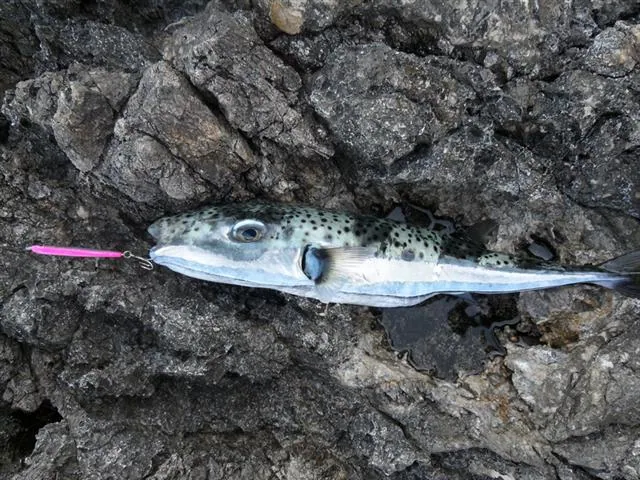
The silver-cheeked toadfish is a puffer fish with a silver stripe along each side. It lives in warm seas, and it is extremely poisonous to eat. It matters because it has spread into the Mediterranean, where people may catch it by mistake.1

 How to recognise it
- Grey or brown back with darker spots1
- White belly1
- A characteristic silver band along each side1
- Long, slim body, more elongated than the oceanic pufferfish1
- Symmetrical tail fin1
Often confused with: It is very similar to the oceanic pufferfish. The silver-cheeked toadfish is more elongated and has a symmetrical tail fin.1
Poison power
It is only harmful if something eats it.
What does its poison do?
It is not venomous. Its poison is tetrodotoxin, which is found mainly in the ovaries, and to a lesser extent in the skin, muscles and liver. The toxin blocks nerve signals, causing numbness and then paralysis of the muscles, including the breathing muscles. This can stop breathing or cause heart failure.1
How dangerous is it to people?
Danger to people: DeadlyOne of the most dangerous animals in the world.It is extremely poisonous if eaten. Fatal poisonings have been reported in Egypt, Israel and Turkey.1
If someone ate it
Always call your emergency number first (for example 112 in Europe, 911 in North America, 000 in Australia).
- If someone feels tingling or numbness of the lips, tongue or face after eating this pufferfish, call the emergency number at once. The poison can stop breathing, so give rescue breaths or CPR if needed until help arrives. There is no antidote, but people survive with breathing support in hospital.1
- If someone ate it or has symptoms after eating it: call your emergency number or poison centre straight away.
This is general first aid guidance, not medical advice. Based on the first aid guidelines of the World Health Organization and the Australian Resuscitation Council. Facts come from public sources and may contain mistakes. When in doubt, always get medical help. First aid basics
 Stay safe
- Never touch, catch or tease a wild animal, even a small one, and even if it looks asleep or dead.
- Give it space. If you meet one, stay calm, step back slowly and let it go its own way.
- If someone ate it: call your emergency number or poison centre straight away.
It is not out to get you. Its poison is only there so that nothing eats it. More about staying safe
Where in the world?
How big is it?
How long is it?
 as long as 2 house cats nose to tail
 as long as 6 bananas end to end
 could swim the length of a big swimming pool (50 m) in 45 seconds
How big is Silver-cheeked toadfish compared to you?
Just maths in your browser. Nothing is saved or sent anywhere.
How fast is it?
Facts
It is poisonous because it eats bacteria that carry tetrodotoxin, and the toxin builds up in its body.1
Its ovaries hold the most tetrodotoxin, more than its skin, muscles or liver.1
It is a Lessepsian migrant, a species that has moved into the Mediterranean through the Suez Canal.1
It is spreading west through the Mediterranean, and it has been recorded as far west as the Strait of Gibraltar.1
The toxin protects it from voracious predators.1
It is usually about 40 cm long but can grow to 110 cm.1
For venom experts
- Scientific name
- Lagocephalus sceleratus
- Group
- Other poisonous animals
- Also called
- Silver puffer, Silver toadfish, Silver pufferfish1
- Family
- Tetraodontidae2
- Order
- Tetraodontiformes
- Continents
- Pacific Ocean, Indian Ocean, Red Sea, Mediterranean Sea, Timor & Arafura Sea, Bay of Bengal, The oceans
- Babies
- Eggs and larvae are found in the open water (pelagic zone).1
- Danger to people
- 5 / 5: Deadly3
Where the facts come from
- Lagocephalus sceleratus (Wikipedia (CC BY-SA 4.0))
- Lagocephalus sceleratus (iNaturalist): names and classification.
- Venom Wiki: the danger level, the typical size and the speed guess are our own. See how we work them out: How we rate danger.
Every fact on this page has a number that points to its source. If we got something wrong, sorry, we are animal fans, not a science journal. Tell us at [email protected] and we will fix it.
Get the Venom Wiki app
Every creature, every picture and the games in your pocket, even without internet.


 Support Venom Wiki Venom Wiki is a one-man project: free, with no ads and no cookies. A small tip helps keep it online.Feed the scorpion
More from the same group: Other poisonous animals
 Japanese pufferfishOther poisonous animalsDeadly
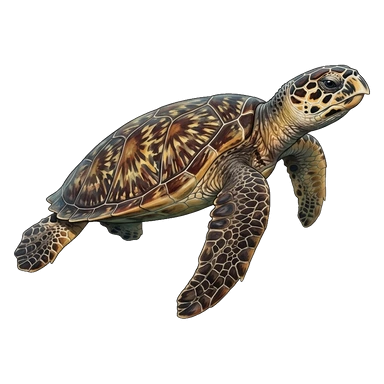 Hawksbill sea turtleOther poisonous animalsCan kill
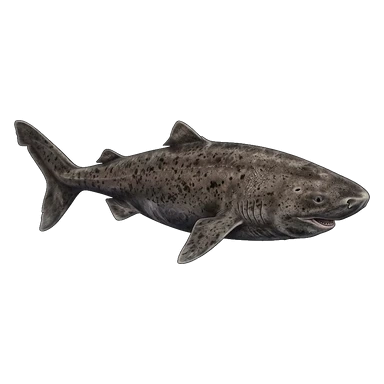 Greenland sharkOther poisonous animalsPainful
 Blackspotted pufferOther poisonous animalsCan kill
 White-spotted pufferOther poisonous animalsCan kill
 Long-spine porcupinefishOther poisonous animalsNeeds a doctor
Also lives in: Pacific Ocean
 Australian box jellyfishJellyfish & sea stingersDeadlyDo not touch
 Geography coneCone snails & octopusesDeadly
 Greater blue-ringed octopusCone snails & octopusesDeadly
 Southern blue-ringed octopusCone snails & octopusesDeadly
 Irukandji jellyfishJellyfish & sea stingersCan killDo not touch
 Reef stonefishVenomous fishCan killDo not touch