
 Afrika
 Asia
Asia Europa
 Hego Amerika
 Australia eta Ozeania
 Antartika
 Ozeano Barea
 Ozeano Atlantikoa
 Ozeano Indikoa
 Ozeano Artikoa
 Mediterraneo itsasoa
 Itsaso Gorria
 Karibe itsasoa
 Koralen itsasoa
 Hego Txinako itsasoa
 Filipinetako itsasoa
 Andaman itsasoa
 Ipar itsasoa
 Timor eta Arafura itsasoak
 Bengalako golkoa
 Kaliforniako golkoa
Eastern hognose snake
 Koska
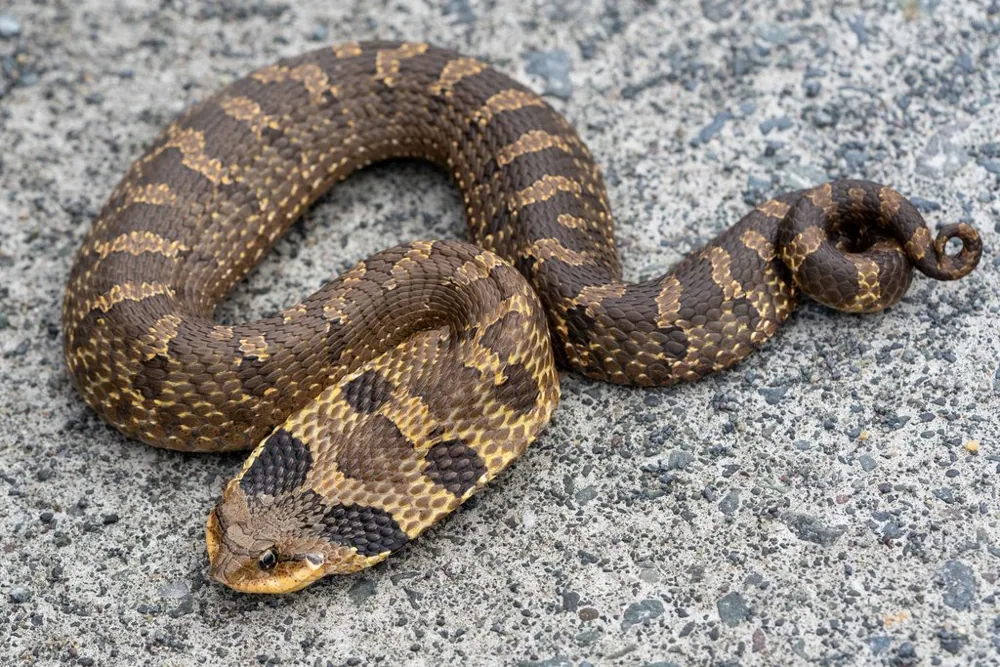
KoskaThe eastern hognose snake is a stout, rear-fanged snake that lives across eastern and central North America. It has an upturned snout, which it uses for digging in sandy soil. It is mildly venomous, but its venom is aimed at toads and frogs and is not deadly to people.1

 Nola ezagutu
- Stout body with an upturned snout1
- Colour varies widely by area, from red, green or orange to brown, grey or black, sometimes blotched, checkered or plain1
- Belly is usually a solid grey, yellow or cream colour1
- The underside of the tail is lighter than the belly1
- Adults average 71 cm in total length, and females are larger than males1
Pozoi-ahalmena
Pozoia letaginetatik edo hortzetatik ateratzen da kosk egiten duenean.
Zer egiten du bere pozoiak?
Its venom is mild and is adapted to amphibian prey. It is delivered through enlarged rear teeth from the Duvernoy's gland. In people who are allergic to the snake's saliva, a bite can cause local swelling, burning, discolouration and bleeding from the wound.1
Zein arriskutsua da pertsonentzat?
Arriskua pertsonentzat: ArinaErle-ziztada bat bezala edo gutxiago. Ia kaltegabea pertsonentzat.The venom is harmless to most people, and no human deaths have been documented. People who are allergic to its saliva may have local symptoms such as swelling and bleeding.1
Zer egiten du beldurtzen denean?
It flattens its neck, raises its head like a cobra, hisses and strikes with a closed mouth to bluff. If that fails, it rolls onto its back, plays dead, releases a foul musk and lets its tongue hang out.1
 Kosk egiten badu
- Garbitu koska, eutsi pertsona lasai eta lortu mediku-laguntza. Espezie batzuk (boomslang-a, adibidez) hilgarriak izan daitezke ordu batzuk geroago.
Deitu beti lehenik zure larrialdi-zenbakira (112, 000, 911). Lehen sorospenei buruzko orientabide orokorra da hau, ez mediku-aholkua. Lehen sorospenen oinarriak
 Egon seguru
- Ez ukitu, ez harrapatu eta ez zirikatu inoiz animalia basati bat, txikia izan arren, eta lo edo hilda dagoela badirudi ere.
- Utzi tartea. Bat aurkitzen baduzu, egon lasai, egin atzera poliki eta utzi bere bidetik joaten.
- Batek kosk egiten badizu: egon lasai, egon geldi, deitu zure larrialdi-zenbakira (112, 000, 911) edo joan ospitalera azkar. Gogoratu nolakoa zen, argazki batek laguntzen du.
Ez dabil zure atzetik. Pozoia janaria harrapatzeko edo bere burua babesteko erabiltzen du, eta askoz nahiago du ezkutatu. Seguru egoteari buruz gehiago
Munduko zein tokitan?
Zein handia da?
Zein luzea da?
 2,5 etxeko katu muturretik buztanera jarrita bezain luzea
 6 banana bata bestearen atzetik jarrita bezain luzea
 100 metro 73 segundotan egin litzake (gizakirik azkarrenak 9,6 behar ditu)
Zein handia da Eastern hognose snake ZUREKIN alderatuta?
Matematika hutsa zure nabigatzailean. Ez da ezer gordetzen, ezta inora bidaltzen ere.
Zein azkarra da?


Datuak
One individual was seen playing dead for 45 minutes before moving away.1
It is resistant to the skin poisons of toads, probably because of its enlarged adrenal glands, which release large amounts of hormones to counter the toxins.1
When threatened, it often bluffs by striking with its mouth closed, and it does not try to bite.1
It is a rear-fanged snake, and its enlarged teeth are at the back of the upper jaw.1
Females can store sperm until spring, so they can be fertilised later.1
Mito-hauslea
Mitoa: The eastern hognose snake is a dangerous, deadly snake.
Egia: It is only mildly venomous, and its venom is aimed at amphibians. No human deaths have been documented, although some people who are allergic to its saliva may have local symptoms.1
Pozoi-adituentzat
- Izen zientifikoa
- Heterodon platirhinos
- Taldea
- Atzeko letagineko sugeak
- Familia
- Colubridae2
- Ordena
- Squamata
- Kontinenteak
- Ipar Amerika
- Kumeak
- Females lay up to 40 eggs, with an average of about 25, usually in June or early July. The hatchlings are about 16.5 to 21 cm long.1
- Nola dagoen naturan
- Least concern (IUCN Red List, assessed 2007). It is a species of increasing conservation concern in the northeastern part of its range.1
- Arriskua pertsonentzat
- 1 / 5: Arina3
Datuak nondik datozen
- Eastern hognose snake (Wikipedia (CC BY-SA 4.0))
- Heterodon platirhinos (iNaturalist): izenak eta sailkapena.
- Venom Wiki: arrisku-maila, ohiko tamaina eta abiadura-kalkulua geureak dira. Ikusi nola kalkulatzen ditugun: Nola baloratzen dugun arriskua.
Orrialde honetako datu bakoitzak zenbaki bat du, bere iturrira eramaten zaituena. Zerbait gaizki badugu, barkatu, animalien zaleak gara, ez zientzia-aldizkari bat. Esaiguzu [email protected] helbidean eta konponduko dugu.
 Eskorpioia gose da! Venom Wiki pertsona bakar baten proiektua da: doakoa, iragarkirik eta jarraitzailerik gabe. Eskupeko txiki batek sarean mantentzen laguntzen du.Elikatu eskorpioia
Talde bereko gehiago: Atzeko letagineko sugeak
 Western hognose snakeAtzeko letagineko sugeakKaltegabea
 Brown vine snakeAtzeko letagineko sugeakKaltegabea
 Green vine snakeAtzeko letagineko sugeakKaltegabea
 Desert night snakeAtzeko letagineko sugeakKaltegabea
 Night snakeAtzeko letagineko sugeakKaltegabea
 Sonoran lyre snakeAtzeko letagineko sugeakKaltegabea
 Terciopelo
 Eastern coral snake
 Eastern diamondback rattlesnake
 Eyelash viper
 Timber rattlesnake
 Western diamondback rattlesnake