
 Afrika
 Asia
Asia Europa
 Hego Amerika
 Australia eta Ozeania
 Antartika
 Ozeano Barea
 Ozeano Atlantikoa
 Ozeano Indikoa
 Ozeano Artikoa
 Mediterraneo itsasoa
 Itsaso Gorria
 Karibe itsasoa
 Koralen itsasoa
 Hego Txinako itsasoa
 Filipinetako itsasoa
 Andaman itsasoa
 Ipar itsasoa
 Timor eta Arafura itsasoak
 Bengalako golkoa
 Kaliforniako golkoa
Western hognose snake
 Koska
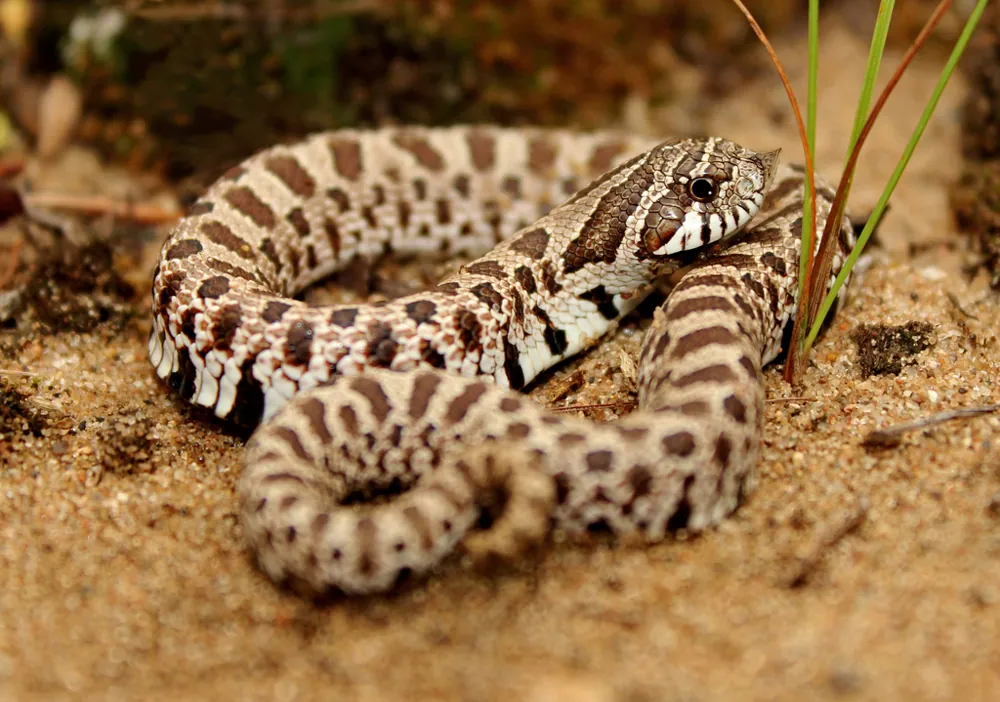
KoskaThe western hognose snake is a small, stout-bodied snake with an upturned nose that looks a bit like a pig's snout. It lives across much of North America, from southern Canada to northern Mexico, in sandy and gravelly places such as prairies and grasslands. It is often mistaken for a rattlesnake, but its bite is not regarded as dangerous to people.1



 Nola ezagutu
- Relatively small and stout-bodied, with adults rarely exceeding 40–50 cm in total length, tail included.1
- A modified, upturned nose scale gives it a distinctive hog-like snout.1
- Colour and pattern vary a great deal between subspecies and individuals.1
- When threatened, it flattens its neck, hisses and may puff up its throat with air.1
Askotan honekin nahasten da: To an untrained eye, most individuals look much like rattlesnakes, which is thought to be a form of mimicry that makes predators wary. Its upturned snout and small, stout body are features to note.1
Pozoi-ahalmena
Pozoia letaginetatik edo hortzetatik ateratzen da kosk egiten duenean.
Zer egiten du bere pozoiak?
The snake releases modified saliva from its Duvernoy's glands, which runs down a groove in its rear fang and helps break down the toxins of toads it eats. No deaths or whole-body (systemic) effects in people have been recorded from its bite. Bites may occasionally be medically significant.1
Zein arriskutsua da pertsonentzat?
Arriskua pertsonentzat: ArinaErle-ziztada bat bezala edo gutxiago. Ia kaltegabea pertsonentzat.The species is not dangerous to people and is not regarded as venomous. Its bites are extremely rare, and no deaths or systemic effects have been recorded. Bites may uncommonly be medically significant.1
Zer egiten du beldurtzen denean?
It flattens its neck, hisses and may make mock strikes with its mouth closed. If harassed further, it usually plays dead rather than biting.1
 Kosk egiten badu
- Garbitu koska, eutsi pertsona lasai eta lortu mediku-laguntza. Espezie batzuk (boomslang-a, adibidez) hilgarriak izan daitezke ordu batzuk geroago.
Deitu beti lehenik zure larrialdi-zenbakira (112, 000, 911). Lehen sorospenei buruzko orientabide orokorra da hau, ez mediku-aholkua. Lehen sorospenen oinarriak
 Egon seguru
- Ez ukitu, ez harrapatu eta ez zirikatu inoiz animalia basati bat, txikia izan arren, eta lo edo hilda dagoela badirudi ere.
- Utzi tartea. Bat aurkitzen baduzu, egon lasai, egin atzera poliki eta utzi bere bidetik joaten.
- Batek kosk egiten badizu: egon lasai, egon geldi, deitu zure larrialdi-zenbakira (112, 000, 911) edo joan ospitalera azkar. Gogoratu nolakoa zen, argazki batek laguntzen du.
Ez dabil zure atzetik. Pozoia janaria harrapatzeko edo bere burua babesteko erabiltzen du, eta askoz nahiago du ezkutatu. Seguru egoteari buruz gehiago
Munduko zein tokitan?
Zein handia da?
Zein luzea da?
 3 banana bata bestearen atzetik jarrita bezain luzea
 16 eraikuntza-bloke ilaran jarrita bezain luzea
 100 metro 77 segundotan egin litzake (gizakirik azkarrenak 9,6 behar ditu)
Zein handia da Western hognose snake ZUREKIN alderatuta?
Matematika hutsa zure nabigatzailean. Ez da ezer gordetzen, ezta inora bidaltzen ere.
Zein azkarra da?


Datuak
Captive breeders have produced more than 50 'designer' colour morphs of this snake.1
In captivity, many hognose snakes refuse food for about two to three and a half months, from January to mid March, because they instinctively brumate, or sleep, underground in winter.1
Males are considerably smaller than females.1
Hatchlings reach sexual maturity after about two years, based mostly on size rather than age.1
Mito-hauslea
Mitoa: Because it looks like a rattlesnake, it must be dangerous or deadly.
Egia: The western hognose snake is not dangerous to people. Its rare bites have not caused recorded deaths or whole-body effects, and it usually plays dead instead of biting.1
Pozoi-adituentzat
- Izen zientifikoa
- Heterodon nasicus
- Taldea
- Atzeko letagineko sugeak
- Familia
- Colubridae2
- Ordena
- Squamata
- Kontinenteak
- Ipar Amerika
- Kumeak
- It lays eggs. Females lay 4–23 elongate, thin-shelled eggs between June and August, which hatch after about 60 days.1
- Nola dagoen naturan
- Least Concern (IUCN)1
- Arriskua pertsonentzat
- 1 / 5: Arina3
Datuak nondik datozen
- Western hognose snake (Wikipedia (CC BY-SA 4.0))
- Heterodon nasicus (iNaturalist): izenak eta sailkapena.
- Venom Wiki: arrisku-maila, ohiko tamaina eta abiadura-kalkulua geureak dira. Ikusi nola kalkulatzen ditugun: Nola baloratzen dugun arriskua.
Orrialde honetako datu bakoitzak zenbaki bat du, bere iturrira eramaten zaituena. Zerbait gaizki badugu, barkatu, animalien zaleak gara, ez zientzia-aldizkari bat. Esaiguzu [email protected] helbidean eta konponduko dugu.
 Eskorpioia gose da! Venom Wiki pertsona bakar baten proiektua da: doakoa, iragarkirik eta jarraitzailerik gabe. Eskupeko txiki batek sarean mantentzen laguntzen du.Elikatu eskorpioia
Talde bereko gehiago: Atzeko letagineko sugeak
 Brown vine snakeAtzeko letagineko sugeakKaltegabea
 Eastern hognose snakeAtzeko letagineko sugeakKaltegabea
 Green vine snakeAtzeko letagineko sugeakKaltegabea
 Desert night snakeAtzeko letagineko sugeakKaltegabea
 Night snakeAtzeko letagineko sugeakKaltegabea
 Sonoran lyre snakeAtzeko letagineko sugeakKaltegabea
 Terciopelo
 Eastern coral snake
 Eastern diamondback rattlesnake
 Eyelash viper
 Timber rattlesnake
 Western diamondback rattlesnake