
 Afrika
 Asia
Asia Europa
 Hego Amerika
 Australia eta Ozeania
 Antartika
 Ozeano Barea
 Ozeano Atlantikoa
 Ozeano Indikoa
 Ozeano Artikoa
 Mediterraneo itsasoa
 Itsaso Gorria
 Karibe itsasoa
 Koralen itsasoa
 Hego Txinako itsasoa
 Filipinetako itsasoa
 Andaman itsasoa
 Ipar itsasoa
 Timor eta Arafura itsasoak
 Bengalako golkoa
 Kaliforniako golkoa
Rock rattlesnake
 Koska
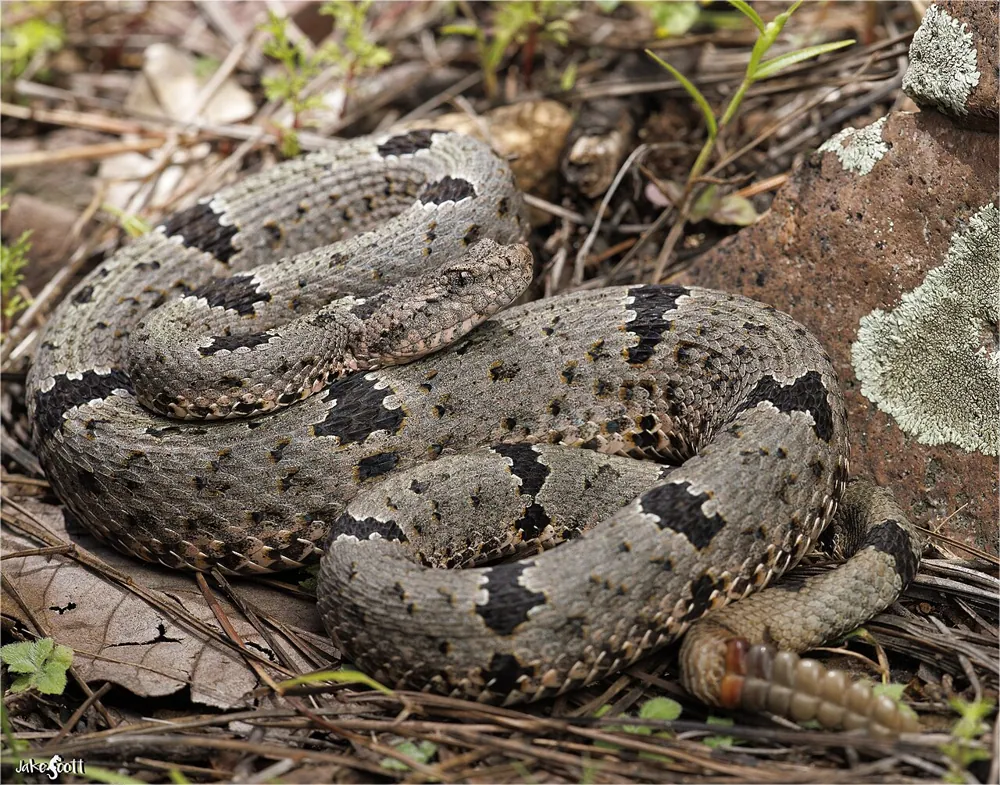
KoskaThe rock rattlesnake is a small rattlesnake that lives in the south-western United States and northern central Mexico. It spends most of its life among rocks and hides well by blending in with its surroundings. It is venomous, so it is important to know what it looks like and to give it plenty of room.1



 Nola ezagutu
- Usually light grey with darker grey banding, especially near areas of limestone1
- Snakes at higher altitudes tend to be darker1
- The mottled form from the Davis Mountains is often pinkish with dark-grey speckling rather than clear banding1
- The banded form has clean, distinct banding with little speckling or mottling1
- Has a large, rounded head, vertical pupils and a rattle on the tail. It rarely grows longer than 81.3 cm1
Pozoi-ahalmena
Pozoia letaginetatik edo hortzetatik ateratzen da kosk egiten duenean.
Zer egiten du bere pozoiak?
Its venom is mainly a hemotoxin, a type of venom that acts on the blood and body tissues. It can also have significant neurotoxic effects, which attack the nerves.1
Zein arriskutsua da pertsonentzat?
Arriskua pertsonentzat: LarriaKoska batek medikua behar du. Heriotzak oso arraroak dira.The snake is not aggressive and relies on camouflage, so it often will not strike or rattle unless it is harassed. However, if someone steps on it or touches it by accident, its immediate reaction is to bite. Most people bitten by this snake were hiking among rocks.1
 Albiste ona: medikuek badute sendagai bat (antipozoia) edo tratamendu bat honetarako.1
Zer egiten du beldurtzen denean?
It relies on camouflage and will often stay still rather than strike or rattle unless it is physically harassed.1
 Kosk egiten badu
- Eutsi pertsona geldi eta lasai, eduki koska jasotako gorputz-adarra bihotzaren mailan, kendu eraztunak eta gauza estuak, eta joan ospitalera azkar.
Deitu beti lehenik zure larrialdi-zenbakira (112, 000, 911). Lehen sorospenei buruzko orientabide orokorra da hau, ez mediku-aholkua. Lehen sorospenen oinarriak
 Egon seguru
- Ez ukitu, ez harrapatu eta ez zirikatu inoiz animalia basati bat, txikia izan arren, eta lo edo hilda dagoela badirudi ere.
- Utzi tartea. Bat aurkitzen baduzu, egon lasai, egin atzera poliki eta utzi bere bidetik joaten.
- Batek kosk egiten badizu: egon lasai, egon geldi, deitu zure larrialdi-zenbakira (112, 000, 911) edo joan ospitalera azkar. Gogoratu nolakoa zen, argazki batek laguntzen du.
Ez dabil zure atzetik. Pozoia janaria harrapatzeko edo bere burua babesteko erabiltzen du, eta askoz nahiago du ezkutatu. Seguru egoteari buruz gehiago
Munduko zein tokitan?
Zein handia da?
Zein luzea da?
 1,5 etxeko katu muturretik buztanera jarrita bezain luzea
 5 banana bata bestearen atzetik jarrita bezain luzea
 100 metro 110 segundotan egin litzake (gizakirik azkarrenak 9,6 behar ditu)
Zein handia da Rock rattlesnake ZUREKIN alderatuta?
Matematika hutsa zure nabigatzailean. Ez da ezer gordetzen, ezta inora bidaltzen ere.
Zein azkarra da?


Datuak
A new segment is added to the rattle each time the snake sheds its skin, but the rattle can break off, so segments do not give a reliable age.1
Its rattle is made of keratin, the same material as human fingernails.1
Its colour generally reflects the colour of the rock where it lives, which helps it stay hidden.1
The young take three or more years to mature.1
Mito-hauslea
Mitoa: You can tell a rock rattlesnake's age by counting the segments on its rattle.
Egia: A segment is added each time the snake sheds, but the rattle is fragile and can break off, and shedding frequency varies. So the number of segments cannot tell you its age.1
Pozoi-adituentzat
- Izen zientifikoa
- Crotalus lepidus
- Taldea
- Kriskitin-sugeak
- Familia
- Viperidae2
- Ordena
- Squamata
- Kontinenteak
- Ipar Amerika
- Kumeak
- It is ovoviviparous, so it gives birth to live young, six to eight at a time, about four months after breeding in spring. The young look like small versions of the parents.1
- Nola dagoen naturan
- Least Concern (IUCN Red List). It is listed as a threatened species by New Mexico.1
- Arriskua pertsonentzat
- 3 / 5: Larria3
Datuak nondik datozen
- Crotalus lepidus (Wikipedia (CC BY-SA 4.0))
- Crotalus lepidus (iNaturalist): izenak eta sailkapena.
- Venom Wiki: arrisku-maila, ohiko tamaina eta abiadura-kalkulua geureak dira. Ikusi nola kalkulatzen ditugun: Nola baloratzen dugun arriskua.
Orrialde honetako datu bakoitzak zenbaki bat du, bere iturrira eramaten zaituena. Zerbait gaizki badugu, barkatu, animalien zaleak gara, ez zientzia-aldizkari bat. Esaiguzu [email protected] helbidean eta konponduko dugu.
 Eskorpioia gose da! Venom Wiki pertsona bakar baten proiektua da: doakoa, iragarkirik eta jarraitzailerik gabe. Eskupeko txiki batek sarean mantentzen laguntzen du.Elikatu eskorpioia
 Eastern diamondback rattlesnake
 Timber rattlesnake
 Western diamondback rattlesnake
 Sidewinder
 Mojave rattlesnake
 Aruba rattlesnake
 Terciopelo
 Eastern coral snake
 Eyelash viper
 Arizona bark scorpion
 Brown recluse
 Cane toad