
 Afirik
 Asiya
Asiya Turai
Turai Amerik Worgo
 Australiya e Oseaniya
 Antarktika
 Baharu Pasifik
 Baharu Atlantik
 Baharu Indiya
 Baharu Arktik
 Baharu Mediterane
 Baharu Boɗeeru
 Baharu Karibiya
 Baharu Koral
 Baharu Ciina Worgo
 Baharu Filipin
 Baharu Andaman
 Baharu Rewo
 Baharu Timor e Arafura
 Baharu Bengal
 Baharu Kaliforniya
Brazilian brown spider
 Ina ŋata
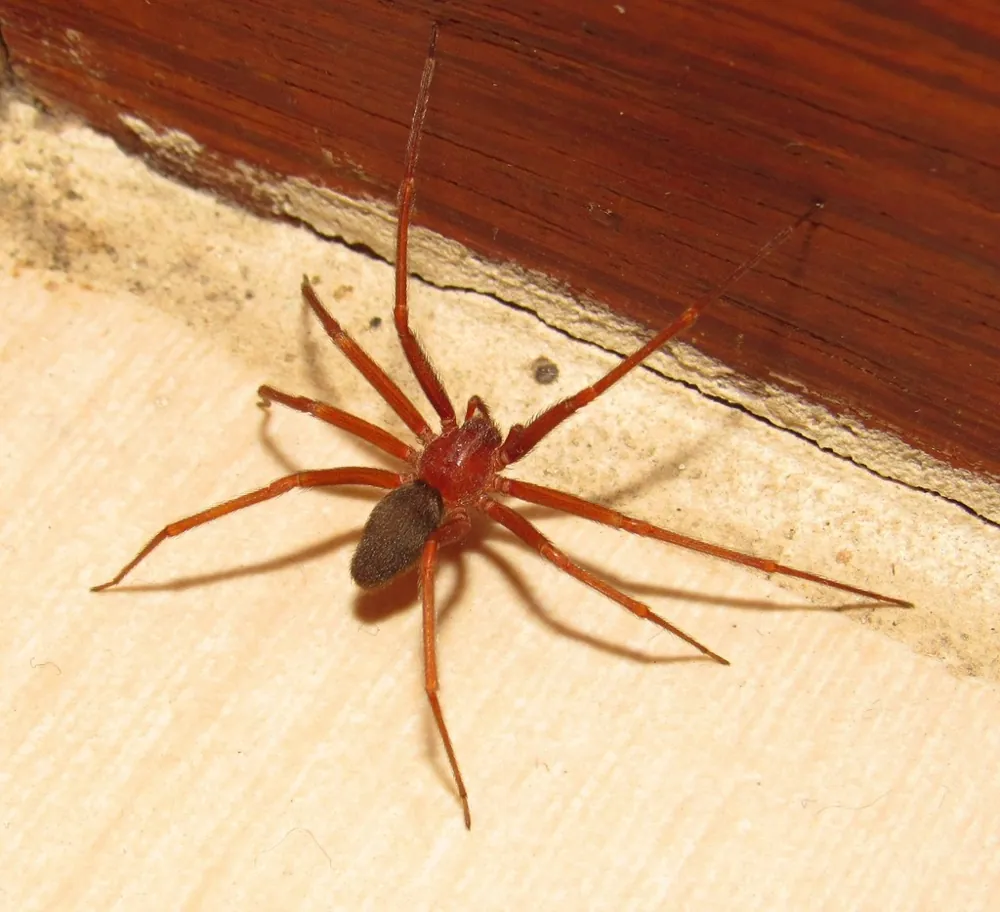
The Brazilian brown recluse spider is a small spider that is highly venomous. It lives in parts of Brazil and Argentina, and it is one of the species linked to deaths from spider bites in South America. Its bite can seem mild at first, so it matters to know what it looks like.1


 No anndirto nde
- Carapace (the front body shield) is dull yellow to orange-brown, with a dark, U-shaped marking on the head area that contrasts with the yellowish thorax.1
- Legs are orange-brown to reddish-brown.1
- Abdomen is grey or blackened, and darker on top than underneath.1
- Small spider: the female is about 8.5 mm long, and the male is smaller.1
- Active at night and very shy, usually found in dark places.1
Doole tooke
Tooke ina yalta e ñiiƴe mum si nde ŋatii.
Hol ko tooke mum (ŋatol walla fiɗol) waɗata?
Its venom contains a high concentration of the enzyme sphingomyelinase D, which causes both local and whole-body effects. Symptoms usually take hours to appear. The bite starts with severe pain, redness, swelling and blisters, and in more severe cases the skin tissue can die. Whole-body effects can include damage to red blood cells, heart problems, low blood pressure, kidney failure and severe bleeding.1
Hol no nde woni bone e yimɓe?
Bone e yimɓe: Bone mawɗoŊatol ina haani doktaa. Maayde ina woodi seeɗa sanne.It is one of the main species linked to deaths from spider bites in South America. Whole-body effects occur frequently after its bite. Because symptoms are delayed, a victim may think the bite was mild.1
Hol ko nde waɗata si nde hulii?
It is a very shy spider that keeps to dark places, so it is rarely seen.1
 Si nde ŋatii
- Lootu ŋatol ngol, waɗu kankara dow mum ngam muusu. Heɓu ballal doktaa si muusu ina tiiɗi, ina yaajoo, walla neɗɗo oo ɓanndu mum welaani.
Sahaa fof, noddu lamba ballal yaawngal (112, 000, 911) ko adii. Ɗum ko ballal arano kuuɓal, wonaa wasiyya doktaa. Aslu ballal arano
 Reen hoore maa
- Taa memu, taa nanngu, taa aaɓnu dabbaare ladde abada, hay pamaro, hay si ina wayi no ɗaanii walla maayii.
- Accu nde nokku. Si a fottii e gooto, deeƴu, ruttu caggal seeɗa seeɗa, accu nde yaha laawol mum.
- Si gooto e majji ŋatii ma: deeƴu, taa dillu, noddu lamba ballal yaawngal (112, 000, 911) walla yah asibiti law. Siftor no nde wayri, foto ina walla.
Nde ɗaɓɓaaki ma. Nde huutora tooke mum ngam nanngude ñaamdu walla reende hoore mum, nde ɓuri yiɗde suuɗaade. Ɓeydu anndude no reentorto
Hol to e aduna?
Hol no nde mawni?
Hol no nde juuti?
 pamaro haa ina waawi joɗaade dow ceɓre feɗeendu maa
Hol no Brazilian brown spider mawni, fottindaade e AAN?
Hiisa tan nder browser maa. Alaa ko mooftetee walla ko neletee.
Hol no nde yaawi?


Anndal
The minimum dose that causes skin tissue death is 2.4 μg per kg of body weight.1
An average bite injects about 40 μg of venom proteins.1
It produces about 5.6 mg of venom, and the male produces less, around 2.43 mg.1
Males have much longer legs than females, although the female has the larger body.1
Its webs are irregular and built under fallen tree trunks and debris, usually in dark places.1
Ɗo anndal iwi
- Loxosceles intermedia (Wikipedia (CC BY-SA 4.0))
- Loxosceles intermedia (iNaturalist): inɗe e tolnugol.
- Venom Wiki: darja bone, mawnude woowaaɗo e miijo yaawre ko amen. Ndaar no min hiisirta ɗum: No min betiri bone.
Kala anndal e ngoo hello ina jogii limre hollirnde iwdi mum. Si min juumii, accu min, min yiɗɓe dabbaaji, wonaa jaridaa ganndal. Wiy min e [email protected] min feewnitay.
 Yaare nden ina heege! Venom Wiki ko golle neɗɗo gooto: meere, tawa tallaaji alaa, trackers alaa. Ballal pamarngal ina walla heddinde ɗum e internet.Ñaamnu yaare nden
 Brazilian wandering spider
 Amazon wandering spider
 Chilean recluse
 Golden silk orb-weaver
 Keyserling's wandering spider
 Argentine black widow
 Paaɓi tooke kaŋŋe
 Terciopelo
 Eyelash viper
 Golden lancehead
 South American bushmaster
 Cane toad