
 Afirik
 Asiya
Asiya Turai
Turai Amerik Worgo
 Australiya e Oseaniya
 Antarktika
 Baharu Pasifik
 Baharu Atlantik
 Baharu Indiya
 Baharu Arktik
 Baharu Mediterane
 Baharu Boɗeeru
 Baharu Karibiya
 Baharu Koral
 Baharu Ciina Worgo
 Baharu Filipin
 Baharu Andaman
 Baharu Rewo
 Baharu Timor e Arafura
 Baharu Bengal
 Baharu Kaliforniya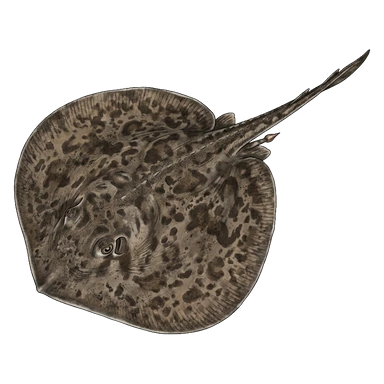
Giant freshwater stingray
 Ina fiɗa
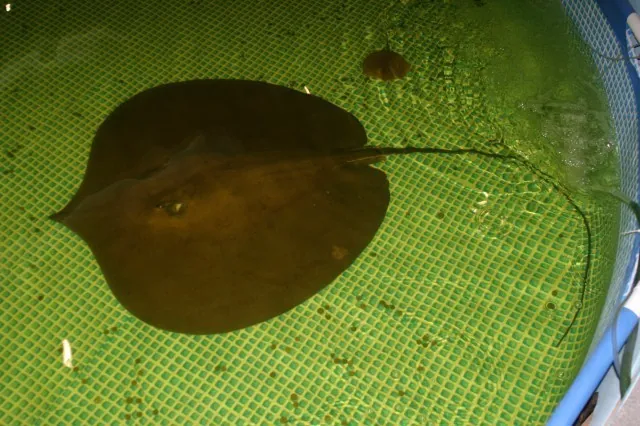
The giant freshwater stingray is a large ray that lives in big rivers and estuaries in Southeast Asia and Borneo. It is the widest freshwater fish in the world, and it is now endangered because of fishing and habitat loss. It has a long, whip-like tail with a sharp spine near the base.1



 No anndirto nde
- Plain grayish brown on top, often with a yellowish or pinkish tint towards the fin edges1
- White underside with broad dark bands on the rear edges of the pectoral and pelvic fins1
- Thin, whip-like tail that is black behind the spine and has no fin folds1
- Sharply pointed snout that projects beyond the disc1
- A single serrated stinging spine on the upper tail near its base, up to 38 cm long1
Ina jiiɓindiree e: Similar freshwater stingrays in South Asia, Southeast Asia and Australasia were once tentatively grouped with this species. Some of them, such as the Australian Urogymnus dalyensis, are now described as separate species.1
Doole tooke
Tooke ina yalta e fiɗirgal.
Hol ko tooke mum (ŋatol walla fiɗol) waɗata?
Its sting is sheathed in toxic mucus. The sting is capable of piercing bone.1
Hol no nde woni bone e yimɓe?
Bone e yimɓe: Bone mawɗoFiɗol ina haani doktaa. Maayde ina woodi seeɗa sanne.The giant freshwater stingray is not aggressive. Its sting is strong enough to pierce bone and is coated in toxic mucus, so it should be treated with care.1
 Si nde fiɗii
- Naatnu barme e ndiyam wulɗam, wulɗam no neɗɗo oo waawi muñde tawa sumataa (ƴeewu ɗam e junngo maa), hakkunde minti 30 e minti 90. Heɓu ballal doktaa, haa teeŋti e stonefish e stingray.
Sahaa fof, noddu lamba ballal yaawngal (112, 000, 911) ko adii. Ɗum ko ballal arano kuuɓal, wonaa wasiyya doktaa. Aslu ballal arano
 Reen hoore maa
- Taa memu, taa nanngu, taa aaɓnu dabbaare ladde abada, hay pamaro, hay si ina wayi no ɗaanii walla maayii.
- Accu nde nokku. Si a fottii e gooto, deeƴu, ruttu caggal seeɗa seeɗa, accu nde yaha laawol mum.
- Si gooto e majji fiɗii ma: deeƴu, taa dillu, noddu lamba ballal yaawngal (112, 000, 911) walla yah asibiti law. Siftor no nde wayri, foto ina walla.
Nde ɗaɓɓaaki ma. Nde huutora tooke mum ngam nanngude ñaamdu walla reende hoore mum, nde ɓuri yiɗde suuɗaade. Ɓeydu anndude no reentorto
Hol to e aduna?
Hol no nde mawni?
Hol no nde juuti?
Hol no nde teddi?
 juuti no dawaaɗi 5, hinere haa laaci
 juuti no ayaba 28 jokkondiraaɗi
 ina waawi lumbaade njuuteendi pisin mawɗo (50 m) nder sakan 6
Hol no Giant freshwater stingray mawni, fottindaade e AAN?
Hiisa tan nder browser maa. Alaa ko mooftetee walla ko neletee.
Hol no nde yaawi?

Anndal
In June 2022, a specimen caught in the Mekong River was reported as the largest strict freshwater fish ever documented, at about 300 kg.1
It is the widest freshwater fish in the world, growing up to 2.2 m across.1
Its tail spine is up to 38 cm long, the largest of any stingray species.1
Pups are nourished in the womb by a milk-like substance called histotroph, or 'uterine milk', made by the mother.1
In Cambodia, the average weight of a landed ray fell from 23.2 kg in 1980 to 6.9 kg in 2006.1
Ngam ganduɓe tooke
- Innde ganndal
- Urogymnus polylepis
- Fedde
- Liddi tooke
- Besngu
- Dasyatidae2
- Tolno
- Myliobatiformes
- Nahiyaaji
- Asiya
- Ɓikkoy
- It gives birth to live young. Females have litters of one to four pups, each about 30 cm across at birth.1
- Hol no nde wonata e ladde
- Endangered (IUCN overall); Critically Endangered in Thailand1
- Bone e yimɓe
- 3 / 5: Bone mawɗo3
Ɗo anndal iwi
- Giant freshwater stingray (Wikipedia (CC BY-SA 4.0))
- Urogymnus polylepis (iNaturalist): inɗe e tolnugol.
- Venom Wiki: darja bone, mawnude woowaaɗo e miijo yaawre ko amen. Ndaar no min hiisirta ɗum: No min betiri bone.
Kala anndal e ngoo hello ina jogii limre hollirnde iwdi mum. Si min juumii, accu min, min yiɗɓe dabbaaji, wonaa jaridaa ganndal. Wiy min e [email protected] min feewnitay.
 Yaare nden ina heege! Venom Wiki ko golle neɗɗo gooto: meere, tawa tallaaji alaa, trackers alaa. Ballal pamarngal ina walla heddinde ɗum e internet.Ñaamnu yaare nden
 Walking catfish
 Asian stinging catfish
 Reef stonefish
 Red lionfish
 Estuarine stonefish
 Short-tail stingray
 Yaare deathstalker
 Cobra Indiya
 Viper kiifi kaasa Indiya
 King cobra
 Puff adder
 Mboddi Russell