
 Afirik
 Asiya
Asiya Turai
Turai Amerik Worgo
 Australiya e Oseaniya
 Antarktika
 Baharu Pasifik
 Baharu Atlantik
 Baharu Indiya
 Baharu Arktik
 Baharu Mediterane
 Baharu Boɗeeru
 Baharu Karibiya
 Baharu Koral
 Baharu Ciina Worgo
 Baharu Filipin
 Baharu Andaman
 Baharu Rewo
 Baharu Timor e Arafura
 Baharu Bengal
 Baharu Kaliforniya
Largespot river stingray
 Ina fiɗa
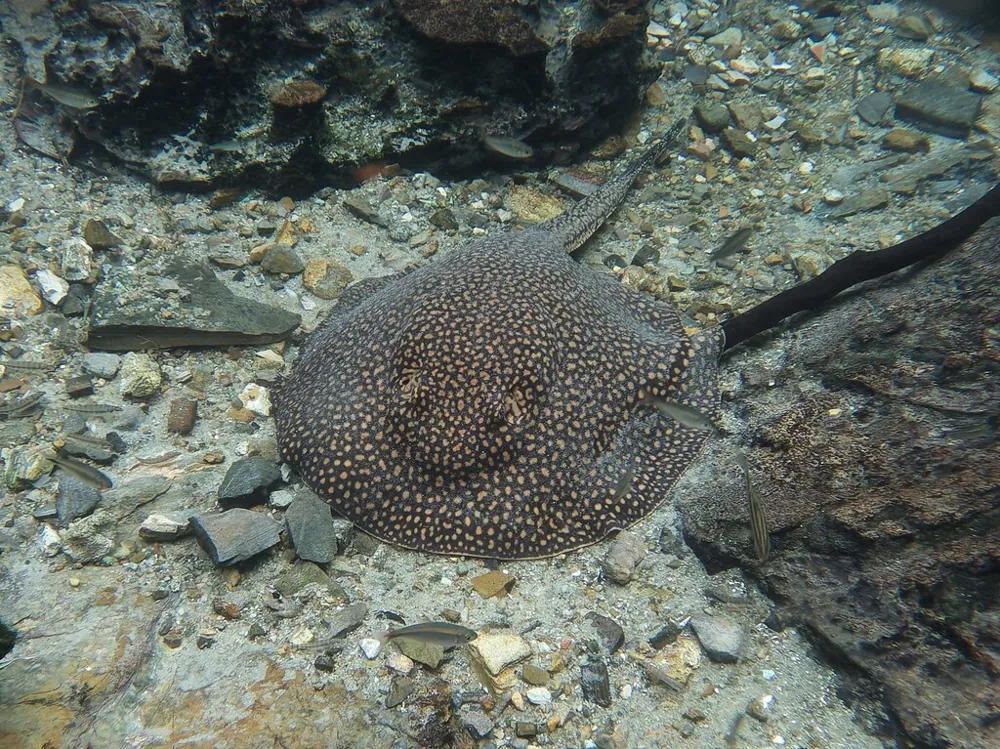
The largespot river stingray is a freshwater stingray with a flat, round body covered in dense spots. It lives in the rivers of tropical and subtropical South America, mainly the Paraná-Paraguay river basin and parts of the upper Amazon. It is sometimes kept in aquariums, but it needs a very large tank.1
 No anndirto nde
- It is densely spotted on its upper side.1
- The exact colour and pattern vary a lot between individuals, and many intermediate patterns exist.1
- The disc (the flat body) reaches a width of up to 52 cm.1
- Its total length, including the tail, reaches up to 89 cm.1
Ina jiiɓindiree e: The so-called 'tiger stingray' has often been mistaken for this species. It is a separate species, P. tigrina, which was only scientifically described in 2011.1
Doole tooke
Tooke ina yalta e fiɗirgal.
Hol no nde woni bone e yimɓe?
Bone e yimɓe: Bone mawɗoFiɗol ina haani doktaa. Maayde ina woodi seeɗa sanne. Si nde fiɗii
- Naatnu barme e ndiyam wulɗam, wulɗam no neɗɗo oo waawi muñde tawa sumataa (ƴeewu ɗam e junngo maa), hakkunde minti 30 e minti 90. Heɓu ballal doktaa, haa teeŋti e stonefish e stingray.
Sahaa fof, noddu lamba ballal yaawngal (112, 000, 911) ko adii. Ɗum ko ballal arano kuuɓal, wonaa wasiyya doktaa. Aslu ballal arano
 Reen hoore maa
- Taa memu, taa nanngu, taa aaɓnu dabbaare ladde abada, hay pamaro, hay si ina wayi no ɗaanii walla maayii.
- Accu nde nokku. Si a fottii e gooto, deeƴu, ruttu caggal seeɗa seeɗa, accu nde yaha laawol mum.
- Si gooto e majji fiɗii ma: deeƴu, taa dillu, noddu lamba ballal yaawngal (112, 000, 911) walla yah asibiti law. Siftor no nde wayri, foto ina walla.
Nde ɗaɓɓaaki ma. Nde huutora tooke mum ngam nanngude ñaamdu walla reende hoore mum, nde ɓuri yiɗde suuɗaade. Ɓeydu anndude no reentorto
Hol to e aduna?
Hol no nde mawni?
Hol no nde juuti?
 juuti no ullundi galle 2, hinere haa laaci
 juuti no ayaba 5 jokkondiraaɗi
 ina waawi lumbaade njuuteendi pisin mawɗo (50 m) nder sakan 11
Hol no Largespot river stingray mawni, fottindaade e AAN?
Hiisa tan nder browser maa. Alaa ko mooftetee walla ko neletee.
Hol no nde yaawi?

Anndal
Its natural range was once cut off from the upper Paraná basin by the Guaíra Falls. After the Itaipu Dam was built, the falls disappeared, which let this species and several others spread into that area.1
Its spotted pattern is so variable that one pattern was once described as a separate species, P. castexi, and another as P. menchacai. All of these are now treated as variants of this species.1
It is sometimes kept in aquariums, but it needs a very large tank because of its size.1
Feññinoowo goonga
Fenaande: The 'tiger stingray' is the same animal as the largespot river stingray.
Goonga: The tiger stingray is a separate species, P. tigrina, which was only scientifically described in 2011. It was earlier mistaken for P. menchacai, which is a name for this species.1
Ɗo anndal iwi
- Potamotrygon falkneri (Wikipedia (CC BY-SA 4.0))
- Potamotrygon falkneri (iNaturalist): inɗe e tolnugol.
- Venom Wiki: darja bone, mawnude woowaaɗo e miijo yaawre ko amen. Ndaar no min hiisirta ɗum: No min betiri bone.
Kala anndal e ngoo hello ina jogii limre hollirnde iwdi mum. Si min juumii, accu min, min yiɗɓe dabbaaji, wonaa jaridaa ganndal. Wiy min e [email protected] min feewnitay.
 Yaare nden ina heege! Venom Wiki ko golle neɗɗo gooto: meere, tawa tallaaji alaa, trackers alaa. Ballal pamarngal ina walla heddinde ɗum e internet.Ñaamnu yaare nden
 Ocellate river stingray
 Xingu River ray
 Discus ray
 Smooth back river stingray
 Amazon toadfish
 Reef stonefish
 Paaɓi tooke kaŋŋe
 Terciopelo
 Brazilian wandering spider
 Eyelash viper
 Golden lancehead
 South American bushmaster