
 Afirik
 Asiya
Asiya Turai
Turai Amerik Worgo
 Australiya e Oseaniya
 Antarktika
 Baharu Pasifik
 Baharu Atlantik
 Baharu Indiya
 Baharu Arktik
 Baharu Mediterane
 Baharu Boɗeeru
 Baharu Karibiya
 Baharu Koral
 Baharu Ciina Worgo
 Baharu Filipin
 Baharu Andaman
 Baharu Rewo
 Baharu Timor e Arafura
 Baharu Bengal
 Baharu Kaliforniya
Mitchell's water monitor
 Ina ŋata
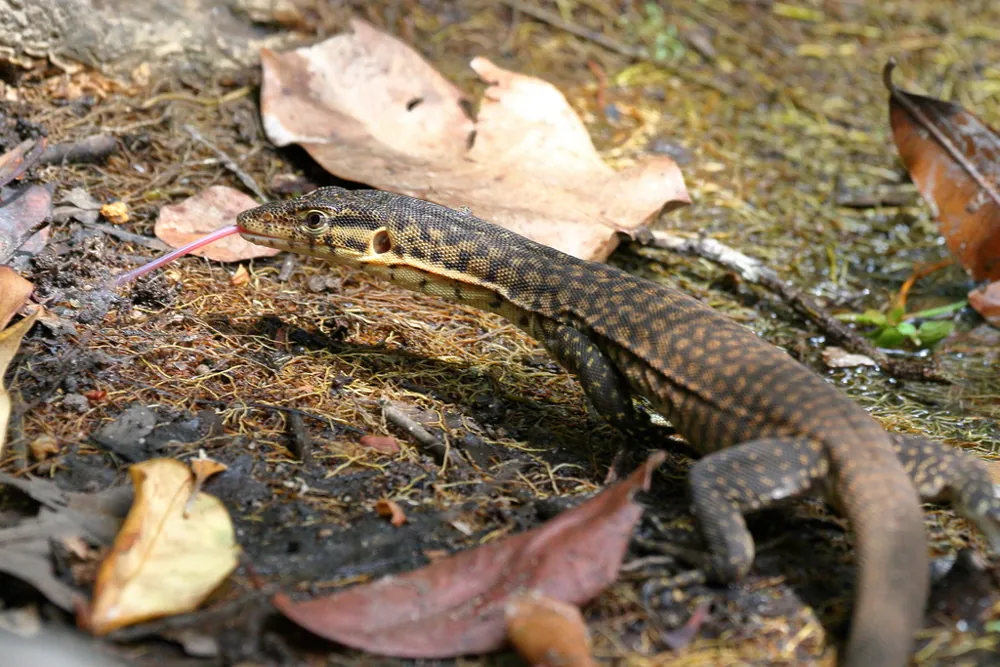
Mitchell's water monitor is a large, slender lizard that lives in the northern rivers, swamps and lagoons of Australia. It spends much of its time near water and can climb trees. It is on the IUCN Red List as Critically Endangered, so it matters a great deal to protect it.1



 No anndirto nde
Doole tooke
Tooke ina yalta e ñiiƴe mum si nde ŋatii.
Hol no nde woni bone e yimɓe?
Bone e yimɓe: HoyɗoNo fiɗol nyaaku walla ɓuri famɗude. Ɓadii alaa bone e yimɓe.Hol ko nde waɗata si nde hulii?
If disturbed, it heads for the water. It is described as nervous and shy.1
 Si nde ŋatii
- Lootu barme, deeƴin neɗɗo oo, heɓu ballal doktaa.
Sahaa fof, noddu lamba ballal yaawngal (112, 000, 911) ko adii. Ɗum ko ballal arano kuuɓal, wonaa wasiyya doktaa. Aslu ballal arano
 Reen hoore maa
- Taa memu, taa nanngu, taa aaɓnu dabbaare ladde abada, hay pamaro, hay si ina wayi no ɗaanii walla maayii.
- Accu nde nokku. Si a fottii e gooto, deeƴu, ruttu caggal seeɗa seeɗa, accu nde yaha laawol mum.
- Si gooto e majji ŋatii ma: deeƴu, taa dillu, noddu lamba ballal yaawngal (112, 000, 911) walla yah asibiti law. Siftor no nde wayri, foto ina walla.
Nde ɗaɓɓaaki ma. Nde huutora tooke mum ngam nanngude ñaamdu walla reende hoore mum, nde ɓuri yiɗde suuɗaade. Ɓeydu anndude no reentorto
Hol to e aduna?
Hol no nde mawni?
Hol no nde juuti?
 juuti no ayaba 4 jokkondiraaɗi
 ina waawi dogde meeter 100 nder sakan 30 (neɗɗo ɓurɗo yaawde ina haani 9,6)
Hol no Mitchell's water monitor mawni, fottindaade e AAN?
Hiisa tan nder browser maa. Alaa ko mooftetee walla ko neletee.
Hol no nde yaawi?

Anndal
Where cane toads arrived at Kakadu National Park, almost the entire population of this lizard was wiped out. Its numbers have been estimated to have dropped by as much as 97% within three years.1
Its eyesight is excellent, but it is night blind because its retinas have no rods, the cells used for night vision.1
The biggest threat to this lizard is the cane toad. Cane toads are poisonous to it, and it can eat the larger toads, which carry lethal doses of poison.1
The Australian name 'goanna' probably comes from 'iguana', because the first European settlers thought these lizards looked like the iguanas of South America.1
Ngam ganduɓe tooke
- Innde ganndal
- Varanus mitchelli
- Fedde
- Kadangareeji tooke
- Besngu
- Varanidae2
- Tolno
- Squamata
- Nahiyaaji
- Australiya e Oseaniya
- Ɓikkoy
- It lays eggs (it is oviparous). Females lay between April and June in the dry season, with clutches of 3 to 12 eggs.1
- Duuɓi nguurndam
- ɓadii duuɓi 101
- Hol no nde wonata e ladde
- Critically Endangered1
- Bone e yimɓe
- 1 / 5: Hoyɗo3
Ɗo anndal iwi
- Mitchell's water monitor (Wikipedia (CC BY-SA 4.0))
- Varanus mitchelli (iNaturalist): inɗe e tolnugol.
- Venom Wiki: darja bone, mawnude woowaaɗo e miijo yaawre ko amen. Ndaar no min hiisirta ɗum: No min betiri bone.
Kala anndal e ngoo hello ina jogii limre hollirnde iwdi mum. Si min juumii, accu min, min yiɗɓe dabbaaji, wonaa jaridaa ganndal. Wiy min e [email protected] min feewnitay.
 Yaare nden ina heege! Venom Wiki ko golle neɗɗo gooto: meere, tawa tallaaji alaa, trackers alaa. Ballal pamarngal ina walla heddinde ɗum e internet.Ñaamnu yaare nden
 Lace monitor
 Perentie
 Spiny-tailed monitor
 Yellow-spotted monitor
 Komodo dragon
 Gila monster
 Taipan takko baharu
 Death adder
 Brown snake fuɗnaange
 Taayipan joornde (Inland taipan)
 Gizo-gizo funnel-web Sydney
 Mboddi Cewngu