
 Afirik
 Asiya
Asiya Turai
Turai Amerik Worgo
 Australiya e Oseaniya
 Antarktika
 Baharu Pasifik
 Baharu Atlantik
 Baharu Indiya
 Baharu Arktik
 Baharu Mediterane
 Baharu Boɗeeru
 Baharu Karibiya
 Baharu Koral
 Baharu Ciina Worgo
 Baharu Filipin
 Baharu Andaman
 Baharu Rewo
 Baharu Timor e Arafura
 Baharu Bengal
 Baharu Kaliforniya
Peruvian giant centipede
 Ina ŋata
The Peruvian giant centipede is the largest centipede species in the world, growing longer than 30 centimetres. It lives in northern South America and on several Caribbean islands, mostly in rainforests and dry forests. It hunts a wide range of animals, from insects to bats, and its venom is strong enough to stop small mammals.1



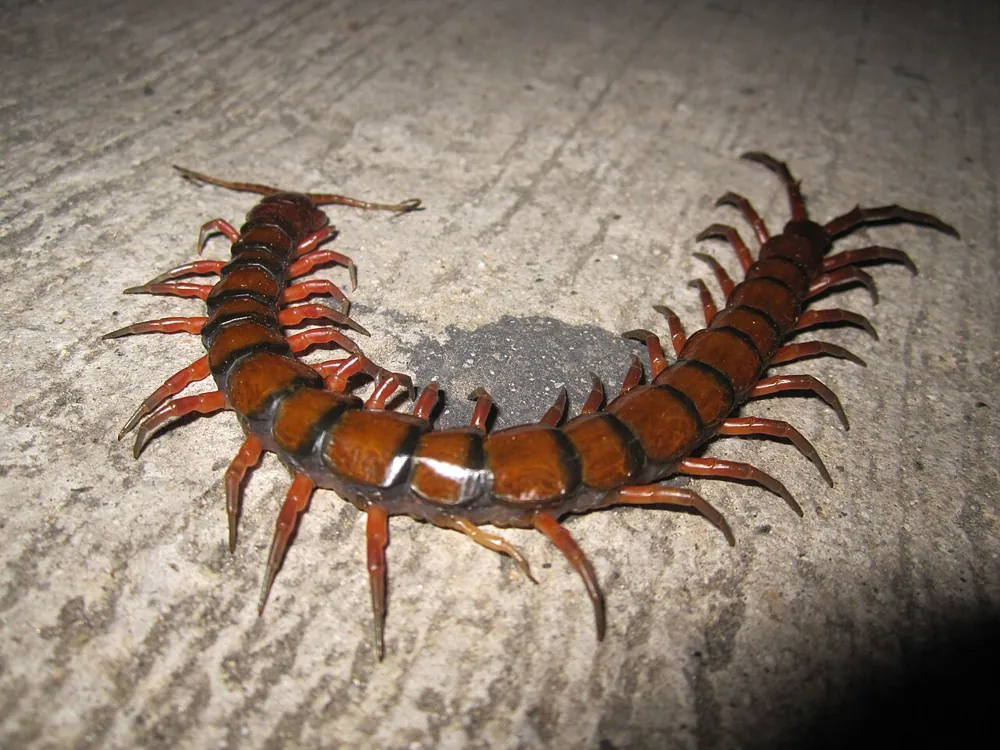
 No anndirto nde
Doole tooke
Tooke ina yalta e ñiiƴe mum si nde ŋatii.
Hol ko tooke mum (ŋatol walla fiɗol) waɗata?
Its venom is strong enough to immobilise small mammals it hunts, such as bats and mice. The venom is produced in a modified pair of legs placed under the head.1
Hol no nde woni bone e yimɓe?
Bone e yimɓe: Bone mawɗoŊatol ina haani doktaa. Maayde ina woodi seeɗa sanne.At least one human death has been linked to its venom. In 2014, a four-year-old child in Venezuela died after being bitten by a giant centipede hidden inside an open soda can. Researchers at Universidad de Oriente later confirmed the animal was this species.1
 Si nde ŋatii
- Lootu ŋatol ngol, ɓuuɓnu ngol walla naatnu ngol e ndiyam wulɗam seeɗa ngam muusu, heɓu ballal doktaa si ɗum ɓurii bonde.
Sahaa fof, noddu lamba ballal yaawngal (112, 000, 911) ko adii. Ɗum ko ballal arano kuuɓal, wonaa wasiyya doktaa. Aslu ballal arano
 Reen hoore maa
- Taa memu, taa nanngu, taa aaɓnu dabbaare ladde abada, hay pamaro, hay si ina wayi no ɗaanii walla maayii.
- Accu nde nokku. Si a fottii e gooto, deeƴu, ruttu caggal seeɗa seeɗa, accu nde yaha laawol mum.
- Si gooto e majji ŋatii ma: deeƴu, taa dillu, noddu lamba ballal yaawngal (112, 000, 911) walla yah asibiti law. Siftor no nde wayri, foto ina walla.
Nde ɗaɓɓaaki ma. Nde huutora tooke mum ngam nanngude ñaamdu walla reende hoore mum, nde ɓuri yiɗde suuɗaade. Ɓeydu anndude no reentorto
Hol to e aduna?
Hol no nde mawni?
Hol no nde juuti?
 juuti no bulok fijo 9 jokkondiraaɗi
 ina waawi dogde meeter 100 nder sakan 140 (neɗɗo ɓurɗo yaawde ina haani 9,6)
Hol no Peruvian giant centipede mawni, fottindaade e AAN?
Hiisa tan nder browser maa. Alaa ko mooftetee walla ko neletee.
Hol no nde yaawi?


Anndal
Large individuals have a clever way of catching bats: they climb cave ceilings and hold their heavier prey with only a few legs attached to the ceiling.1
It is the largest centipede species in the world, with a length exceeding 30 centimetres.1
It can overpower animals as large as tarantulas, and it can also kill snakes up to 25 centimetres long.1
Its venom comes from a modified pair of legs placed just underneath its head.1
It climbs readily and will use hiding spaces under tree bark.1
Its natural predators include large birds, spiders, and mammals that hunt arthropods, such as the coati, kinkajou and opossum.1
Ɗo anndal iwi
- Scolopendra gigantea (Wikipedia (CC BY-SA 4.0))
- Scolopendra gigantea (iNaturalist): inɗe e tolnugol.
- Venom Wiki: darja bone, mawnude woowaaɗo e miijo yaawre ko amen. Ndaar no min hiisirta ɗum: No min betiri bone.
Kala anndal e ngoo hello ina jogii limre hollirnde iwdi mum. Si min juumii, accu min, min yiɗɓe dabbaaji, wonaa jaridaa ganndal. Wiy min e [email protected] min feewnitay.
 Yaare nden ina heege! Venom Wiki ko golle neɗɗo gooto: meere, tawa tallaaji alaa, trackers alaa. Ballal pamarngal ina walla heddinde ɗum e internet.Ñaamnu yaare nden
Goɗɗi e fedde wootere: Shanshani
 Amazonian giant green-horned centipedeShanshaniIna haani doktaa
 Galapagos centipedeShanshaniIna haani doktaa
 Chinese red-headed centipedeShanshaniIna haani doktaa
 Giant Australian centipedeShanshaniIna muusa tan
 Giant desert centipedeShanshaniIna muusa tan
 Mediterranean banded centipedeShanshaniIna muusa tan
 Paaɓi tooke kaŋŋe
 Terciopelo
 Brazilian wandering spider
 Eyelash viper
 Golden lancehead
 South American bushmaster