
 Afirik
 Asiya
Asiya Turai
Turai Amerik Worgo
 Australiya e Oseaniya
 Antarktika
 Baharu Pasifik
 Baharu Atlantik
 Baharu Indiya
 Baharu Arktik
 Baharu Mediterane
 Baharu Boɗeeru
 Baharu Karibiya
 Baharu Koral
 Baharu Ciina Worgo
 Baharu Filipin
 Baharu Andaman
 Baharu Rewo
 Baharu Timor e Arafura
 Baharu Bengal
 Baharu Kaliforniya
Rhombic night adder
 Ina ŋata
The rhombic night adder is a venomous snake found across much of Sub-Saharan Africa. It is the largest snake in its genus, Causus, and it has a striking threat display that makes it look more dangerous than its venom usually makes it.1


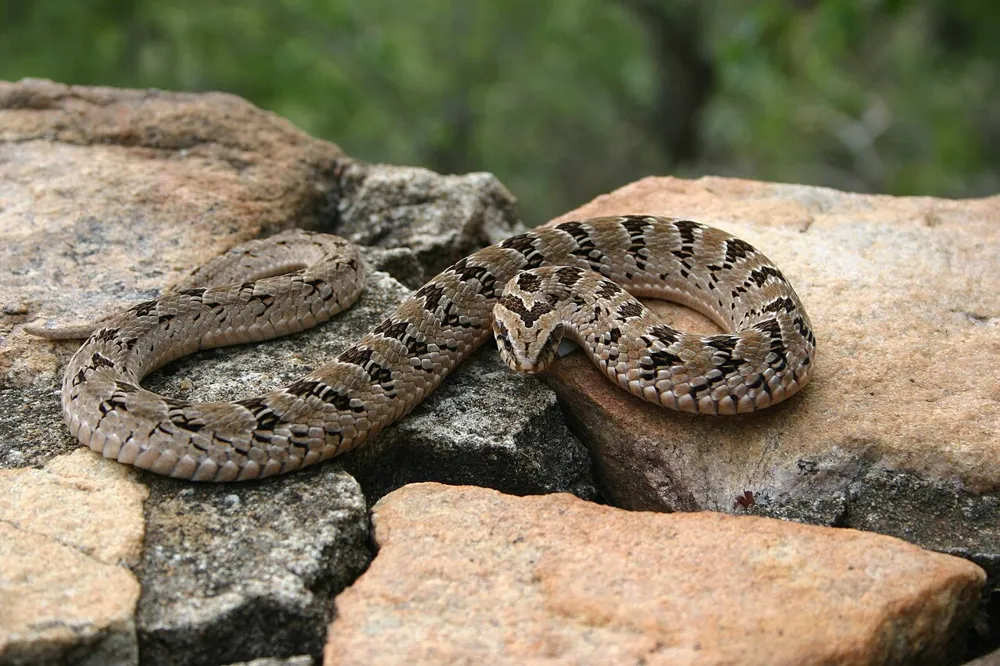
 No anndirto nde
- The main colour is usually a shade of brown, sometimes pinkish or greyish, and occasionally olive green.1
- It has 20 to 30 rhombic (diamond-shaped) blotches with pale edges running along its back.1
- Oblique black bars on its sides are each topped by one or two black spots with pale centres, which look like eyes.1
- The head has a V-shaped mark that may be solid black, or brown with a black outline.1
- Northern populations may have no pattern at all, which makes them harder to identify.1
Ina jiiɓindiree e: The common egg-eater (Dasypeltis scabra) is compared with this snake. Its colour pattern and behaviour may be a form of defensive mimicry, meaning it may resemble another animal to stay safe.1
Doole tooke
Tooke ina yalta e ñiiƴe mum si nde ŋatii.
Hol ko tooke mum (ŋatol walla fiɗol) waɗata?
The venom is low in toxicity. Bites usually cause pain and minor swelling, with little tissue death (necrosis), and these symptoms usually fade within 2 to 3 days. Bites can still be serious, as in at least one case where a child needed a fasciotomy, a surgical operation to relieve pressure in a limb.1
Hol no nde woni bone e yimɓe?
Bone e yimɓe: Ina muusaIna waawi muusude sanne, kono ɓadii abada wonaa bone mawɗo.Most individuals are docile and seldom bite unless severely provoked. Bites can be serious, but there are no modern, well-documented cases of deaths from this species.1
Hol ko nde waɗata si nde hulii?
When seriously disturbed, it coils up, inflates its body so the dark markings stand out, hisses and puffs loudly, flattens the front of its body and neck, and strikes frantically.1
 Si nde ŋatii
- Deeƴin neɗɗo oo, taa o dilla, waɗu koyngal walla junngo ŋataangal e toowal ɓernde, ittu zoobe e geɗe ɗigginiiɗe, yahra mo asibiti law.
Sahaa fof, noddu lamba ballal yaawngal (112, 000, 911) ko adii. Ɗum ko ballal arano kuuɓal, wonaa wasiyya doktaa. Aslu ballal arano
 Reen hoore maa
- Taa memu, taa nanngu, taa aaɓnu dabbaare ladde abada, hay pamaro, hay si ina wayi no ɗaanii walla maayii.
- Accu nde nokku. Si a fottii e gooto, deeƴu, ruttu caggal seeɗa seeɗa, accu nde yaha laawol mum.
- Si gooto e majji ŋatii ma: deeƴu, taa dillu, noddu lamba ballal yaawngal (112, 000, 911) walla yah asibiti law. Siftor no nde wayri, foto ina walla.
Nde ɗaɓɓaaki ma. Nde huutora tooke mum ngam nanngude ñaamdu walla reende hoore mum, nde ɓuri yiɗde suuɗaade. Ɓeydu anndude no reentorto
Hol to e aduna?
Hol no nde mawni?
Hol no nde juuti?
 juuti no ullundi galle 2, hinere haa laaci
 juuti no ayaba 5 jokkondiraaɗi
 ina waawi dogde meeter 100 nder sakan 110 (neɗɗo ɓurɗo yaawde ina haani 9,6)
Hol no Rhombic night adder mawni, fottindaade e AAN?
Hiisa tan nder browser maa. Alaa ko mooftetee walla ko neletee.
Hol no nde yaawi?


Anndal
Feññinoowo goonga
Fenaande: Its bite is deadly.
Goonga: There are no modern, well-documented cases of deaths from this species. Bites usually cause pain and minor swelling that fade within 2 to 3 days, although bites can still be serious.1
Ɗo anndal iwi
- Causus rhombeatus (Wikipedia (CC BY-SA 4.0))
- Causus rhombeatus (iNaturalist): inɗe e tolnugol.
- Venom Wiki: darja bone, mawnude woowaaɗo e miijo yaawre ko amen. Ndaar no min hiisirta ɗum: No min betiri bone.
Kala anndal e ngoo hello ina jogii limre hollirnde iwdi mum. Si min juumii, accu min, min yiɗɓe dabbaaji, wonaa jaridaa ganndal. Wiy min e [email protected] min feewnitay.
 Yaare nden ina heege! Venom Wiki ko golle neɗɗo gooto: meere, tawa tallaaji alaa, trackers alaa. Ballal pamarngal ina walla heddinde ɗum e internet.Ñaamnu yaare nden
 Puff adder
 Gaboon viper
 Northeast African carpet viper
 West African carpet viper
 Rhinoceros viper
 West African Gaboon viper
 Black mamba
 Deathstalker
 Egyptian cobra
 Boomslang
 Fat-tailed scorpion
 Western honey bee