
 Afirik
 Asiya
Asiya Turai
Turai Amerik Worgo
 Australiya e Oseaniya
 Antarktika
 Baharu Pasifik
 Baharu Atlantik
 Baharu Indiya
 Baharu Arktik
 Baharu Mediterane
 Baharu Boɗeeru
 Baharu Karibiya
 Baharu Koral
 Baharu Ciina Worgo
 Baharu Filipin
 Baharu Andaman
 Baharu Rewo
 Baharu Timor e Arafura
 Baharu Bengal
 Baharu Kaliforniya
Snouted night adder
 Ina ŋata
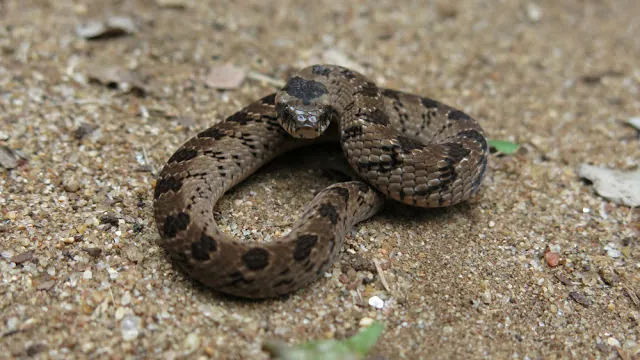
The snouted night adder is a venomous snake with an upturned, pointed snout. It lives in parts of East and Southern Africa, in savanna, forest edges and rocky hillsides. Its venom is not lethal to humans, but doctors still treat its bites as medically significant.1

 No anndirto nde
- Short, wide head with a prominent, pointed snout that turns upwards1
- Light brown, pinkish brown, grey or grey-green body with 20 to 30 dark crescent-shaped markings running down the back, though these can be faint1
- A V-shaped marking on the top of the head and a dark streak running backwards from behind the eye1
- Yellowish or whitish belly, plain or with small grey-brown spots1
- Young snakes are often glossy black or grey1
Doole tooke
Tooke ina yalta e ñiiƴe mum si nde ŋatii.
Hol ko tooke mum (ŋatol walla fiɗol) waɗata?
Little is known about its venom. Reported cases describe rapid swelling, fever, sometimes intense pain and occasionally swelling of the lymph glands. The swelling usually goes down after 2 to 3 days, and no cases of tissue death (necrosis) have been reported.1
Hol no nde woni bone e yimɓe?
Bone e yimɓe: Ina muusaIna waawi muusude sanne, kono ɓadii abada wonaa bone mawɗo.Its venom is not lethal to humans, but it is still considered medically significant. Only a few case histories exist.1
Hol ko nde waɗata si nde hulii?
When disturbed, it inflates its body and hisses, and it can strike quickly if threatened.1
 Si nde ŋatii
- Deeƴin neɗɗo oo, taa o dilla, waɗu koyngal walla junngo ŋataangal e toowal ɓernde, ittu zoobe e geɗe ɗigginiiɗe, yahra mo asibiti law.
Sahaa fof, noddu lamba ballal yaawngal (112, 000, 911) ko adii. Ɗum ko ballal arano kuuɓal, wonaa wasiyya doktaa. Aslu ballal arano
 Reen hoore maa
- Taa memu, taa nanngu, taa aaɓnu dabbaare ladde abada, hay pamaro, hay si ina wayi no ɗaanii walla maayii.
- Accu nde nokku. Si a fottii e gooto, deeƴu, ruttu caggal seeɗa seeɗa, accu nde yaha laawol mum.
- Si gooto e majji ŋatii ma: deeƴu, taa dillu, noddu lamba ballal yaawngal (112, 000, 911) walla yah asibiti law. Siftor no nde wayri, foto ina walla.
Nde ɗaɓɓaaki ma. Nde huutora tooke mum ngam nanngude ñaamdu walla reende hoore mum, nde ɓuri yiɗde suuɗaade. Ɓeydu anndude no reentorto
Hol to e aduna?
Hol no nde mawni?
Hol no nde juuti?
 juuti no bulok fijo 11 jokkondiraaɗi
 ina waawi dogde meeter 100 nder sakan 120 (neɗɗo ɓurɗo yaawde ina haani 9,6)
Hol no Snouted night adder mawni, fottindaade e AAN?
Hiisa tan nder browser maa. Alaa ko mooftetee walla ko neletee.
Hol no nde yaawi?


Anndal
Ɗo anndal iwi
- Causus defilippii (Wikipedia (CC BY-SA 4.0))
- Causus defilippii (iNaturalist): inɗe e tolnugol.
- Venom Wiki: darja bone, mawnude woowaaɗo e miijo yaawre ko amen. Ndaar no min hiisirta ɗum: No min betiri bone.
Kala anndal e ngoo hello ina jogii limre hollirnde iwdi mum. Si min juumii, accu min, min yiɗɓe dabbaaji, wonaa jaridaa ganndal. Wiy min e [email protected] min feewnitay.
 Yaare nden ina heege! Venom Wiki ko golle neɗɗo gooto: meere, tawa tallaaji alaa, trackers alaa. Ballal pamarngal ina walla heddinde ɗum e internet.Ñaamnu yaare nden
 Puff adder
 Gaboon viper
 Northeast African carpet viper
 West African carpet viper
 Rhinoceros viper
 West African Gaboon viper
 Mamba ɓaleendi
 Yaare deathstalker
 Cobra Masar
 Boomslang
 Fat-tailed scorpion
 Western honey bee