
 Afirik
 Asiya
Asiya Turai
Turai Amerik Worgo
 Australiya e Oseaniya
 Antarktika
 Baharu Pasifik
 Baharu Atlantik
 Baharu Indiya
 Baharu Arktik
 Baharu Mediterane
 Baharu Boɗeeru
 Baharu Karibiya
 Baharu Koral
 Baharu Ciina Worgo
 Baharu Filipin
 Baharu Andaman
 Baharu Rewo
 Baharu Timor e Arafura
 Baharu Bengal
 Baharu Kaliforniya
Spur-winged goose
 Tooke si ñaamaamaIna ñaama: PuɗɗiTooke memde walla ñaamde, wonaa tooke ŋatol walla fiɗol
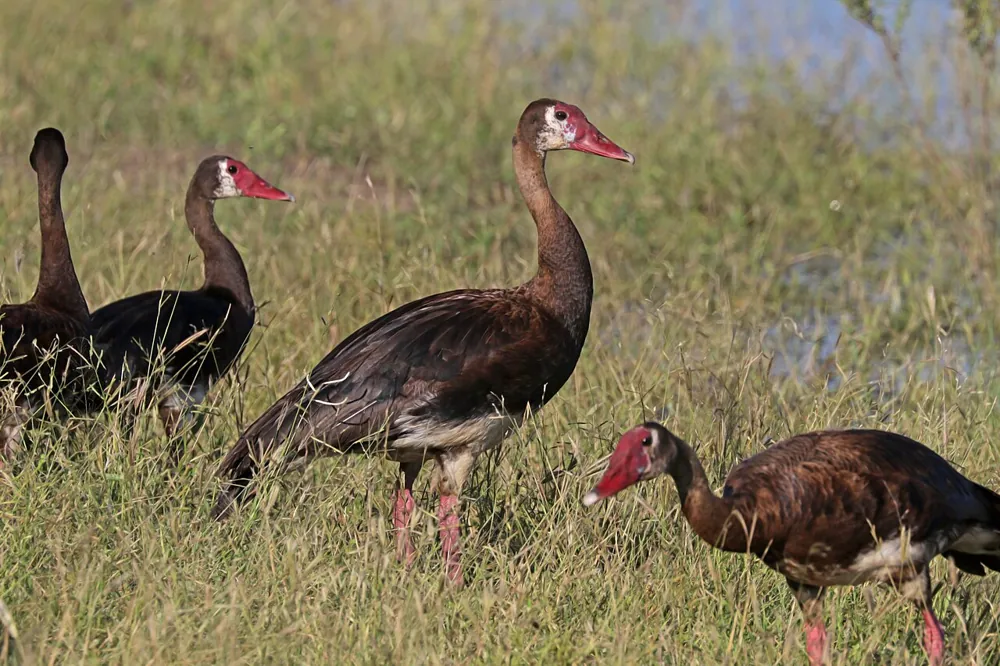
The spur-winged goose is a large waterbird from Sub-Saharan Africa, and on average it is the world's largest goose. Some populations are poisonous to eat: birds that feed on many blister beetles carry a poison called cantharidin in their body tissue.1



 No anndirto nde
Doole tooke
Ina bone tan si huunde ñaamii nde.
Hol ko tooke mum (memde walla ñaamde) waɗata?
This goose is not venomous. Its poison, cantharidin, is held in the bird's tissue and comes from blister beetles it eats. Eating the cooked goose poisons the person who eats it.1
Hol no nde woni bone e yimɓe?
Bone e yimɓe: Ina muusaIna waawi muusude sanne, kono ɓadii abada wonaa bone mawɗo.Only populations whose diet includes large amounts of blister beetles are poisonous. A dose of 10 mg of cantharidin can kill a human. The risk is to people who eat the cooked goose.1
Hol ko nde waɗata si nde hulii?
Its alarm call is a soft bubbling "cherwit" when it takes flight or feels alarmed.1
 Si neɗɗo memii nde walla ñaamii nde
- Si neɗɗo ñaamii nde walla alaamaaji ñawu ngaɗii mo caggal ñaamde nde: noddu lamba ballal yaawngal walla nokku ballal tooke ɗoo ɗoon.
Sahaa fof, noddu lamba ballal yaawngal (112, 000, 911) ko adii. Ɗum ko ballal arano kuuɓal, wonaa wasiyya doktaa. Aslu ballal arano
 Reen hoore maa
- Taa memu, taa nanngu, taa aaɓnu dabbaare ladde abada, hay pamaro, hay si ina wayi no ɗaanii walla maayii.
- Accu nde nokku. Si a fottii e gooto, deeƴu, ruttu caggal seeɗa seeɗa, accu nde yaha laawol mum.
- Si a memii nde walla a ñaamii nde: taa momtu gite maa walla hunnduko maa, lootu juuɗe maa, heɓu ballal doktaa.
Nde ɗaɓɓaaki ma. Tooke mum ina woodi tan ngam taa huunde ñaama nde. Ɓeydu anndude no reentorto
Hol to e aduna?
Hol no nde mawni?
Hol no nde juuti?
Hol no nde teddi?
 juuti no ullundi galle 2,5, hinere haa laaci
 juuti no ayaba 6 jokkondiraaɗi
 ina waawi diwde dow nokku fijo bal fof nder sakan 9,5
Hol no Spur-winged goose mawni, fottindaade e AAN?
Hiisa tan nder browser maa. Alaa ko mooftetee walla ko neletee.
Hol no nde yaawi?


Anndal
On average, it is the world's largest goose. It is also one of the largest African waterfowl, after the wading Goliath heron.1
During the breeding season, it is highly aggressive. It can use the spur on the bend of its wing in fights with other birds.1
Its wingspan can reach 150 to 200 cm, which is wider than most adults are tall.1
Its nests can be found in unusual places, including tree holes, rock cavities, old nests of other birds, termite mounds and aardvark burrows.1
Although it belongs to the duck, goose and swan family, Anatidae, its unique features place it in its own subfamily, the Plectropterinae.1
Ɗo anndal iwi
- Spur-winged goose (Wikipedia (CC BY-SA 4.0))
- Plectropterus gambensis (iNaturalist): inɗe e tolnugol.
- Venom Wiki: darja bone, mawnude woowaaɗo e miijo yaawre ko amen. Ndaar no min hiisirta ɗum: No min betiri bone.
Kala anndal e ngoo hello ina jogii limre hollirnde iwdi mum. Si min juumii, accu min, min yiɗɓe dabbaaji, wonaa jaridaa ganndal. Wiy min e [email protected] min feewnitay.
 Yaare nden ina heege! Venom Wiki ko golle neɗɗo gooto: meere, tawa tallaaji alaa, trackers alaa. Ballal pamarngal ina walla heddinde ɗum e internet.Ñaamnu yaare nden
Goɗɗi e fedde wootere: Dabbaaji goɗɗi tooke memde walla ñaamde
 African crested ratDabbaaji goɗɗi tooke memde walla ñaamdeIna haani doktaaTaa memu
 Common quailDabbaaji goɗɗi tooke memde walla ñaamdeIna muusa tan
 Fahaka pufferfishDabbaaji goɗɗi tooke memde walla ñaamdeIna waawi warde
 Red-striped oil beetleDabbaaji goɗɗi tooke memde walla ñaamdeIna muusa tanTaa memu
 Liingu ufotoongu JafanDabbaaji goɗɗi tooke memde walla ñaamdeWarooɗo
 Hawksbill sea turtleDabbaaji goɗɗi tooke memde walla ñaamdeIna waawi warde
 Mamba ɓaleendi
 Yaare deathstalker
 Cobra Masar
 Puff adder
 Boomslang
 Fat-tailed scorpion
.jpg)