
 Afrik
Afrik Aazi
Aazi Orop
Orop Amerik Worgo
 Ostaraali e Oseyaani
 Antarktik
 Geec Pasifik
 Geec Atlantik
 Geec Enndo
 Geec Arktik
 Geec Mediteraane
 Geec Boɗeejo
 Geec Karayib
 Geec Korayl
 Geec Siin Worgo
 Geec Filipiin
 Geec Andaman
 Geec Rewo
 Geec Timor e Arafura
 Gulf Bengal
 Gulf Kaliforni
Brown banded cobra
 Ŋatgol
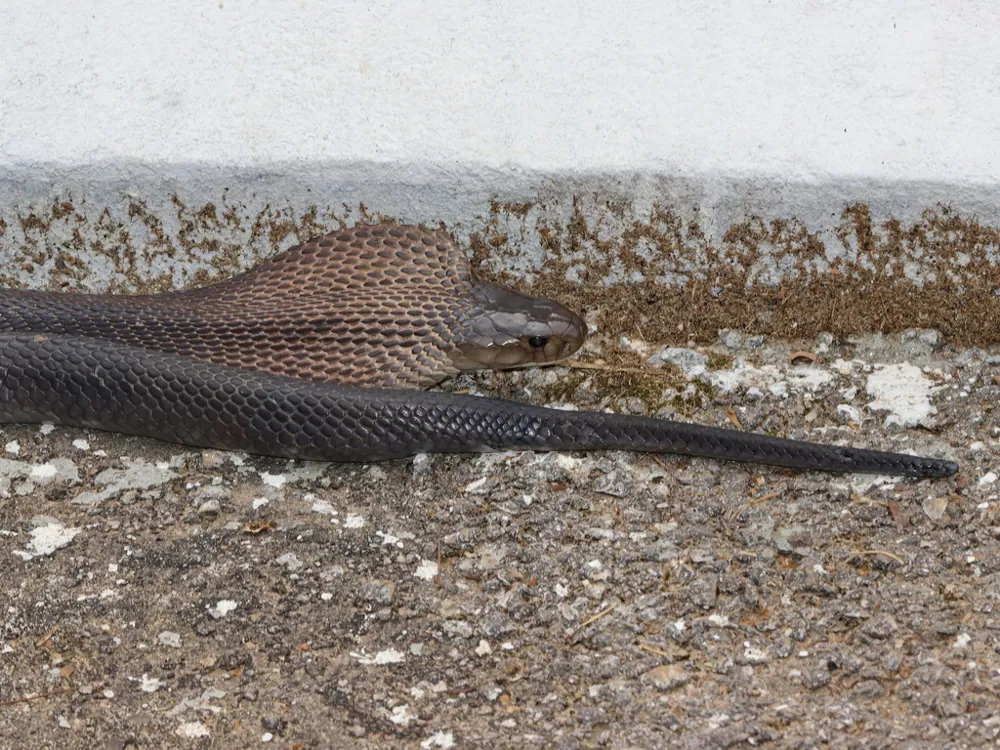
The brown banded cobra is a medium-sized venomous snake found in Southeast Asia. Until 2022 scientists thought it was part of the monocled cobra's species, but genetic studies showed it is its own species. It is an aggressive snake and was a major cause of snakebites in one part of southwestern China.1



 No anndirte ngal
- A medium-sized cobra, with adult body length of 69 to 137 cm1
- Brown body, with shades that vary along its length1
- Juveniles and smaller snakes are darker on the back and belly than large adults1
- Narrow crossbands on the middle to hind parts of the back scales1
- The underside of the tail is buff with dark fringes1
- Its hood usually has a single eye-like marking1
Ina heewi waylondireede e: It resembles the monocled cobra (Naja kaouthia), which has a similar hood marking. The brown banded cobra can be told apart by its regular narrow crossbands on the middle to hind back scales and the buff tail with dark fringes.1
Doole tooke
Tooke ngal ina yaltira ñiiƴe mum so ina ŋata.
Hol ko tooke ŋatgol mum waɗata?
Not much is known about this species' venom. Its fangs are short and firm, like other cobras, but they are not adapted to spit venom.1
Hol no bone mum heewiri e yimɓe?
Bone e yimɓe: Bone sanneIna waawi warde neɗɗo mo safraaka.It is an aggressive snake and was one of the most significant causes of snakebite in Xishuangbanna, Yunnan Province, from 2007 to 2014.1
 So ina ŋata
- Haɗ neɗɗo oo dillaade, deƴƴin mo, ittu jabbe e kala ko tiiɗi, yahra mo opitaal law: sérum antivenimeux woni safaara.
Adii fof noddu nimero urgence (112, 000, 911). Ɗum ko anndinal ballal adiingal, wonaa saaraangal doktoor. Ko adii e ballal adiingal
 Reen hoore maa
- Wota a meem, wota a nanngu, wota a ñiŋŋu kullal ladde haa abada, hay so ngal ina famɗi, hay so ina nanndi e ɗaaniingal walla maayngal.
- Accu ngal nokku. So a fotti e ngal, deƴƴu, ruttu ɓaawo seeɗa seeɗa, accu ngal yaha laawol mum.
- So gooto ŋatii ma: deƴƴu, wota a dillu, noddu nimero urgence (112, 000, 911) walla yahu opitaal law. Jogo e hakkille no ngal nanndi, natal ina walla.
Ngal faalaaka gaañde ma. Ina huutoroo tooke mum ngam nanngude ñaamdu walla reenaade, ina ɓuri yiɗde suuɗaade. Ɓeydu anndude no reentortoo
Hol to e aduna?
Hol no mawniri?
Hol no juutiri?
 juutde no ulluuɗi galle 2,5, hinere haa lawol
 juutde no banaanaaji 8 sammondiraaɗi
 ina waawi taƴde 100 meeteer e segonde 49 (neɗɗo ɓurɗo yaawde ina sokli 9,6)
Hol no Brown banded cobra mawniri, so fooɗondiraama e AN?
Limgal tan e navigatoor maa. Alaa ko danndetee walla ko neldetee.
Hol no yaawiri?


Humpito
It has been reported entering homes in Yunnan Province to feed on chicks.1
Several individuals have been found living in abandoned termite nests during winter in Menglian County.1
Like other cobras, its fangs are short and firm, but they are not adapted to spray venom.1
It was considered part of the monocled cobra's species until genetic studies in 2022 showed it is a separate species.1
Ɗo humpito iwri
- Brown banded cobra (Wikipedia (CC BY-SA 4.0))
- Naja fuxi (iNaturalist): inɗe e ceergal.
- Venom Wiki: tolno bone, mawnude heewnde e miijo yaawde ko amen. Yiy no men keɓirta ɗum: No men tolnirta bone.
Kala humpito e ngoo hello ina jogii limoore hollirnde iwdi mum. So men juumii, yaafo, men ko yiɗɓe kulle, wonaa jaaynde ganndal. Wiy men e [email protected], men feewnita.
 Yaare nden ina weelaa! Venom Wiki ko golle neɗɗo gooto: yoɓetaake, alaa ko jeeyetee, alaa rewɓe. Ndokkal seeɗa ina walla ngam heddude e enternet.Ñaam yaare nden
 Kobra Enndo
 Kobra laamɗo
 Caspian cobra
 Common krait
 Malayan krait
 Many-banded krait
 Yaare oolnde maayde
 Wipeer cerkeeje siy Enndo
 Mbaa-ndiyam (Puff adder)
 Ladde Russell
 Asian giant hornet
 Komodo dragon