
 Afrik
Afrik Aazi
Aazi Orop
Orop Amerik Worgo
 Ostaraali e Oseyaani
 Antarktik
 Geec Pasifik
 Geec Atlantik
 Geec Enndo
 Geec Arktik
 Geec Mediteraane
 Geec Boɗeejo
 Geec Karayib
 Geec Korayl
 Geec Siin Worgo
 Geec Filipiin
 Geec Andaman
 Geec Rewo
 Geec Timor e Arafura
 Gulf Bengal
 Gulf Kaliforni
Burmese krait
 Ŋatgol
The Burmese krait is a venomous snake that lives only in Myanmar. It has broad white bands with black gaps between them, and it is active at night. It is shy and very rarely bites people.1



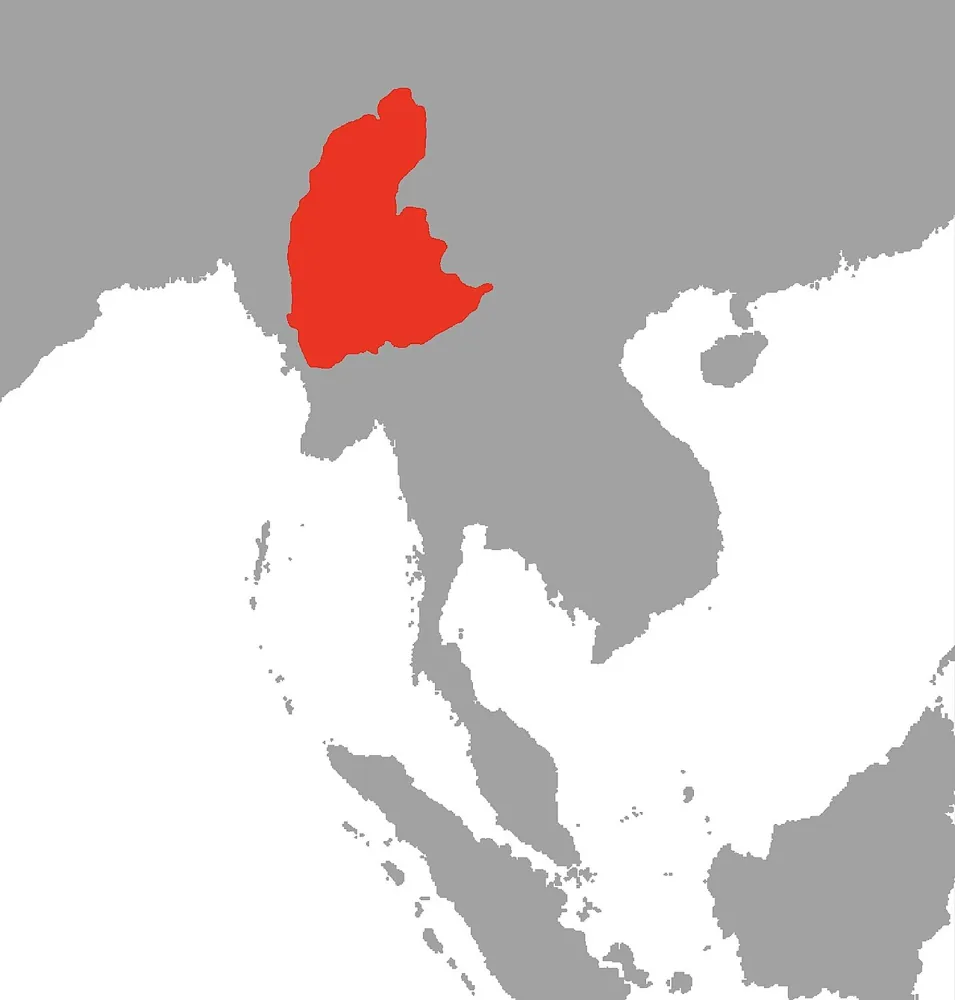
 No anndirte ngal
- Slender body with a triangular shape in cross-section1
- 11 to 14 broad white crossbars on the back, each about as wide as the black gaps between them1
- Smooth, glossy scales, and some white scales may have black spots in their centres1
- Flat head that is slightly distinct from the neck, with small to medium eyes and round black pupils1
- Uniformly white belly and a short tail of about 150 mm1
Doole tooke
Tooke ngal ina yaltira ñiiƴe mum so ina ŋata.
Hol ko tooke ŋatgol mum waɗata?
Very little is known about its venom. Like other kraits, the venom is potent and contains pre-synaptic and post-synaptic neurotoxins, which attack the nerves.1
Hol no bone mum heewiri e yimɓe?
Bone e yimɓe: Bone sanneIna waawi warde neɗɗo mo safraaka.Bites to humans by this snake are exceptionally rare. No well-documented human deaths have been attributed to it. It is very reluctant to bite unless it is repeatedly provoked.1
Hol ko ngal waɗata so ina hula?
When molested or threatened, it coils loosely and hides its head beneath its body.1
 So ina ŋata
- Haɗ neɗɗo oo dillaade, deƴƴin mo, ittu jabbe e kala ko tiiɗi, yahra mo opitaal law: sérum antivenimeux woni safaara.
Adii fof noddu nimero urgence (112, 000, 911). Ɗum ko anndinal ballal adiingal, wonaa saaraangal doktoor. Ko adii e ballal adiingal
 Reen hoore maa
- Wota a meem, wota a nanngu, wota a ñiŋŋu kullal ladde haa abada, hay so ngal ina famɗi, hay so ina nanndi e ɗaaniingal walla maayngal.
- Accu ngal nokku. So a fotti e ngal, deƴƴu, ruttu ɓaawo seeɗa seeɗa, accu ngal yaha laawol mum.
- So gooto ŋatii ma: deƴƴu, wota a dillu, noddu nimero urgence (112, 000, 911) walla yahu opitaal law. Jogo e hakkille no ngal nanndi, natal ina walla.
Ngal faalaaka gaañde ma. Ina huutoroo tooke mum ngam nanngude ñaamdu walla reenaade, ina ɓuri yiɗde suuɗaade. Ɓeydu anndude no reentortoo
Hol to e aduna?
Hol no mawniri?
Hol no juutiri?
 juutde no ulluuɗi galle 3, hinere haa lawol
 juutde no banaanaaji 8 sammondiraaɗi
 ina waawi taƴde 100 meeteer e segonde 49 (neɗɗo ɓurɗo yaawde ina sokli 9,6)
Hol no Burmese krait mawniri, so fooɗondiraama e AN?
Limgal tan e navigatoor maa. Alaa ko danndetee walla ko neldetee.
Hol no yaawiri?


Humpito
Feññinoowo fenaande
Fenaande: Kraits are aggressive snakes that bite readily.
Goonga: The Burmese krait is shy and very disinclined to bite. It usually coils and hides its head unless it is persistently provoked.1
Ɗo humpito iwri
- Bungarus magnimaculatus (Wikipedia (CC BY-SA 4.0))
- Bungarus magnimaculatus (iNaturalist): inɗe e ceergal.
- Venom Wiki: tolno bone, mawnude heewnde e miijo yaawde ko amen. Yiy no men keɓirta ɗum: No men tolnirta bone.
Kala humpito e ngoo hello ina jogii limoore hollirnde iwdi mum. So men juumii, yaafo, men ko yiɗɓe kulle, wonaa jaaynde ganndal. Wiy men e [email protected], men feewnita.
 Yaare nden ina weelaa! Venom Wiki ko golle neɗɗo gooto: yoɓetaake, alaa ko jeeyetee, alaa rewɓe. Ndokkal seeɗa ina walla ngam heddude e enternet.Ñaam yaare nden
 Indian cobra
 King cobra
 Caspian cobra
 Common krait
 Malayan krait
 Many-banded krait
 Deathstalker
 Indian saw-scaled viper
 Mbaa-ndiyam (Puff adder)
 Ladde Russell
 Asian giant hornet
 Komodo dragon