
 Afrik
Afrik Aazi
Aazi Orop
Orop Amerik Worgo
 Ostaraali e Oseyaani
 Antarktik
 Geec Pasifik
 Geec Atlantik
 Geec Enndo
 Geec Arktik
 Geec Mediteraane
 Geec Boɗeejo
 Geec Karayib
 Geec Korayl
 Geec Siin Worgo
 Geec Filipiin
 Geec Andaman
 Geec Rewo
 Geec Timor e Arafura
 Gulf Bengal
 Gulf Kaliforni
Equatorial spitting cobra
 Ina tuha walla ina wuja
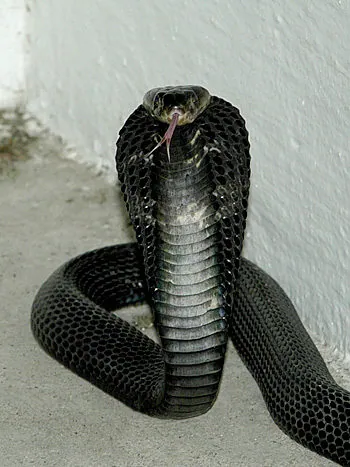
The equatorial spitting cobra is a medium-sized cobra found in Southeast Asia. It can spray venom from a distance, which is what makes it special. It lives mainly in forests and sometimes in gardens and towns.1



 No anndirte ngal
- Medium-sized, usually 0.9 to 1.2 metres long, and can grow up to 1.5 metres1
- Has no hood marks1
- Comes in two colour forms: yellow (common in Thailand and northern Peninsular Malaysia) and black (found in Peninsular Malaysia, Singapore and the islands of Indonesia and the Philippines)1
- Juveniles and adults often have different colours1
- Has smooth scales and a short, rounded snout1
Doole tooke
Ina tuha walla ina wuja ndiyam muusɗam e ko jangii ngal.
Hol ko tooke ŋatgol mum waɗata?
Its venom is postsynaptic neurotoxic, meaning it attacks the nerves. It also contains cardiotoxins, which damage the heart, and cytotoxins, which damage cells. The venom is strong enough that a bite can be serious.1
Hol no bone mum heewiri e yimɓe?
Bone e yimɓe: Bone sanneIna waawi warde neɗɗo mo safraaka.It will spit venom readily when cornered or threatened, and it can spit from up in trees. It will also strike and bite. The yellow form from Thailand is described as highly aggressive and more prone to spitting large amounts.1
Hol ko ngal waɗata so ina hula?
When cornered or threatened, it spits venom and will also strike and bite.1
 So ina ŋata walla ina tuha
- Haɗ neɗɗo oo dillaade, deƴƴin mo, ittu jabbe e kala ko tiiɗi, yahra mo opitaal law: sérum antivenimeux woni safaara.
- So tooke tuhaama e gite, loot ɗe e ndiyam laaɓɗam keewɗam ɗoo e sahaa oo.
Adii fof noddu nimero urgence (112, 000, 911). Ɗum ko anndinal ballal adiingal, wonaa saaraangal doktoor. Ko adii e ballal adiingal
 Reen hoore maa
- Wota a meem, wota a nanngu, wota a ñiŋŋu kullal ladde haa abada, hay so ngal ina famɗi, hay so ina nanndi e ɗaaniingal walla maayngal.
- Accu ngal nokku. So a fotti e ngal, deƴƴu, ruttu ɓaawo seeɗa seeɗa, accu ngal yaha laawol mum.
- So gooto ŋatii ma walla tuhii tooke e gite maa: deƴƴu, wota a dillu, noddu nimero urgence (112, 000, 911) walla yahu opitaal law. Jogo e hakkille no ngal nanndi, natal ina walla.
Ngal faalaaka gaañde ma. Ina huutoroo tooke mum ngam nanngude ñaamdu walla reenaade, ina ɓuri yiɗde suuɗaade. Ɓeydu anndude no reentortoo
Hol to e aduna?
Hol no mawniri?
Hol no juutiri?
 juutde no ulluuɗi galle 3, hinere haa lawol
 juutde no banaanaaji 8 sammondiraaɗi
 ina waawi taƴde 100 meeteer e segonde 51 (neɗɗo ɓurɗo yaawde ina sokli 9,6)
Hol no Equatorial spitting cobra mawniri, so fooɗondiraama e AN?
Limgal tan e navigatoor maa. Alaa ko danndetee walla ko neldetee.
Hol no yaawiri?


Humpito
It can spit venom even when it is up in the trees.1
Cardiotoxins make up about 40% of its venom protein, a higher share than in some related spitting cobras.1
The yellow colour form from Thailand is described as more aggressive than the black form.1
It is mainly active during the day and lives on the ground.1
Feññinoowo fenaande
Fenaande: It is just a subspecies of the Indian cobra.
Goonga: It was first defined as its own species in 1989. Earlier, its populations had been grouped under several subspecies of the Indian cobra.1
Ɗo humpito iwri
- Equatorial spitting cobra (Wikipedia (CC BY-SA 4.0))
- Naja sumatrana (iNaturalist): inɗe e ceergal.
- Venom Wiki: tolno bone, mawnude heewnde e miijo yaawde ko amen. Yiy no men keɓirta ɗum: No men tolnirta bone.
Kala humpito e ngoo hello ina jogii limoore hollirnde iwdi mum. So men juumii, yaafo, men ko yiɗɓe kulle, wonaa jaaynde ganndal. Wiy men e [email protected], men feewnita.
 Yaare nden ina weelaa! Venom Wiki ko golle neɗɗo gooto: yoɓetaake, alaa ko jeeyetee, alaa rewɓe. Ndokkal seeɗa ina walla ngam heddude e enternet.Ñaam yaare nden
 Kobra Enndo
 Kobra laamɗo
 Caspian cobra
 Common krait
 Malayan krait
 Many-banded krait
 Yaare oolnde maayde
 Wipeer cerkeeje siy Enndo
 Mbaa-ndiyam (Puff adder)
 Ladde Russell
 Asian giant hornet
 Komodo dragon