
 Afrik
Afrik Aazi
Aazi Orop
Orop Amerik Worgo
 Ostaraali e Oseyaani
 Antarktik
 Geec Pasifik
 Geec Atlantik
 Geec Enndo
 Geec Arktik
 Geec Mediteraane
 Geec Boɗeejo
 Geec Karayib
 Geec Korayl
 Geec Siin Worgo
 Geec Filipiin
 Geec Andaman
 Geec Rewo
 Geec Timor e Arafura
 Gulf Bengal
 Gulf Kaliforni
Fea's viper
 Ŋatgol
Fea's viper is a venomous snake that lives in the mountains of Southeast Asia. It is special because scientists once thought it was one of the most primitive vipers, but later studies showed it is more closely related to the pit vipers. It can also be found on roadsides, in rice fields and around homes.1

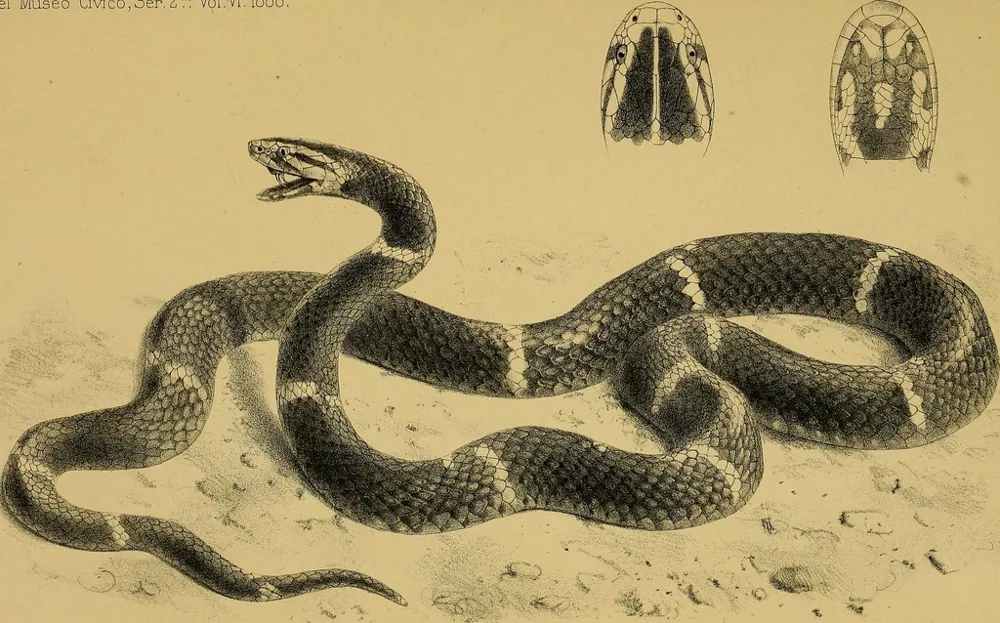
 No anndirte ngal
- The body is shiny, deep blue-grey to black, with several widely spaced, thin white-orange crossbands.1
- The head is orange to slightly yellow, with a cross-pattern outlined in grey.1
- The eyes are yellowish with vertical pupils.1
- The scales are smooth, not keeled, and arranged in 17 rows at midbody.1
- Adults are no longer than about 77 cm.1
Doole tooke
Tooke ngal ina yaltira ñiiƴe mum so ina ŋata.
Hol ko tooke ŋatgol mum waɗata?
Its venom is remarkably similar to that of Wagler's viper. Its venom does not cause blood clotting, bleeding or muscle breakdown, according to the studies described. One toxin, azemiopsin, blocks nicotinic acetylcholine receptors in muscles, which interferes with signals that tell muscles to move.1
Hol no bone mum heewiri e yimɓe?
Bone e yimɓe: Ina tiiɗiŊatgol ina sokli doktoor. Maayde ina famɗi sanne.Hol ko ngal waɗata so ina hula?
When disturbed, it flattens its body to look wider, flares its jaws so the head looks triangular, sometimes vibrates its tail, and then may strike.1
 So ina ŋata
- Haɗ neɗɗo oo dillaade, deƴƴin mo, jogo terɗe ŋataaɗe ɗee e toownde ɓernde, ittu jabbe e kala ko tiiɗi, yahra mo opitaal law.
Adii fof noddu nimero urgence (112, 000, 911). Ɗum ko anndinal ballal adiingal, wonaa saaraangal doktoor. Ko adii e ballal adiingal
 Reen hoore maa
- Wota a meem, wota a nanngu, wota a ñiŋŋu kullal ladde haa abada, hay so ngal ina famɗi, hay so ina nanndi e ɗaaniingal walla maayngal.
- Accu ngal nokku. So a fotti e ngal, deƴƴu, ruttu ɓaawo seeɗa seeɗa, accu ngal yaha laawol mum.
- So gooto ŋatii ma: deƴƴu, wota a dillu, noddu nimero urgence (112, 000, 911) walla yahu opitaal law. Jogo e hakkille no ngal nanndi, natal ina walla.
Ngal faalaaka gaañde ma. Ina huutoroo tooke mum ngam nanngude ñaamdu walla reenaade, ina ɓuri yiɗde suuɗaade. Ɓeydu anndude no reentortoo
Hol to e aduna?
Hol no mawniri?
Hol no juutiri?
 juutde no banaanaaji 4 sammondiraaɗi
 ina waawi taƴde 100 meeteer e segonde 100 (neɗɗo ɓurɗo yaawde ina sokli 9,6)
Hol no Fea's viper mawniri, so fooɗondiraama e AN?
Limgal tan e navigatoor maa. Alaa ko danndetee walla ko neldetee.
Hol no yaawiri?


Humpito
Its fangs are hollow and rotate, but they are short. It also has a blade-like structure on the underside of the fang, which is seen only in a few other snake groups.1
It has large head shields like colubrids and elapids, instead of the many small scales found on most vipers.1
It hibernates during the winter, which is unusual for most vipers.1
It is thought to be crepuscular, which means it is most active at dusk and dawn, and it is active from early March into late November.1
Feññinoowo fenaande
Fenaande: It is one of the most primitive vipers.
Goonga: It was once thought to be among the most primitive vipers, but molecular studies show it is the sister group to the pit vipers, Crotalinae.1
Ɗo humpito iwri
- Azemiops (Wikipedia (CC BY-SA 4.0))
- Azemiops feae (iNaturalist): inɗe e ceergal.
- Venom Wiki: tolno bone, mawnude heewnde e miijo yaawde ko amen. Yiy no men keɓirta ɗum: No men tolnirta bone.
Kala humpito e ngoo hello ina jogii limoore hollirnde iwdi mum. So men juumii, yaafo, men ko yiɗɓe kulle, wonaa jaaynde ganndal. Wiy men e [email protected], men feewnita.
 Yaare nden ina weelaa! Venom Wiki ko golle neɗɗo gooto: yoɓetaake, alaa ko jeeyetee, alaa rewɓe. Ndokkal seeɗa ina walla ngam heddude e enternet.Ñaam yaare nden
 Indian saw-scaled viper
 Mbaa-ndiyam (Puff adder)
 Ladde Russell
 Common European adder
 Eastern Russell's viper
 Northeast African carpet viper
 Deathstalker
 Indian cobra
 King cobra
 Asian giant hornet
 Komodo dragon
 Spanish fly