
 Afrik
Afrik Aazi
Aazi Orop
Orop Amerik Worgo
 Ostaraali e Oseyaani
 Antarktik
 Geec Pasifik
 Geec Atlantik
 Geec Enndo
 Geec Arktik
 Geec Mediteraane
 Geec Boɗeejo
 Geec Karayib
 Geec Korayl
 Geec Siin Worgo
 Geec Filipiin
 Geec Andaman
 Geec Rewo
 Geec Timor e Arafura
 Gulf Bengal
 Gulf Kaliforni
Giant golden orb-weaver
 Ŋatgol
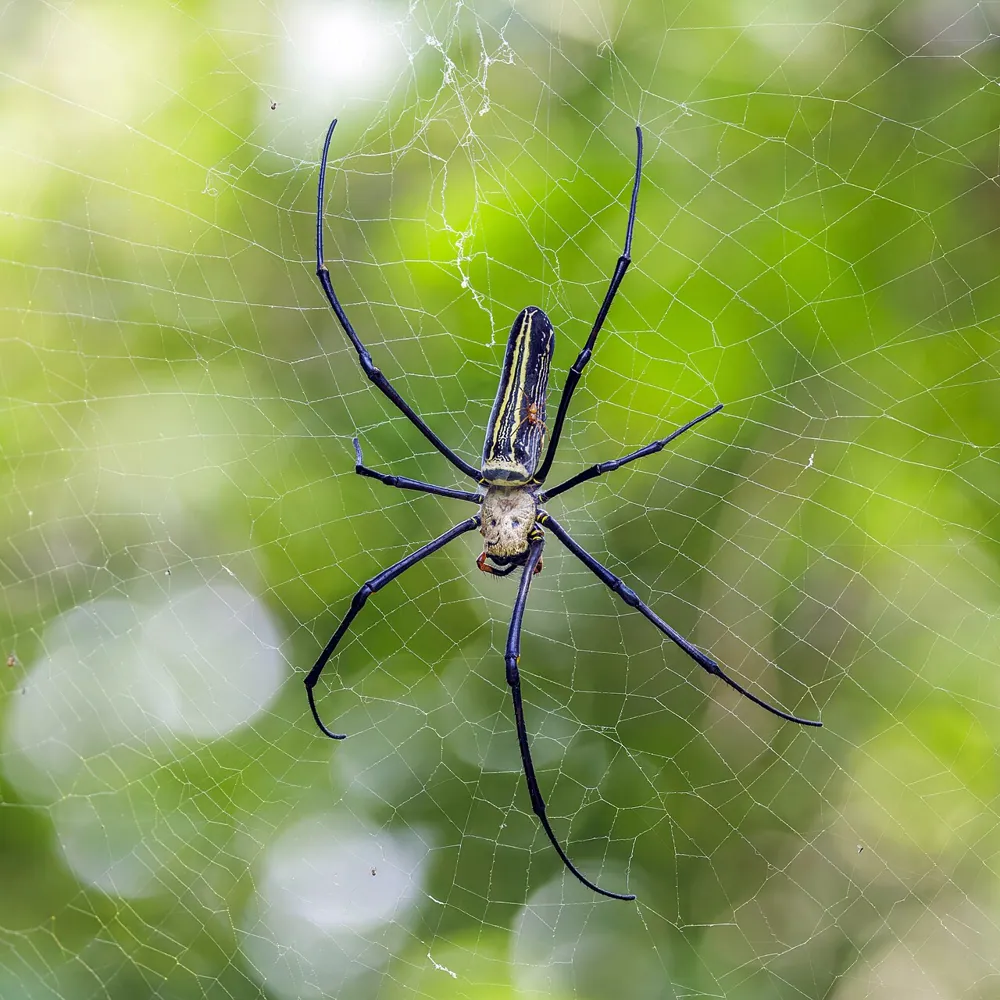
The giant golden orb-weaver is a large spider found across East and Southeast Asia and in Oceania. Adult females have bodies up to 50 mm long, while the males are tiny by comparison. Its big, yellowish webs are often seen in forests and against buildings.1

 No anndirte ngal
- Adult females are very large, with a body length of 25 to 50 mm.1
- The abdomen is mostly dark yellow-brown with yellow stripes.1
- The legs are long and black and yellow.1
- Females have a horn-like bulge on the back of the body (tergum).1
- Males are tiny, measuring about 4 to 6 mm, with light brown legs.1
Ina heewi waylondireede e: Trichonephila clavata has no horn-like bulge on its back, which the giant golden orb-weaver does have. Nephila laurinae lacks the pair of yellow stripes at the back of the abdomen that this species has.1
Doole tooke
Tooke ngal ina yaltira ñiiƴe mum so ina ŋata.
Hol no bone mum heewiri e yimɓe?
Bone e yimɓe: HoyɗoNo jukkugol ñaaki walla ko ɓuri famɗude. Ko ɓuri heewde alaa bone e yimɓe. So ina ŋata
- Loot nokku ŋataaɗo oo, waɗ galaas e mum ngam muusu ngu. Heɓ ballal cafrol so muusu ngu ina tiiɗi, ina saakoo walla neɗɗo oo ina wiya wonaa e jam.
Adii fof noddu nimero urgence (112, 000, 911). Ɗum ko anndinal ballal adiingal, wonaa saaraangal doktoor. Ko adii e ballal adiingal
 Reen hoore maa
- Wota a meem, wota a nanngu, wota a ñiŋŋu kullal ladde haa abada, hay so ngal ina famɗi, hay so ina nanndi e ɗaaniingal walla maayngal.
- Accu ngal nokku. So a fotti e ngal, deƴƴu, ruttu ɓaawo seeɗa seeɗa, accu ngal yaha laawol mum.
- So gooto ŋatii ma: deƴƴu, wota a dillu, noddu nimero urgence (112, 000, 911) walla yahu opitaal law. Jogo e hakkille no ngal nanndi, natal ina walla.
Ngal faalaaka gaañde ma. Ina huutoroo tooke mum ngam nanngude ñaamdu walla reenaade, ina ɓuri yiɗde suuɗaade. Ɓeydu anndude no reentortoo
Hol to e aduna?
Hol no mawniri?
Hol no juutiri?
 ɓuri hondu maa tokooso rabbaɗde
 ina waawi taƴde 100 meeteer e segonde 130 (neɗɗo ɓurɗo yaawde ina sokli 9,6)
Hol no Giant golden orb-weaver mawniri, so fooɗondiraama e AN?
Limgal tan e navigatoor maa. Alaa ko danndetee walla ko neldetee.
Hol no yaawiri?


Humpito
Its silk is more robust than most human-made materials, which has drawn attention from materials scientists.1
Males can be 4 to 10 times smaller than the females, one of the biggest size differences among land animals.1
Adult females keep growing by moulting after they mature, which most spiders do not do.1
Females do not shed their genitals when they moult, so they can keep collecting sperm.1
When temperatures rise above 40 °C, it will abandon its web.1
Ngam ganduɓe tooke
- Innde ganndal
- Nephila pilipes
- Fedde
- Araañeeji
- Ɓesngu
- Nephilidae2
- Ordre
- Araneae
- Leyɗe mawɗe
- Aazi, Ostaraali e Oseyaani
- Ɓiɓɓe tokooso
- Females do not hang egg sacs in the web. Instead they dig a pit, lay eggs in it and cover it with plant debris or soil. Adult females lay eggs continuously.1
- Bone e yimɓe
- 1 / 5: Hoyɗo3
Ɗo humpito iwri
- Nephila pilipes (Wikipedia (CC BY-SA 4.0))
- Nephila pilipes (iNaturalist): inɗe e ceergal.
- Venom Wiki: tolno bone, mawnude heewnde e miijo yaawde ko amen. Yiy no men keɓirta ɗum: No men tolnirta bone.
Kala humpito e ngoo hello ina jogii limoore hollirnde iwdi mum. So men juumii, yaafo, men ko yiɗɓe kulle, wonaa jaaynde ganndal. Wiy men e [email protected], men feewnita.
 Yaare nden ina weelaa! Venom Wiki ko golle neɗɗo gooto: yoɓetaake, alaa ko jeeyetee, alaa rewɓe. Ndokkal seeɗa ina walla ngam heddude e enternet.Ñaam yaare nden
 Redback spider
 Katipo
 Mediterranean black widow
 Diving bell spider
 European yellow sac spider
 White-tailed spider
 Yaare oolnde maayde
 Kobra Enndo
 Wipeer cerkeeje siy Enndo
 Kobra laamɗo
 Mbaa-ndiyam (Puff adder)
 Ladde Russell
_female_and_male_Double_Haven.jpg)