
 Afrik
Afrik Aazi
Aazi Orop
Orop Amerik Worgo
 Ostaraali e Oseyaani
 Antarktik
 Geec Pasifik
 Geec Atlantik
 Geec Enndo
 Geec Arktik
 Geec Mediteraane
 Geec Boɗeejo
 Geec Karayib
 Geec Korayl
 Geec Siin Worgo
 Geec Filipiin
 Geec Andaman
 Geec Rewo
 Geec Timor e Arafura
 Gulf Bengal
 Gulf Kaliforni
Palestine viper
 Ŋatgol
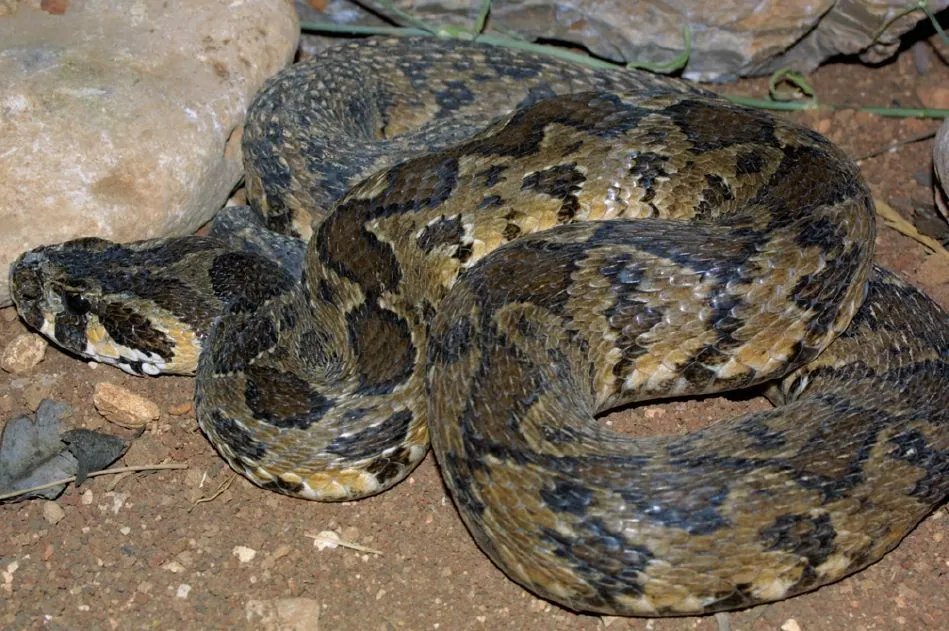
The Palestine viper is a venomous snake found in the Levant, the region around the eastern Mediterranean. It is considered a leading cause of snakebite within its range, so knowing what it looks like is important. It is also special because it lays eggs, unlike most other vipers.1
 No anndirte ngal
- The head is triangular and clearly separate from the neck, covered in small scales.1
- The upper body has large dark, diamond-shaped (rhomboid) blotches, sometimes forming a zig-zag pattern.1
- It usually measures 70 to 90 cm in total length (body plus tail), and can reach 130 cm.1
Ina heewi waylondireede e: The harmless coin-marked snake lives in the same areas and is similar in length, colouring and defensive behaviour, so people often confuse the two. This resemblance is probably a case of Batesian mimicry, where a harmless animal copies a dangerous one.1
Doole tooke
Tooke ngal ina yaltira ñiiƴe mum so ina ŋata.
Hol ko tooke ŋatgol mum waɗata?
Its venom contains several groups of active compounds, including neurotoxins (which attack the nerves) and hemorrhagins (which damage blood vessels and cause bleeding). Other compounds include angioneurin growth factors and integrin inhibitors. Its LD50, a standard measure of how toxic a venom is, is 0.34 mg/kg.1
Hol no bone mum heewiri e yimɓe?
Bone e yimɓe: Bone sanneIna waawi warde neɗɗo mo safraaka.It is considered a leading cause of snakebite within its range. About 0.5% to 2% of people who are bitten die. At least 7 people are reported to have died from its bite in Israel in the 21st century so far.1
 Kabaaru moƴƴo: doktooruuji ina njogii lekki (sérum antivenimeux) walla safaara ngam ɗum.1
 So ina ŋata
- Haɗ neɗɗo oo dillaade, deƴƴin mo, jogo terɗe ŋataaɗe ɗee e toownde ɓernde, ittu jabbe e kala ko tiiɗi, yahra mo opitaal law.
Adii fof noddu nimero urgence (112, 000, 911). Ɗum ko anndinal ballal adiingal, wonaa saaraangal doktoor. Ko adii e ballal adiingal
 Reen hoore maa
- Wota a meem, wota a nanngu, wota a ñiŋŋu kullal ladde haa abada, hay so ngal ina famɗi, hay so ina nanndi e ɗaaniingal walla maayngal.
- Accu ngal nokku. So a fotti e ngal, deƴƴu, ruttu ɓaawo seeɗa seeɗa, accu ngal yaha laawol mum.
- So gooto ŋatii ma: deƴƴu, wota a dillu, noddu nimero urgence (112, 000, 911) walla yahu opitaal law. Jogo e hakkille no ngal nanndi, natal ina walla.
Ngal faalaaka gaañde ma. Ina huutoroo tooke mum ngam nanngude ñaamdu walla reenaade, ina ɓuri yiɗde suuɗaade. Ɓeydu anndude no reentortoo
Hol to e aduna?
Hol no mawniri?
Hol no juutiri?
 juutde no ulluuɗi galle 2,5, hinere haa lawol
 juutde no banaanaaji 7 sammondiraaɗi
 ina waawi taƴde 100 meeteer e segonde 100 (neɗɗo ɓurɗo yaawde ina sokli 9,6)
Hol no Palestine viper mawniri, so fooɗondiraama e AN?
Limgal tan e navigatoor maa. Alaa ko danndetee walla ko neldetee.
Hol no yaawiri?


Humpito
In the 1991 Gulf War, the code phrase "Nahash Tsefa" (Viper Snake) was broadcast on radio and TV to tell Israelis to put on their gas masks during missile attacks from Iraq.1
In 2018 it was chosen as the national snake of Israel, after a public campaign.1
The Israeli Air Force named its Bell AH-1 Cobra helicopter Tzefa, and the IDF's paratroopers battalion #202 is called the Tzefa Battalion.1
Some modern scholars think the tsefa snake mentioned in the Hebrew Bible is this species.1
A list of venomous snakes in the Brooklyn Papyrus, from the first millennium BC in ancient Egypt, probably includes it.1
Ngam ganduɓe tooke
- Innde ganndal
- Daboia palaestinae
- Fedde
- Ɓoɗɗi wipeer
- Ɓesngu
- Viperidae2
- Ordre
- Squamata
- Leyɗe mawɗe
- Aazi
- Ɓiɓɓe tokooso
- Unlike most vipers, which give birth to live young, it lays eggs around August. The eggs hatch 1.5 to 2 months later, and the young can already bite and kill prey.1
- Hol no ngal woniri e ladde
- Least Concern1
- Bone e yimɓe
- 4 / 5: Bone sanne3
Ɗo humpito iwri
- Daboia palaestinae (Wikipedia (CC BY-SA 4.0))
- Daboia palaestinae (iNaturalist): inɗe e ceergal.
- Venom Wiki: tolno bone, mawnude heewnde e miijo yaawde ko amen. Yiy no men keɓirta ɗum: No men tolnirta bone.
Kala humpito e ngoo hello ina jogii limoore hollirnde iwdi mum. So men juumii, yaafo, men ko yiɗɓe kulle, wonaa jaaynde ganndal. Wiy men e [email protected], men feewnita.
 Yaare nden ina weelaa! Venom Wiki ko golle neɗɗo gooto: yoɓetaake, alaa ko jeeyetee, alaa rewɓe. Ndokkal seeɗa ina walla ngam heddude e enternet.Ñaam yaare nden
 Wipeer cerkeeje siy Enndo
 Mbaa-ndiyam (Puff adder)
 Ladde Russell
 Common European adder
 Eastern Russell's viper
 Northeast African carpet viper
 Yaare oolnde maayde
 Kobra Enndo
 Kobra laamɗo
 Asian giant hornet
 Komodo dragon
 Spanish fly