
 Afrịka
 Eshia
Eshia Yurop
Yurop Ndịda Amerika
 Ọstrelia na Oshenia
 Antaktika
 Oké Osimiri Pasifik
 Oké Osimiri Atlantik
 Oké Osimiri India
 Oké Osimiri Arktik
 Osimiri Mediterenian
 Osimiri Uhie
 Osimiri Karibịan
 Osimiri Coral
 Osimiri Ndịda China
 Osimiri Filipin
 Osimiri Andaman
 Osimiri Ugwu (North Sea)
 Osimiri Timor na Arafura
 Ọwara Bengal
 Ọwara California
Asian common toad
 Nsị n'akpụkpọ ahụ ya
The Asian common toad is a large toad found across much of South and Southeast Asia. It grows to about 20 cm long and is often seen at night under street lamps. It matters because it has spread to places where it does not belong, and experts worry it could harm local wildlife.1

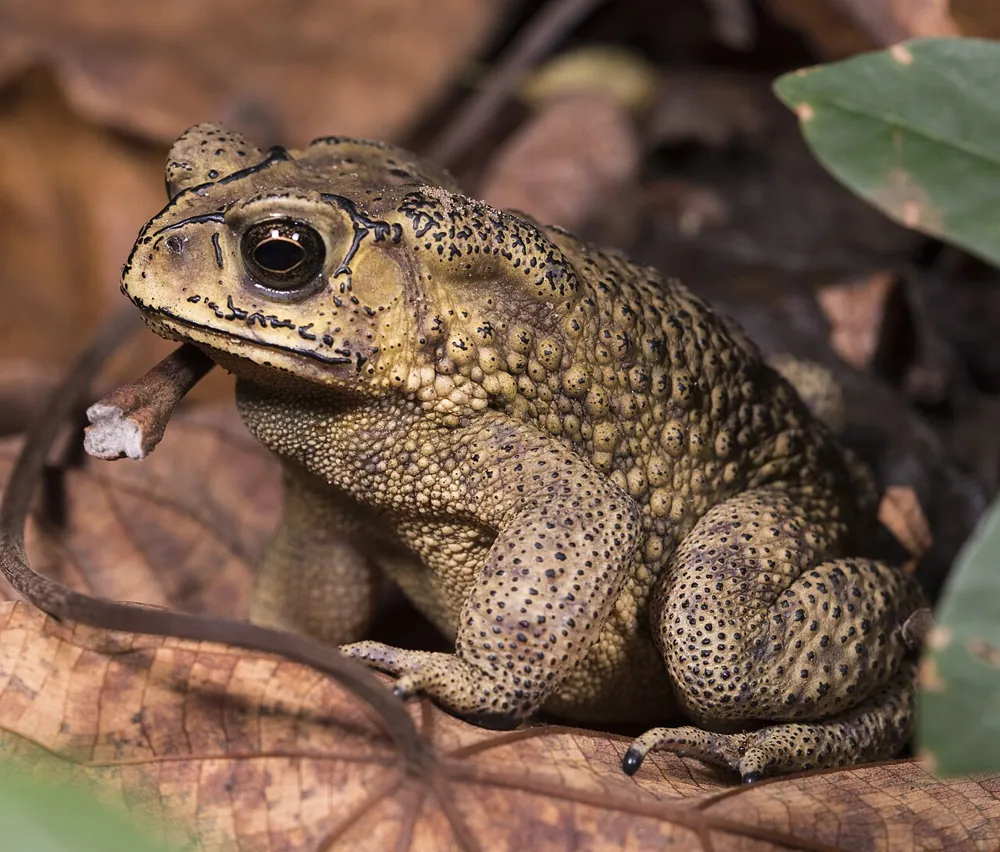
 Otú ị ga-esi mata ya
- Grows to about 20 cm long1
- Back is yellowish or brownish, with black spines and ridges1
- Large, kidney-shaped or elongated parotoid glands behind the eyes, which are prominent1
- Ear drum (tympanum) is very distinct, at least two-thirds the width of the eye1
- Short, blunt snout and several bony ridges on top of the head1
Ike nsị
Akpụkpọ ahụ ya nwere nsị. Ọ dị egwu imetụ ya aka, iracha ya ma ọ bụ iri ya.
Gịnị ka nsị dị n'ahụ ya na-eme?
Its parotoid glands secrete milky white bufotoxin, a toxin, from its back. It uses this to deter predators. The toxin would beyond reasonable doubt severely affect native predators such as snakes, goannas and quolls.1
Kedu otú o si dị egwu nye mmadụ?
Ihe ize ndụ nye mmadụ: Ọ dị njọỌ bụrụ na mmadụ metụ ya aka ma ọ bụ rie ya, gaa n'ebe dọkịta. Ọnwụ anaghị adịkarị ma ọlị.Gịnị ka ọ na-eme mgbe ụjọ tụrụ ya?
Its glands in the back release toxin to deter predators.1
 Ọ bụrụ na mmadụ metụrụ ya aka ma ọ bụ rie ya
- Ọ bụrụ na mmadụ metụrụ otu aka: saa aka nke ọma, emetụkwala anya ma ọ bụ ọnụ aka. Ọ bụrụ na nwatakịrị ma ọ bụ anụ ụlọ rachara otu ma ọ bụ rie ya: kpọọ ụlọ ọrụ ndụmọdụ nsị (poison centre) ma ọ bụ nọmba mberede gị.
Na-ebu ụzọ kpọọ nọmba mberede gị mgbe niile (112, 000, 911). Nke a bụ ndụmọdụ enyemaka mbụ n'ozuzu, ọ bụghị ndụmọdụ ọgwụ. Isi ihe enyemaka mbụ
 Nọrọ na nchekwa
- Emetụla anụ ọhịa aka, ejidela ya, emekwala ya ihe ọjọọ, ọbụna obere, ọbụna ma ọ dị ka ọ na-ehi ụra ma ọ bụ nwụọ anwụ.
- Nye ya ohere. Ọ bụrụ na ị zutere otu, dị jụụ, laghachi azụ nwayọ, hapụ ya ka ọ gaa ụzọ ya.
- Ọ bụrụ na i metụrụ ya aka ma ọ bụ rie ya: ehichala anya gị ma ọ bụ ọnụ gị, saa aka gị, chọọkwa enyemaka ọgwụ.
Ọ naghị achụ gị. Nsị ya dị naanị ka ihe ọ bụla ghara iri ya. Ihe ndị ọzọ gbasara ịnọ na nchekwa
Ọ hà aṅaa?
Kedu otú o si dị ogologo?
 dị ogologo dị ka blọk egwuregwu 6 n'ahịrị
 nwere ike ịgba ọsọ mita 100 n'ime sekọnd 180 (mmadụ kacha ọsọ chọrọ 9,6)
Kedu otú Asian common toad si hà ma e jiri ya tụnyere GỊ?
Naanị mgbakọ na mwepụ n'ime browser gị. Ọ dịghị ihe echekwara ma ọ bụ ezigara ebe ọ bụla.
Kedu otú o si agba ọsọ?


Eziokwu
It has been described as one of Australia's '10 most unwanted' species, and as potentially more damaging than the cane toad.1
Madagascar's native predators lack resistance to its toxins, which could affect local wildlife there.1
Tadpoles have been shown to be able to recognise their kin.1
Tadpoles grown in sibling groups metamorphosed faster than those kept in mixed groups.1
Maka ndị ọkachamara nsị
Ebe eziokwu ndị a si
- Duttaphrynus melanostictus (Wikipedia (CC BY-SA 4.0))
- Duttaphrynus melanostictus (iNaturalist): aha na nhazi ọkwa.
- Venom Wiki: ọkwa ihe ize ndụ, nha nkịtị na nchepụta ọsọ bụ nke anyị. Lee otú anyị si achọpụta ha: Otú anyị si atụ ihe ize ndụ.
Eziokwu ọ bụla dị na peeji a nwere nọmba na-egosi ebe o si. Ọ bụrụ na anyị mehiere ihe, ndo, anyị bụ ndị hụrụ anụmanụ n'anya, ọ bụghị akwụkwọ akụkọ sayensị. Gwa anyị na [email protected], anyị ga-edozi ya.
 Akpị agụụ na-agụ! Venom Wiki bụ ọrụ otu onye: n'efu, na-enweghị mgbasa ozi na ndị na-esochi gị. Obere onyinye na-enyere aka idebe ya n'ịntanetị.Nye akpị nri
Ndị ọzọ si n'otu ahụ: Awọ nsị, awọ ala na newt
 Japanese fire-bellied newtAwọ nsị, awọ ala na newtỌ chọrọ dọkịtaEmetụla ya aka
 Common toadAwọ nsị, awọ ala na newtNaanị na-afụ ụfụEmetụla ya aka
 Oriental fire-bellied toadAwọ nsị, awọ ala na newtAdịghị njọ
 Asiatic toadAwọ nsị, awọ ala na newtNaanị na-afụ ụfụEmetụla ya aka
 Emperor newtAwọ nsị, awọ ala na newtNaanị na-afụ ụfụEmetụla ya aka
 Himalayan newtAwọ nsị, awọ ala na newtNaanị na-afụ ụfụEmetụla ya aka
 Deathstalker
 Indian cobra
 Indian saw-scaled viper
 King cobra
 Puff adder
 Agwọ Russell
.jpg)