
 Afrịka
 Eshia
Eshia Yurop
Yurop Ndịda Amerika
 Ọstrelia na Oshenia
 Antaktika
 Oké Osimiri Pasifik
 Oké Osimiri Atlantik
 Oké Osimiri India
 Oké Osimiri Arktik
 Osimiri Mediterenian
 Osimiri Uhie
 Osimiri Karibịan
 Osimiri Coral
 Osimiri Ndịda China
 Osimiri Filipin
 Osimiri Andaman
 Osimiri Ugwu (North Sea)
 Osimiri Timor na Arafura
 Ọwara Bengal
 Ọwara California
Asian needle ant
 Ịgba
ỊgbaThe Asian needle ant is a small stinging ant that is native to Japan and mainland Asia. It has spread to the United States, where it is now common across much of the American South and along the East Coast. It matters because its sting can cause serious allergic reactions in some people, and it crowds out native ants.1

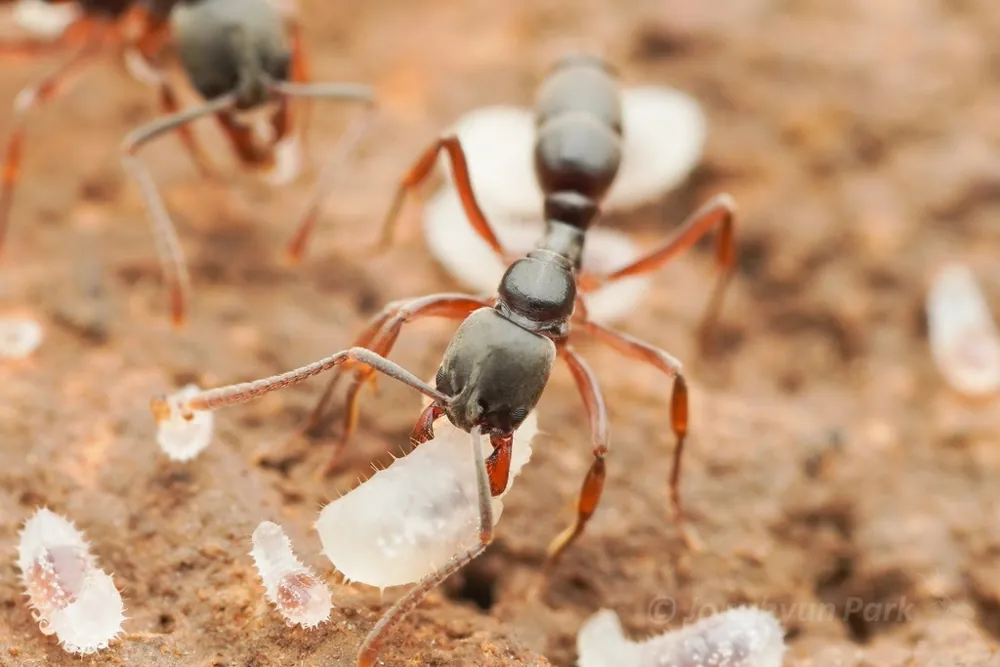
 Otú ị ga-esi mata ya
- A stinging ant from the ponerine group1
- Often nests near termite colonies, which are a reliable food source1
- Looks very similar to Brachyponera luteipes, B. nigrita and B. obscurans, so it is often mistaken for them1
A na-agwakọkarị ya na: It is commonly mistaken for Brachyponera luteipes, Brachyponera nigrita and Brachyponera obscurans because they look similar. Misidentification can mean people do not realise the seriousness of the sting.1
Ike nsị
Nsị na-esi na ndụdụ ya apụta.
Gịnị ka nsị ọ na-agba na-eme?
Its venom contains proteins that can trigger allergic reactions. The sting is painful and can leave people in distress. In some cases, allergic reactions cause anaphylaxis, a severe whole-body reaction, or urticaria, which is hives.1
Kedu otú o si dị egwu nye mmadụ?
Ihe ize ndụ nye mmadụ: Na-afụ ụfụỌ nwere ike ịfụ ụfụ nke ukwuu, mana ọ naghị adịkarị njọ.The ant is not aggressive but will sting when disturbed. Its sting can cause anaphylaxis in some people. As it spreads into more urban areas, encounters with people are likely to increase.1
Gịnị ka ọ na-eme mgbe ụjọ tụrụ ya?
Although not aggressive, it will sting when it is disturbed.1
 Ọ bụrụ na ọ gbaa
- Saa ebe ọ gbara, mee ka ha jụọ oyi.
- Ọ bụrụ na o siri onye ahụ ike iku ume, ihu ya ma ọ bụ akpịrị ya na-aza, ma ọ bụ na ọ dị ya ka ọ ga-ada mbà, ọ bụ mberede allergy: kpọọ nọmba mberede gị.
Na-ebu ụzọ kpọọ nọmba mberede gị mgbe niile (112, 000, 911). Nke a bụ ndụmọdụ enyemaka mbụ n'ozuzu, ọ bụghị ndụmọdụ ọgwụ. Isi ihe enyemaka mbụ
 Nọrọ na nchekwa
- Emetụla anụ ọhịa aka, ejidela ya, emekwala ya ihe ọjọọ, ọbụna obere, ọbụna ma ọ dị ka ọ na-ehi ụra ma ọ bụ nwụọ anwụ.
- Nye ya ohere. Ọ bụrụ na ị zutere otu, dị jụụ, laghachi azụ nwayọ, hapụ ya ka ọ gaa ụzọ ya.
- Ọ bụrụ na otu gbaa gị: dị jụụ, emegharịla ahụ, kpọọ nọmba mberede gị (112, 000, 911) ma ọ bụ gaa ụlọ ọgwụ ngwa ngwa. Cheta ka o si dị, foto na-enye aka.
Ọ naghị achụ gị. Ọ na-eji nsị ya ejide nri ma ọ bụ chebe onwe ya, ọ ga-akakwa mma n'anya ya ịzo onwe ya. Ihe ndị ọzọ gbasara ịnọ na nchekwa
Ọ hà aṅaa?
Kedu otú o si dị ogologo?
 dị obere nke na ọ nwere ike ịnọdụ n'elu mbọ aka gị
Kedu otú Asian needle ant si hà ma e jiri ya tụnyere GỊ?
Naanị mgbakọ na mwepụ n'ime browser gị. Ọ dịghị ihe echekwara ma ọ bụ ezigara ebe ọ bụla.
Kedu otú o si agba ọsọ?


Eziokwu
In invaded areas, the native ant Aphaenogaster rudis was reduced by 96%.1
A study in North Carolina found that the Asian needle ant outnumbered all native ant species in most sample areas.1
Workers carry nestmates from one place to another when the colony moves nests. Unlike many ant species, they likely use visual cues rather than pheromone trails to do this.1
Queen ants have a special pouch that stores sperm, so they can mate once and keep reproducing for their whole lives.1
The European Union has listed it as an invasive alien species of Union concern, so it cannot be imported, bred, transported, sold or intentionally released in any EU member state.1
Ebe eziokwu ndị a si
- Brachyponera chinensis (Wikipedia (CC BY-SA 4.0))
- Brachyponera chinensis (iNaturalist): aha na nhazi ọkwa.
- Venom Wiki: ọkwa ihe ize ndụ, nha nkịtị na nchepụta ọsọ bụ nke anyị. Lee otú anyị si achọpụta ha: Otú anyị si atụ ihe ize ndụ.
Eziokwu ọ bụla dị na peeji a nwere nọmba na-egosi ebe o si. Ọ bụrụ na anyị mehiere ihe, ndo, anyị bụ ndị hụrụ anụmanụ n'anya, ọ bụghị akwụkwọ akụkọ sayensị. Gwa anyị na [email protected], anyị ga-edozi ya.
 Akpị agụụ na-agụ! Venom Wiki bụ ọrụ otu onye: n'efu, na-enweghị mgbasa ozi na ndị na-esochi gị. Obere onyinye na-enyere aka idebe ya n'ịntanetị.Nye akpị nri
 Green weaver ant
 Red wood ant
 Arboreal bicoloured ant
 European fire ant
 Indian jumping ant
 Samsum ant
 Deathstalker
 Indian cobra
 Indian saw-scaled viper
 King cobra
 Puff adder
 Agwọ Russell