
 Afrịka
 Eshia
Eshia Yurop
Yurop Ndịda Amerika
 Ọstrelia na Oshenia
 Antaktika
 Oké Osimiri Pasifik
 Oké Osimiri Atlantik
 Oké Osimiri India
 Oké Osimiri Arktik
 Osimiri Mediterenian
 Osimiri Uhie
 Osimiri Karibịan
 Osimiri Coral
 Osimiri Ndịda China
 Osimiri Filipin
 Osimiri Andaman
 Osimiri Ugwu (North Sea)
 Osimiri Timor na Arafura
 Ọwara Bengal
 Ọwara California
Chinese black earth tiger tarantula
 Ịta
ỊtaThe Chinese black earth tiger tarantula is a large, dark spider that lives in burrows on the island of Hainan, off southern China. It is one of several spiders from China and Vietnam known as the Chinese bird spider. Scientists study its venom because it is considered highly venomous.1

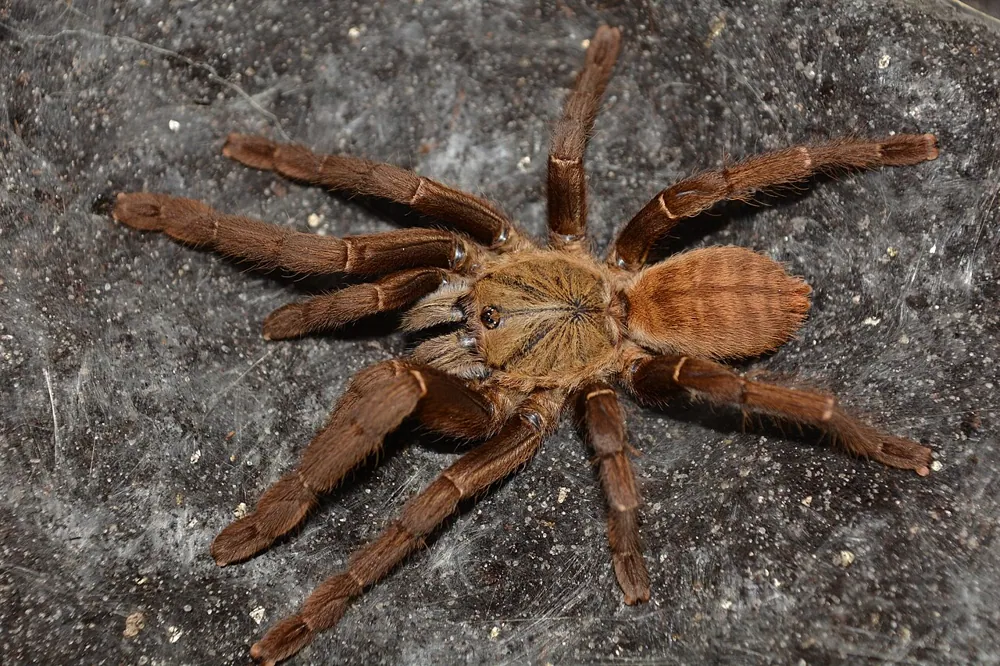
 Otú ị ga-esi mata ya
- Dark black-brown body1
- Abdomen (rear body) is dark brown with six black stripes running across it and a black stripe down the centre of the upper surface1
- Carapace (upper front body) is black-brown, and the underside of the front body is red-brown1
- Females are about 60 mm long (body plus chelicerae, the fang-bearing mouthparts), with longer legs than males1
- Males are smaller, about 34 mm long, but have legs of a similar length to the female's1
A na-agwakọkarị ya na: It resembles Cyriopagopus schmidti. The Chinese black earth tiger tarantula can be told apart by its dark black-brown body and by the longer thorns on the forward-facing side of the maxillae (the mouthparts that hold the fangs).1
Ike nsị
Nsị na-esi n'eze nsị ya ma ọ bụ eze ya apụta mgbe ọ na-ata.
Gịnị ka nsị ọ na-agba na-eme?
Its venom is a complex neurotoxin, meaning it attacks the nervous system. It contains many compounds that block neurotransmitters, the chemical messengers that carry signals between nerves, including neurotoxic peptides called hainantoxins. The effects of its bite on humans are not well documented.1
Kedu otú o si dị egwu nye mmadụ?
Ihe ize ndụ nye mmadụ: Ọ dị njọỊta ya chọrọ dọkịta. Ọnwụ anaghị adịkarị ma ọlị.The effects of its bite on people are not well documented. In laboratory tests, its venom is often lethal to mice and rats in small doses, so it is generally regarded as a highly venomous species.1
Gịnị ka ọ na-eme mgbe ụjọ tụrụ ya?
It stays hidden in its silk-lined burrow during the day, and its silk alarm lines radiate from the burrow mouth.1
 Ọ bụrụ na ọ tara
- Saa ebe ọ tara, mee ka ọ jụọ oyi. Chọọ enyemaka ọgwụ ma ọ bụrụ na mgbu ahụ siri ike ma ọ bụ na ahụ adịghị onye ahụ mma.
Na-ebu ụzọ kpọọ nọmba mberede gị mgbe niile (112, 000, 911). Nke a bụ ndụmọdụ enyemaka mbụ n'ozuzu, ọ bụghị ndụmọdụ ọgwụ. Isi ihe enyemaka mbụ
 Nọrọ na nchekwa
- Emetụla anụ ọhịa aka, ejidela ya, emekwala ya ihe ọjọọ, ọbụna obere, ọbụna ma ọ dị ka ọ na-ehi ụra ma ọ bụ nwụọ anwụ.
- Nye ya ohere. Ọ bụrụ na ị zutere otu, dị jụụ, laghachi azụ nwayọ, hapụ ya ka ọ gaa ụzọ ya.
- Ọ bụrụ na otu tara gị: dị jụụ, emegharịla ahụ, kpọọ nọmba mberede gị (112, 000, 911) ma ọ bụ gaa ụlọ ọgwụ ngwa ngwa. Cheta ka o si dị, foto na-enye aka.
Ọ naghị achụ gị. Ọ na-eji nsị ya ejide nri ma ọ bụ chebe onwe ya, ọ ga-akakwa mma n'anya ya ịzo onwe ya. Ihe ndị ọzọ gbasara ịnọ na nchekwa
Ọ hà aṅaa?
Kedu otú o si dị ogologo?
 dị ogologo dị ka blọk egwuregwu 2 n'ahịrị
 nwere ike ịgba ọsọ mita 100 n'ime sekọnd 200 (mmadụ kacha ọsọ chọrọ 9,6)
Kedu otú Chinese black earth tiger tarantula si hà ma e jiri ya tụnyere GỊ?
Naanị mgbakọ na mwepụ n'ime browser gị. Ọ dịghị ihe echekwara ma ọ bụ ezigara ebe ọ bụla.
Kedu otú o si agba ọsọ?


Eziokwu
Although the effects of its bite on humans are poorly recorded, its venom is often lethal to laboratory mice and rats in small doses.1
Its venom contains neurotoxic peptides called hainantoxins, which block the chemical signals that nerves use to communicate.1
It lives on very steep, south-facing mountain slopes, at angles of 75 to 85 degrees.1
Despite the male being much smaller than the female, his legs are nearly as long as hers.1
Ebe eziokwu ndị a si
- Cyriopagopus hainanus (Wikipedia (CC BY-SA 4.0))
- Cyriopagopus hainanus (iNaturalist): aha na nhazi ọkwa.
- Venom Wiki: ọkwa ihe ize ndụ, nha nkịtị na nchepụta ọsọ bụ nke anyị. Lee otú anyị si achọpụta ha: Otú anyị si atụ ihe ize ndụ.
Eziokwu ọ bụla dị na peeji a nwere nọmba na-egosi ebe o si. Ọ bụrụ na anyị mehiere ihe, ndo, anyị bụ ndị hụrụ anụmanụ n'anya, ọ bụghị akwụkwọ akụkọ sayensị. Gwa anyị na [email protected], anyị ga-edozi ya.
 Akpị agụụ na-agụ! Venom Wiki bụ ọrụ otu onye: n'efu, na-enweghị mgbasa ozi na ndị na-esochi gị. Obere onyinye na-enyere aka idebe ya n'ịntanetị.Nye akpị nri
Ndị ọzọ si n'otu ahụ: Tarantula na funnel-web
 Gooty sapphire tarantulaTarantula na funnel-webỌ chọrọ dọkịta
 Indian ornamental tarantulaTarantula na funnel-webỌ chọrọ dọkịta
 Cobalt blue tarantulaTarantula na funnel-webNaanị na-afụ ụfụ
 Chinese bird spiderTarantula na funnel-webỌ chọrọ dọkịta
 Fringed ornamental tarantulaTarantula na funnel-webỌ chọrọ dọkịta
 Japanese funnel-web spiderTarantula na funnel-webỌ chọrọ dọkịta
 Deathstalker
 Indian cobra
 Indian saw-scaled viper
 King cobra
 Puff adder
 Agwọ Russell