
 Afrịka
 Eshia
Eshia Yurop
Yurop Ndịda Amerika
 Ọstrelia na Oshenia
 Antaktika
 Oké Osimiri Pasifik
 Oké Osimiri Atlantik
 Oké Osimiri India
 Oké Osimiri Arktik
 Osimiri Mediterenian
 Osimiri Uhie
 Osimiri Karibịan
 Osimiri Coral
 Osimiri Ndịda China
 Osimiri Filipin
 Osimiri Andaman
 Osimiri Ugwu (North Sea)
 Osimiri Timor na Arafura
 Ọwara Bengal
 Ọwara California
Indian ornamental tarantula
 Ịta
ỊtaThe Indian ornamental tarantula is a large spider that lives high in trees in southeastern India. It is known for its striking patterned body and is a popular spider among tarantula keepers. It has a medically significant bite, though no death from any tarantula bite has ever been recorded.1

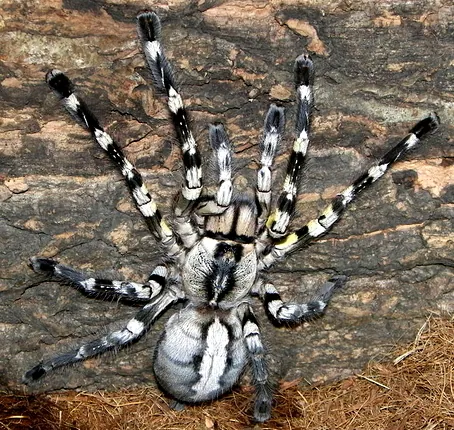
 Otú ị ga-esi mata ya
Ike nsị
Nsị na-esi n'eze nsị ya ma ọ bụ eze ya apụta mgbe ọ na-ata.
Gịnị ka nsị ọ na-agba na-eme?
The venom may cause intense pain. This is judged from the experience of keepers bitten by other spiders in the same genus, so the exact effects are not fully known for this species. The large fangs also make puncture wounds that can become infected.1
Kedu otú o si dị egwu nye mmadụ?
Ihe ize ndụ nye mmadụ: Ọ dị njọỊta ya chọrọ dọkịta. Ọnwụ anaghị adịkarị ma ọlị.No death has ever been recorded from any tarantula bite. The species is still considered to have a medically significant bite. It generally prefers flight to fight but may attack when cornered.1
Gịnị ka ọ na-eme mgbe ụjọ tụrụ ya?
It tends to be quite defensive, and may attack when cornered, though it generally prefers to escape.1
 Ọ bụrụ na ọ tara
- Bites need proper treatment, because the fang punctures can lead to a secondary bacterial infection if they are not treated properly.1
- Saa ebe ọ tara, mee ka ọ jụọ oyi. Chọọ enyemaka ọgwụ ma ọ bụrụ na mgbu ahụ siri ike ma ọ bụ na ahụ adịghị onye ahụ mma.
Na-ebu ụzọ kpọọ nọmba mberede gị mgbe niile (112, 000, 911). Nke a bụ ndụmọdụ enyemaka mbụ n'ozuzu, ọ bụghị ndụmọdụ ọgwụ. Isi ihe enyemaka mbụ
 Nọrọ na nchekwa
- Emetụla anụ ọhịa aka, ejidela ya, emekwala ya ihe ọjọọ, ọbụna obere, ọbụna ma ọ dị ka ọ na-ehi ụra ma ọ bụ nwụọ anwụ.
- Nye ya ohere. Ọ bụrụ na ị zutere otu, dị jụụ, laghachi azụ nwayọ, hapụ ya ka ọ gaa ụzọ ya.
- Ọ bụrụ na otu tara gị: dị jụụ, emegharịla ahụ, kpọọ nọmba mberede gị (112, 000, 911) ma ọ bụ gaa ụlọ ọgwụ ngwa ngwa. Cheta ka o si dị, foto na-enye aka.
Ọ naghị achụ gị. Ọ na-eji nsị ya ejide nri ma ọ bụ chebe onwe ya, ọ ga-akakwa mma n'anya ya ịzo onwe ya. Ihe ndị ọzọ gbasara ịnọ na nchekwa
Ọ hà aṅaa?
Kedu otú o si dị ogologo?
 dị ogologo dị ka blọk egwuregwu 6 n'ahịrị
 nwere ike ịgba ọsọ mita 100 n'ime sekọnd 190 (mmadụ kacha ọsọ chọrọ 9,6)
Kedu otú Indian ornamental tarantula si hà ma e jiri ya tụnyere GỊ?
Naanị mgbakọ na mwepụ n'ime browser gị. Ọ dịghị ihe echekwara ma ọ bụ ezigara ebe ọ bụla.
Kedu otú o si agba ọsọ?


Eziokwu
No case of anaphylactic shock, a severe allergic reaction, has ever been reported from tarantula venom.1
Some individuals of this genus live communally when territory is limited, sharing a tree with several holes.1
Females can live upwards of 12 years, while males usually live only 3 to 5 years.1
In captivity, it is usually fed crickets and grasshoppers, and adults can occasionally be fed small rodents.1
It is one of the most popular arboreal tarantulas among amateur collectors.1
Onye na-ekpughe akụkọ ụgha
Akụkọ ụgha: Tarantula bites are always deadly.
Eziokwu: No death has ever been recorded from any tarantula bite, although the bite of this species can still be medically significant and cause intense pain.1
Ebe eziokwu ndị a si
- Poecilotheria regalis (Wikipedia (CC BY-SA 4.0))
- Poecilotheria regalis (iNaturalist): aha na nhazi ọkwa.
- Venom Wiki: ọkwa ihe ize ndụ, nha nkịtị na nchepụta ọsọ bụ nke anyị. Lee otú anyị si achọpụta ha: Otú anyị si atụ ihe ize ndụ.
Eziokwu ọ bụla dị na peeji a nwere nọmba na-egosi ebe o si. Ọ bụrụ na anyị mehiere ihe, ndo, anyị bụ ndị hụrụ anụmanụ n'anya, ọ bụghị akwụkwọ akụkọ sayensị. Gwa anyị na [email protected], anyị ga-edozi ya.
 Akpị agụụ na-agụ! Venom Wiki bụ ọrụ otu onye: n'efu, na-enweghị mgbasa ozi na ndị na-esochi gị. Obere onyinye na-enyere aka idebe ya n'ịntanetị.Nye akpị nri
Ndị ọzọ si n'otu ahụ: Tarantula na funnel-web
 Gooty sapphire tarantulaTarantula na funnel-webỌ chọrọ dọkịta
 Cobalt blue tarantulaTarantula na funnel-webNaanị na-afụ ụfụ
 Chinese bird spiderTarantula na funnel-webỌ chọrọ dọkịta
 Chinese black earth tiger tarantulaTarantula na funnel-webỌ chọrọ dọkịta
 Fringed ornamental tarantulaTarantula na funnel-webỌ chọrọ dọkịta
 Japanese funnel-web spiderTarantula na funnel-webỌ chọrọ dọkịta
 Deathstalker
 Indian cobra
 Indian saw-scaled viper
 King cobra
 Puff adder
 Agwọ Russell