
 Afrịka
 Eshia
Eshia Yurop
Yurop Ndịda Amerika
 Ọstrelia na Oshenia
 Antaktika
 Oké Osimiri Pasifik
 Oké Osimiri Atlantik
 Oké Osimiri India
 Oké Osimiri Arktik
 Osimiri Mediterenian
 Osimiri Uhie
 Osimiri Karibịan
 Osimiri Coral
 Osimiri Ndịda China
 Osimiri Filipin
 Osimiri Andaman
 Osimiri Ugwu (North Sea)
 Osimiri Timor na Arafura
 Ọwara Bengal
 Ọwara California
Cobalt blue tarantula
 Ịta
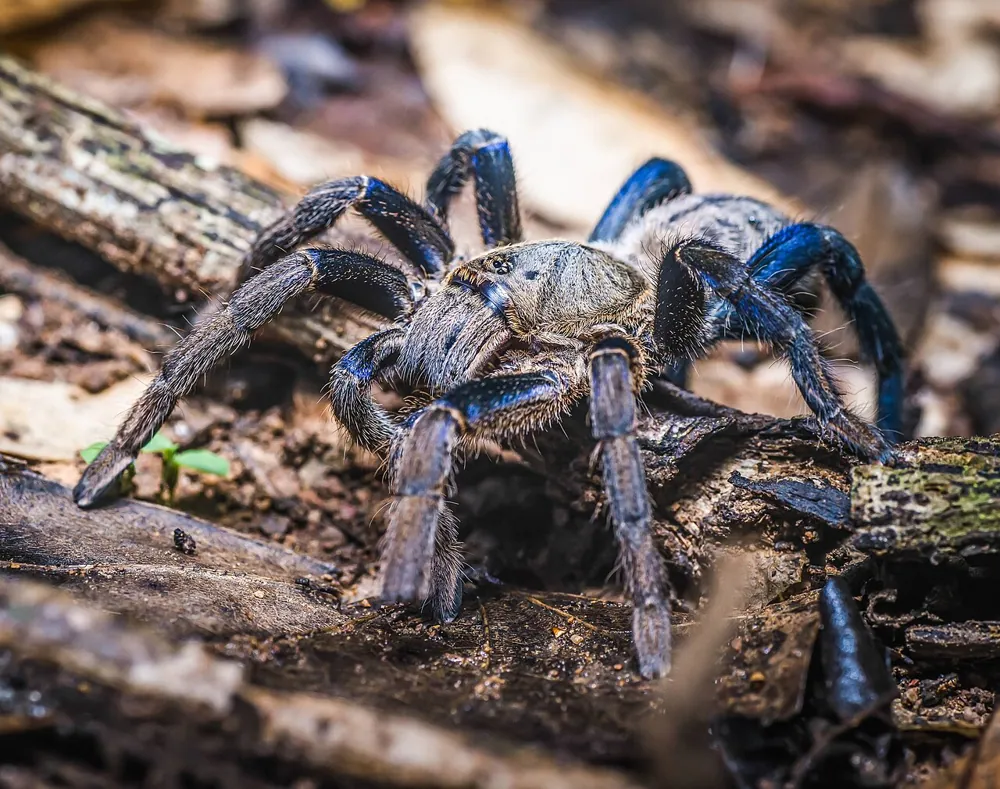
ỊtaThe cobalt blue tarantula is a medium-sized spider with bright blue legs. It lives in tropical rainforests in Myanmar and Thailand, mostly underground. It is popular in the pet trade, so people sometimes meet it in homes.1
 Otú ị ga-esi mata ya
- Medium-sized, with a leg span of around 13 cm.1
- Iridescent blue legs.1
- Light grey body, which may have darker grey chevron markings on the abdomen.1
- Adult males turn light tan or bronze and look longer-legged after their final moult. They also gain mating hooks and a palpal bulb on the pedipalps.1
- Females look the same as males until the males' final moult, and they grow larger than males.1
Ike nsị
Nsị na-esi n'eze nsị ya ma ọ bụ eze ya apụta mgbe ọ na-ata.
Gịnị ka nsị ọ na-agba na-eme?
Its venom is not enough to kill a human, but bites can be extremely painful. In a 2001 case from Japan, two people bitten by a pet reported severe pain and inflammation, which faded after several hours. One person had stiffness for a few weeks. Bites can also cause severe muscle cramps.1
Kedu otú o si dị egwu nye mmadụ?
Ihe ize ndụ nye mmadụ: Na-afụ ụfụỌ nwere ike ịfụ ụfụ nke ukwuu, mana ọ naghị adịkarị njọ.The venom is not enough to kill a person, but bites are very painful and can cause inflammation and severe muscle cramps. The species is described as having potent venom, so bites should still be taken seriously.1
Gịnị ka ọ na-eme mgbe ụjọ tụrụ ya?
It is described as a fast and defensive tarantula.1
 Ọ bụrụ na ọ tara
- Saa ebe ọ tara, mee ka ọ jụọ oyi. Chọọ enyemaka ọgwụ ma ọ bụrụ na mgbu ahụ siri ike ma ọ bụ na ahụ adịghị onye ahụ mma.
Na-ebu ụzọ kpọọ nọmba mberede gị mgbe niile (112, 000, 911). Nke a bụ ndụmọdụ enyemaka mbụ n'ozuzu, ọ bụghị ndụmọdụ ọgwụ. Isi ihe enyemaka mbụ
 Nọrọ na nchekwa
- Emetụla anụ ọhịa aka, ejidela ya, emekwala ya ihe ọjọọ, ọbụna obere, ọbụna ma ọ dị ka ọ na-ehi ụra ma ọ bụ nwụọ anwụ.
- Nye ya ohere. Ọ bụrụ na ị zutere otu, dị jụụ, laghachi azụ nwayọ, hapụ ya ka ọ gaa ụzọ ya.
- Ọ bụrụ na otu tara gị: dị jụụ, emegharịla ahụ, kpọọ nọmba mberede gị (112, 000, 911) ma ọ bụ gaa ụlọ ọgwụ ngwa ngwa. Cheta ka o si dị, foto na-enye aka.
Ọ naghị achụ gị. Ọ na-eji nsị ya ejide nri ma ọ bụ chebe onwe ya, ọ ga-akakwa mma n'anya ya ịzo onwe ya. Ihe ndị ọzọ gbasara ịnọ na nchekwa
Ọ hà aṅaa?
Kedu otú o si dị ogologo?
 dị ogologo dị ka blọk egwuregwu 4 n'ahịrị
 nwere ike ịgba ọsọ mita 100 n'ime sekọnd 220 (mmadụ kacha ọsọ chọrọ 9,6)
Kedu otú Cobalt blue tarantula si hà ma e jiri ya tụnyere GỊ?
Naanị mgbakọ na mwepụ n'ime browser gị. Ọ dịghị ihe echekwara ma ọ bụ ezigara ebe ọ bụla.
Kedu otú o si agba ọsọ?


Eziokwu
Its blue colour comes from iridescent legs, which shimmer in light.1
Adult males change colour after their final moult, turning light tan or bronze.1
Despite its potent venom, it is a mainstay of the pet trade.1
It is a fossorial species, meaning it spends nearly all its time in deep burrows that it digs itself.1
Females grow larger than males and live for years longer.1
Onye na-ekpughe akụkọ ụgha
Akụkọ ụgha: Tarantula venom is deadly to people.
Eziokwu: The venom of this tarantula is not enough to kill a human, but its bites can be extremely painful.1
Ebe eziokwu ndị a si
- Cobalt blue tarantula (Wikipedia (CC BY-SA 4.0))
- Cyriopagopus lividus (iNaturalist): aha na nhazi ọkwa.
- Venom Wiki: ọkwa ihe ize ndụ, nha nkịtị na nchepụta ọsọ bụ nke anyị. Lee otú anyị si achọpụta ha: Otú anyị si atụ ihe ize ndụ.
Eziokwu ọ bụla dị na peeji a nwere nọmba na-egosi ebe o si. Ọ bụrụ na anyị mehiere ihe, ndo, anyị bụ ndị hụrụ anụmanụ n'anya, ọ bụghị akwụkwọ akụkọ sayensị. Gwa anyị na [email protected], anyị ga-edozi ya.
 Akpị agụụ na-agụ! Venom Wiki bụ ọrụ otu onye: n'efu, na-enweghị mgbasa ozi na ndị na-esochi gị. Obere onyinye na-enyere aka idebe ya n'ịntanetị.Nye akpị nri
Ndị ọzọ si n'otu ahụ: Tarantula na funnel-web
 Gooty sapphire tarantulaTarantula na funnel-webỌ chọrọ dọkịta
 Indian ornamental tarantulaTarantula na funnel-webỌ chọrọ dọkịta
 Chinese bird spiderTarantula na funnel-webỌ chọrọ dọkịta
 Chinese black earth tiger tarantulaTarantula na funnel-webỌ chọrọ dọkịta
 Fringed ornamental tarantulaTarantula na funnel-webỌ chọrọ dọkịta
 Japanese funnel-web spiderTarantula na funnel-webỌ chọrọ dọkịta
 Deathstalker
 Indian cobra
 Indian saw-scaled viper
 King cobra
 Puff adder
 Agwọ Russell