
 Afrịka
 Eshia
Eshia Yurop
Yurop Ndịda Amerika
 Ọstrelia na Oshenia
 Antaktika
 Oké Osimiri Pasifik
 Oké Osimiri Atlantik
 Oké Osimiri India
 Oké Osimiri Arktik
 Osimiri Mediterenian
 Osimiri Uhie
 Osimiri Karibịan
 Osimiri Coral
 Osimiri Ndịda China
 Osimiri Filipin
 Osimiri Andaman
 Osimiri Ugwu (North Sea)
 Osimiri Timor na Arafura
 Ọwara Bengal
 Ọwara California
Chinese cobra
 Ịta
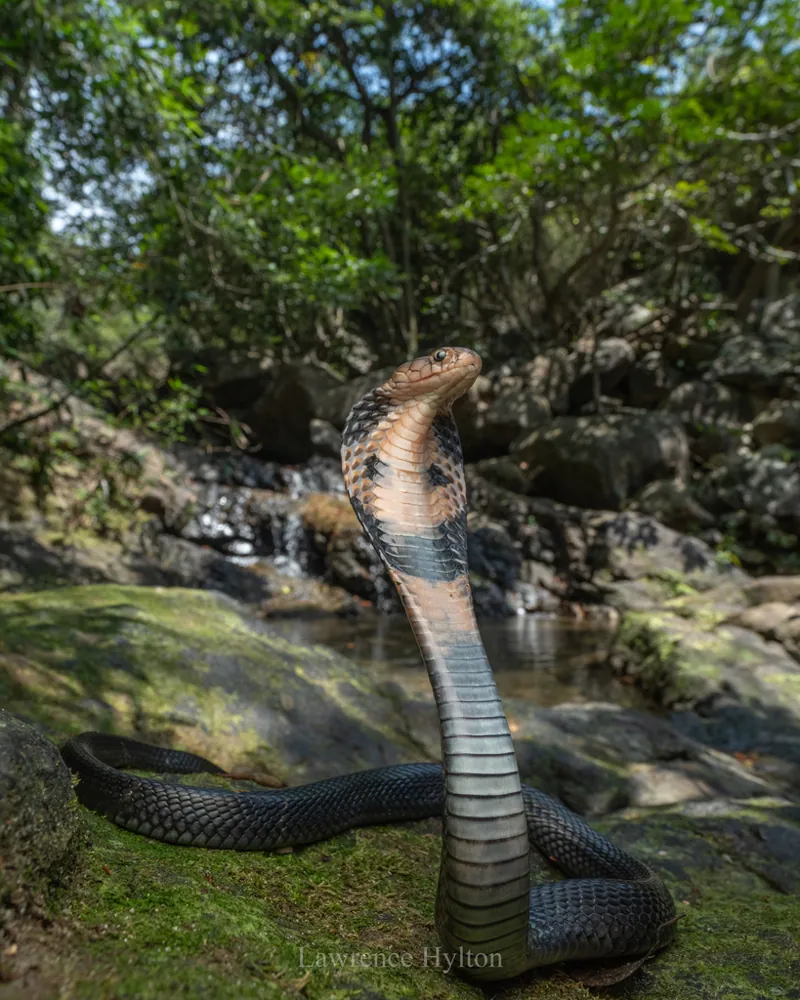
ỊtaThe Chinese cobra is a venomous snake from southern China and a few neighbouring countries and islands. It is one of the most common venomous snakes in China, and it has caused many snakebites there.1
 Otú ị ga-esi mata ya
- The hood marking varies. It can look like spectacles, a mask, a horseshoe or the letter O, and it is often linked to a pale throat area on at least one side.1
- The body is iridescent black, with widely spaced yellow double lines running across it.1
- The underside is pearl or slate-coloured. The upper colour is usually brown, grey or black, sometimes with narrow pale lines, which are especially clear in young snakes.1
- Typical adults are 1.2 to 1.5 metres long.1
A na-agwakọkarị ya na: It is sometimes confused with the monocled cobra (Naja kaouthia). The Chinese cobra has lower counts of ventral and subcaudal scales, which are the belly and tail scales. Sex should be taken into account when comparing these counts.1
Ike nsị
Nsị na-esi n'eze nsị ya ma ọ bụ eze ya apụta mgbe ọ na-ata.
Gịnị ka nsị ọ na-agba na-eme?
The Chinese cobra is a highly venomous member of the true cobras. Local symptoms at the bite include darkening of the wound, redness, swelling, pain and numbness, and blisters and necrosis (death of tissue) almost always follow. Necrosis can last for years after the person has otherwise recovered. Whole-body symptoms can include chest discomfort, fever, sore throat, difficulty swallowing, loss of voice, weak limbs, unsteady walking, lockjaw and difficulty breathing.1
Kedu otú o si dị egwu nye mmadụ?
Ihe ize ndụ nye mmadụ: Ọ dị egwu nke ukwuuỌ nwere ike igbu onye na-enwetaghị ọgwụgwọ.It is one of the most common venomous snakes in China and has caused many snakebite incidents there. Deaths occasionally occur, but they are much rarer than they used to be.1
 Ozi ọma: ndị dọkịta nwere ọgwụ (antivenom) ma ọ bụ ọgwụgwọ maka nke a.1
Gịnị ka ọ na-eme mgbe ụjọ tụrụ ya?
Adults can be aggressive, and young snakes are more nervous and more likely to be aggressive, but it usually escapes to avoid a confrontation.1
 Ọ bụrụ na ọ tara
- Mee ka onye ahụ ghara imegharị ahụ, dịkwa jụụ, wepụ mgbanaka na ihe ndị kekọrọ ahụ ike, kpọga ya ụlọ ọgwụ ngwa ngwa: ọgwụ mgbochi nsị (antivenom) bụ ọgwụgwọ ya.
- Ọ bụrụ na asụpụrụ nsị n'anya, jiri ọtụtụ mmiri dị ọcha saa anya ahụ ozugbo.
Na-ebu ụzọ kpọọ nọmba mberede gị mgbe niile (112, 000, 911). Nke a bụ ndụmọdụ enyemaka mbụ n'ozuzu, ọ bụghị ndụmọdụ ọgwụ. Isi ihe enyemaka mbụ
 Nọrọ na nchekwa
- Emetụla anụ ọhịa aka, ejidela ya, emekwala ya ihe ọjọọ, ọbụna obere, ọbụna ma ọ dị ka ọ na-ehi ụra ma ọ bụ nwụọ anwụ.
- Nye ya ohere. Ọ bụrụ na ị zutere otu, dị jụụ, laghachi azụ nwayọ, hapụ ya ka ọ gaa ụzọ ya.
- Ọ bụrụ na otu tara gị: dị jụụ, emegharịla ahụ, kpọọ nọmba mberede gị (112, 000, 911) ma ọ bụ gaa ụlọ ọgwụ ngwa ngwa. Cheta ka o si dị, foto na-enye aka.
Ọ naghị achụ gị. Ọ na-eji nsị ya ejide nri ma ọ bụ chebe onwe ya, ọ ga-akakwa mma n'anya ya ịzo onwe ya. Ihe ndị ọzọ gbasara ịnọ na nchekwa
Ọ hà aṅaa?
Kedu otú o si dị ogologo?
 dị ogologo dị ka nwamba ụlọ 4 site n'imi ruo n'ọdụ
 dị ogologo dị ka unere 11 a tọgbọrọ n'ahịrị
 nwere ike ịgba ọsọ mita 100 n'ime sekọnd 48 (mmadụ kacha ọsọ chọrọ 9,6)
Kedu otú Chinese cobra si hà ma e jiri ya tụnyere GỊ?
Naanị mgbakọ na mwepụ n'ime browser gị. Ọ dịghị ihe echekwara ma ọ bụ ezigara ebe ọ bụla.
Kedu otú o si agba ọsọ?


Eziokwu
Necrosis from a bite can continue for many years after the victim has recovered in general.1
A snake kept at a snake farm gave an average venom yield of about 250.8 mg, of which about 80 mg was dry weight.1
Its fangs are always erect and sit at the front of the upper jaw, as in other elapid snakes.1
Ebe eziokwu ndị a si
- Chinese cobra (Wikipedia (CC BY-SA 4.0))
- Naja atra (iNaturalist): aha na nhazi ọkwa.
- Venom Wiki: ọkwa ihe ize ndụ, nha nkịtị na nchepụta ọsọ bụ nke anyị. Lee otú anyị si achọpụta ha: Otú anyị si atụ ihe ize ndụ.
Eziokwu ọ bụla dị na peeji a nwere nọmba na-egosi ebe o si. Ọ bụrụ na anyị mehiere ihe, ndo, anyị bụ ndị hụrụ anụmanụ n'anya, ọ bụghị akwụkwọ akụkọ sayensị. Gwa anyị na [email protected], anyị ga-edozi ya.
 Akpị agụụ na-agụ! Venom Wiki bụ ọrụ otu onye: n'efu, na-enweghị mgbasa ozi na ndị na-esochi gị. Obere onyinye na-enyere aka idebe ya n'ịntanetị.Nye akpị nri
 Indian cobra
 King cobra
 Caspian cobra
 Common krait
 Malayan krait
 Many-banded krait
 Deathstalker
 Indian saw-scaled viper
 Puff adder
 Agwọ Russell
 Asian giant hornet
 Komodo dragon