
 Afrịka
 Eshia
Eshia Yurop
Yurop Ndịda Amerika
 Ọstrelia na Oshenia
 Antaktika
 Oké Osimiri Pasifik
 Oké Osimiri Atlantik
 Oké Osimiri India
 Oké Osimiri Arktik
 Osimiri Mediterenian
 Osimiri Uhie
 Osimiri Karibịan
 Osimiri Coral
 Osimiri Ndịda China
 Osimiri Filipin
 Osimiri Andaman
 Osimiri Ugwu (North Sea)
 Osimiri Timor na Arafura
 Ọwara Bengal
 Ọwara California
Iberian ribbed newt
 Mkpu na-agba nsị
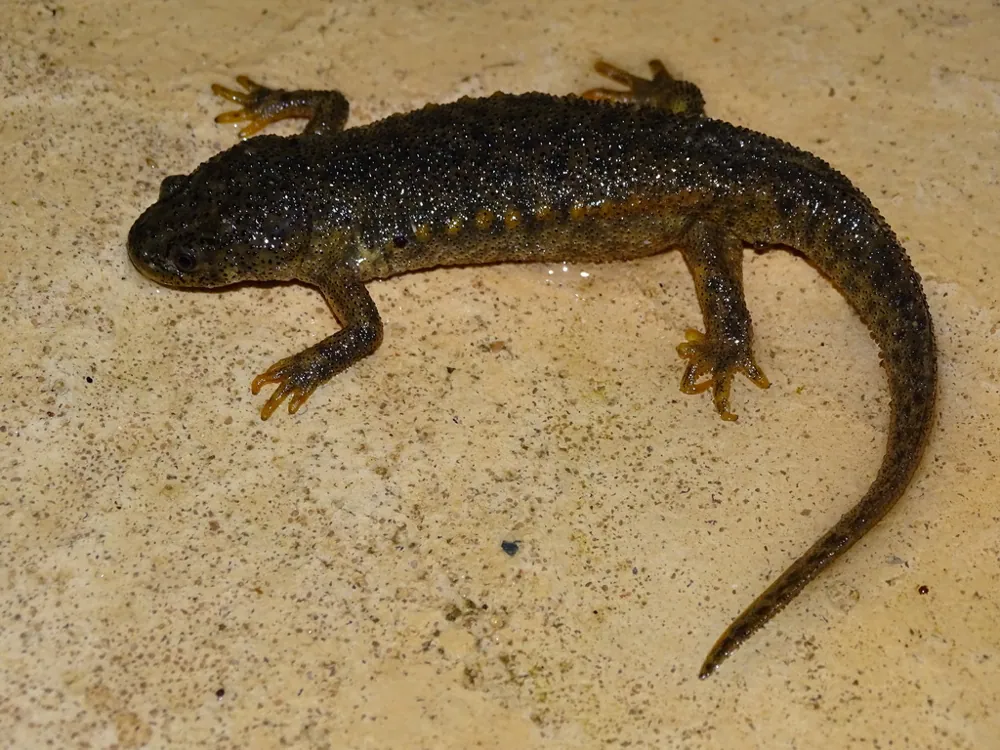
The Iberian ribbed newt is a salamander that lives in ponds and wells in Spain, Portugal and northern Morocco. It is the largest European newt species. When threatened, it can push its sharp ribs out through its skin, which gives it a way to defend itself against predators.1



 Otú ị ga-esi mata ya
- Dark grey on its back and lighter grey on its belly, with small rust-coloured spots1
- Usually 8 to 10 orange, wart-like bumps (tubercles) running down each side of the body1
- Flat, spade-shaped head and a long tail, about half of its body length1
- Males are more slender and usually smaller than females1
- Larvae have bushy external gills and paler colours than adults1
A na-agwakọkarị ya na: It is sometimes confused with the Iberian newt (Lissotriton boscai), a different species with a similar common name.1
Ike nsị
Mkpu dị nkọ na-ebu nsị ahụ. Ịzọ ya ụkwụ ma ọ bụ ijide ya na-afụ ụfụ.
Gịnị ka nsị ọ na-agba na-eme?
When threatened, the newt releases a milky, thick poison from glands on its neck, back, sides and tail as its ribs push out. The poison coats the ribs, which can pierce the skin of a predator's mouth and inject toxins.1
Kedu otú o si dị egwu nye mmadụ?
Ihe ize ndụ nye mmadụ: ObereDị ka ịgba aṅụ ma ọ bụ nke na-erughị ya. Ọ fọrọ nke nta ka ọ ghara ịdị njọ nye mmadụ.The rib defence is completely harmless to humans. The ribs cause only little harm to the newt itself, and its skin quickly heals without infection.1
Gịnị ka ọ na-eme mgbe ụjọ tụrụ ya?
It tries to run away from predators first. If it cannot escape, it pushes its sharp ribs through its sides and releases poison.1
 Ọ bụrụ na mkpu ya dụrụ gị
- Ọ bụrụ na mmadụ metụrụ otu aka: saa aka nke ọma, emetụkwala anya ma ọ bụ ọnụ aka. Ọ bụrụ na nwatakịrị ma ọ bụ anụ ụlọ rachara otu ma ọ bụ rie ya: kpọọ ụlọ ọrụ ndụmọdụ nsị (poison centre) ma ọ bụ nọmba mberede gị.
Na-ebu ụzọ kpọọ nọmba mberede gị mgbe niile (112, 000, 911). Nke a bụ ndụmọdụ enyemaka mbụ n'ozuzu, ọ bụghị ndụmọdụ ọgwụ. Isi ihe enyemaka mbụ
 Nọrọ na nchekwa
- Emetụla anụ ọhịa aka, ejidela ya, emekwala ya ihe ọjọọ, ọbụna obere, ọbụna ma ọ dị ka ọ na-ehi ụra ma ọ bụ nwụọ anwụ.
- Nye ya ohere. Ọ bụrụ na ị zutere otu, dị jụụ, laghachi azụ nwayọ, hapụ ya ka ọ gaa ụzọ ya.
- Ọ bụrụ na mkpu ya dụrụ gị: dị jụụ, emegharịla ahụ, kpọọ nọmba mberede gị (112, 000, 911) ma ọ bụ gaa ụlọ ọgwụ ngwa ngwa. Cheta ka o si dị, foto na-enye aka.
Ọ naghị achụ gị. Ọ na-eji nsị ya ejide nri ma ọ bụ chebe onwe ya, ọ ga-akakwa mma n'anya ya ịzo onwe ya. Ihe ndị ọzọ gbasara ịnọ na nchekwa
Ọ hà aṅaa?
Kedu otú o si dị ogologo?
 dị ogologo dị ka blọk egwuregwu 9 n'ahịrị
Kedu otú Iberian ribbed newt si hà ma e jiri ya tụnyere GỊ?
Naanị mgbakọ na mwepụ n'ime browser gị. Ọ dịghị ihe echekwara ma ọ bụ ezigara ebe ọ bụla.
Kedu otú o si agba ọsọ?


Eziokwu
Its ribs can push through its skin to act as a defence, a primitive and rudimentary form of envenomation.1
It is a model animal for regeneration research. It can regrow lost limbs, injured heart tissue, brain cells, eye lenses and parts of its spinal cord.1
This newt has been sent into space on at least six missions, starting in 1985.1
In genetic males and females, temperature can override sex chromosomes. Some ZW larvae reared at 32 °C (90 °F) become functional males.1
Its immune system, rib-coated collagen and antimicrobial peptides let the pierced skin heal quickly without infection.1
Females can keep live sperm in their cloaca for up to five months.1
Onye na-ekpughe akụkọ ụgha
Akụkọ ụgha: The newt's ribs and poison are dangerous to people.
Eziokwu: The ribs and poison are a defence against predators. The rib defence is completely harmless to humans.1
Maka ndị ọkachamara nsị
- Aha sayensị
- Pleurodeles waltl
- Otu
- Awọ nsị, awọ ala na newt
- Ezinụlọ
- Salamandridae2
- Usoro
- Caudata
- Kọntinent dị iche iche
- Yurop, Afrịka
- Ụmụ ọhụrụ
- The young are born in water as larvae, breathing through gills. They lose their gills as their limbs grow and can then live on land as well as in water.1
- Otú ọ na-eme n'ọhịa
- Least Concern (IUCN, assessed October 2020)1
- Ihe ize ndụ nye mmadụ
- 1 / 5: Obere3
Ebe eziokwu ndị a si
- Iberian ribbed newt (Wikipedia (CC BY-SA 4.0))
- Pleurodeles waltl (iNaturalist): aha na nhazi ọkwa.
- Venom Wiki: ọkwa ihe ize ndụ, nha nkịtị na nchepụta ọsọ bụ nke anyị. Lee otú anyị si achọpụta ha: Otú anyị si atụ ihe ize ndụ.
Eziokwu ọ bụla dị na peeji a nwere nọmba na-egosi ebe o si. Ọ bụrụ na anyị mehiere ihe, ndo, anyị bụ ndị hụrụ anụmanụ n'anya, ọ bụghị akwụkwọ akụkọ sayensị. Gwa anyị na [email protected], anyị ga-edozi ya.
 Akpị agụụ na-agụ! Venom Wiki bụ ọrụ otu onye: n'efu, na-enweghị mgbasa ozi na ndị na-esochi gị. Obere onyinye na-enyere aka idebe ya n'ịntanetị.Nye akpị nri
Ndị ọzọ si n'otu ahụ: Awọ nsị, awọ ala na newt
 Fire salamanderAwọ nsị, awọ ala na newtNaanị na-afụ ụfụEmetụla ya aka
 Common toadAwọ nsị, awọ ala na newtNaanị na-afụ ụfụEmetụla ya aka
 European fire-bellied toadAwọ nsị, awọ ala na newtAdịghị njọ
 Golden mantellaAwọ nsị, awọ ala na newtAdịghị njọ
 Natterjack toadAwọ nsị, awọ ala na newtAdịghị njọ
 Tomato frogAwọ nsị, awọ ala na newtAdịghị njọ
Ọ na-ebikwa na: Yurop
 Common European adderViper na adderỌ chọrọ dọkịta
 Spanish flyAnụmanụ ndị ọzọ nwere nsị n'ahụỌ chọrọ dọkịtaEmetụla ya aka
 Common waspAṅụ, ebu na ebu ukwuNaanị na-afụ ụfụ
 European hornetAṅụ, ebu na ebu ukwuNaanị na-afụ ụfụ
 Western honey beeAṅụ, ebu na ebu ukwuNaanị na-afụ ụfụ
 Blunt-nosed viperViper na adderNwere ike igbu mmadụ