
 Afrịka
 Eshia
Eshia Yurop
Yurop Ndịda Amerika
 Ọstrelia na Oshenia
 Antaktika
 Oké Osimiri Pasifik
 Oké Osimiri Atlantik
 Oké Osimiri India
 Oké Osimiri Arktik
 Osimiri Mediterenian
 Osimiri Uhie
 Osimiri Karibịan
 Osimiri Coral
 Osimiri Ndịda China
 Osimiri Filipin
 Osimiri Andaman
 Osimiri Ugwu (North Sea)
 Osimiri Timor na Arafura
 Ọwara Bengal
 Ọwara California
Sea apple
 Nwere nsị ma e rie yaNri ya: Obere nri osimiriNwere nsị n'ahụ, ọ naghị agba nsị
The sea apple is a round, colourful sea cucumber that lives in the warm waters of the Indo-Pacific. It filters tiny floating food from the water with its feathery tentacles. It is special because it can release a toxin into the water when it is stressed, which can harm other sea creatures nearby.1

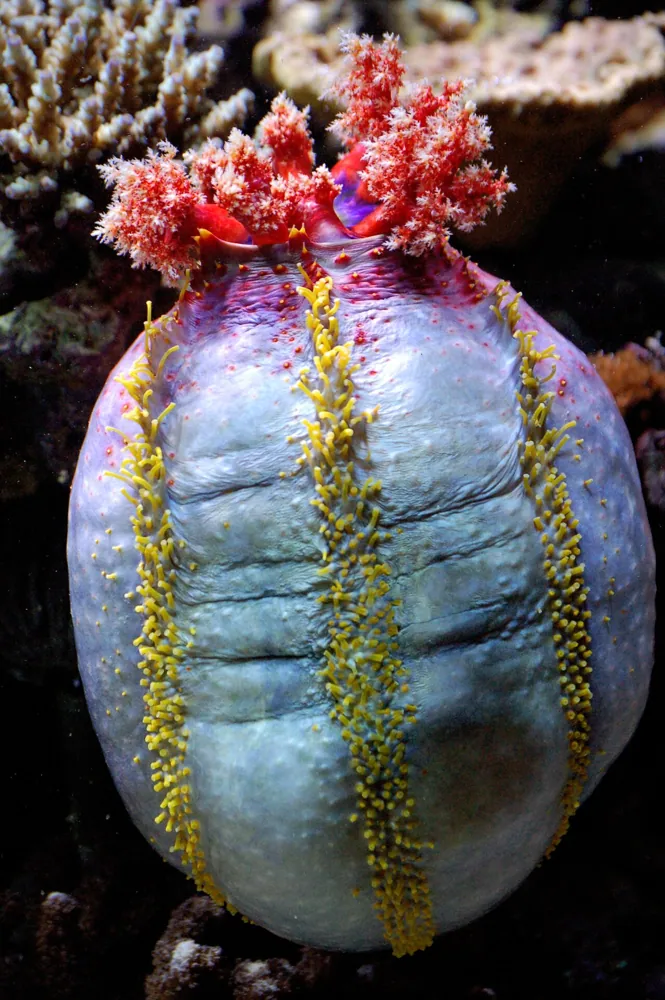
 Otú ị ga-esi mata ya
Ike nsị
Ọ na-emerụ ahụ naanị ma ihe riri ya.
Gịnị ka nsị dị n'ahụ ya na-eme?
Sea apples release a toxic saponin called holothurin into the water when they are stressed. Saponin is a chemical that is harmful to other organisms. In aquariums, this toxin can poison other animals living nearby.1
Kedu otú o si dị egwu nye mmadụ?
Ihe ize ndụ nye mmadụ: ObereDị ka ịgba aṅụ ma ọ bụ nke na-erughị ya. Ọ fọrọ nke nta ka ọ ghara ịdị njọ nye mmadụ.Its toxin can poison other aquarium inhabitants, and this is one reason sea apples are not commonly kept in aquariums.1
Gịnị ka ọ na-eme mgbe ụjọ tụrụ ya?
When disturbed, sea apples can violently push out their internal organs through their rear end, a process called evisceration. They can also release their toxin into the water.1
 Ọ bụrụ na mmadụ metụrụ ya aka ma ọ bụ rie ya
- Tinye ọnya ahụ n'ime mmiri ọkụ, nke ọkụ dị ka onye ahụ nwere ike ịnagide n'ere ya ọkụ, chọọkwa enyemaka ọgwụ iji wepụ mkpu ndị ahụ. Egwula ha n'onwe gị.
Na-ebu ụzọ kpọọ nọmba mberede gị mgbe niile (112, 000, 911). Nke a bụ ndụmọdụ enyemaka mbụ n'ozuzu, ọ bụghị ndụmọdụ ọgwụ. Isi ihe enyemaka mbụ
 Nọrọ na nchekwa
- Emetụla anụ ọhịa aka, ejidela ya, emekwala ya ihe ọjọọ, ọbụna obere, ọbụna ma ọ dị ka ọ na-ehi ụra ma ọ bụ nwụọ anwụ.
- Nye ya ohere. Ọ bụrụ na ị zutere otu, dị jụụ, laghachi azụ nwayọ, hapụ ya ka ọ gaa ụzọ ya.
- Ọ bụrụ na i metụrụ ya aka ma ọ bụ rie ya: ehichala anya gị ma ọ bụ ọnụ gị, saa aka gị, chọọkwa enyemaka ọgwụ.
Ọ naghị achụ gị. Nsị ya dị naanị ka ihe ọ bụla ghara iri ya. Ihe ndị ọzọ gbasara ịnọ na nchekwa
Ebee n'ụwa?
Ọ hà aṅaa?
Kedu otú o si dị ogologo?
 dị ogologo dị ka blọk egwuregwu 6 n'ahịrị
 nwayọ karịa ejula ubi
Kedu otú Sea apple si hà ma e jiri ya tụnyere GỊ?
Naanị mgbakọ na mwepụ n'ime browser gị. Ọ dịghị ihe echekwara ma ọ bụ ezigara ebe ọ bụla.
Kedu otú o si agba ọsọ?


Eziokwu
Sea apples can swell to nearly double their original size by drinking large amounts of seawater when threatened or in an unsuitable environment.1
Their swollen bodies let water currents carry them to a new area, which is much quicker than walking.1
In aquariums, sea apples often starve because plankton levels are lower than they need, and they try to feed in the daytime too.1
Hermit crabs and fish often peck at sea apple tentacles, either to eat them or to steal the food caught in them.1
Sea apples usually feed at night, when their delicate tentacles are less at risk from predators.1
Onye na-ekpughe akụkọ ụgha
Akụkọ ụgha: Sea apples are safe for reef aquariums.
Eziokwu: Sea apples are considered reef safe for their compatibility with other species. However, they are unsafe for reef aquariums for other reasons, including starvation and the toxin they release.1
Maka ndị ọkachamara nsị
Ebe eziokwu ndị a si
- Sea apple (Wikipedia (CC BY-SA 4.0))
- Pseudocolochirus violaceus (iNaturalist): aha na nhazi ọkwa.
- Venom Wiki: ọkwa ihe ize ndụ, nha nkịtị na nchepụta ọsọ bụ nke anyị. Lee otú anyị si achọpụta ha: Otú anyị si atụ ihe ize ndụ.
Eziokwu ọ bụla dị na peeji a nwere nọmba na-egosi ebe o si. Ọ bụrụ na anyị mehiere ihe, ndo, anyị bụ ndị hụrụ anụmanụ n'anya, ọ bụghị akwụkwọ akụkọ sayensị. Gwa anyị na [email protected], anyị ga-edozi ya.
 Akpị agụụ na-agụ! Venom Wiki bụ ọrụ otu onye: n'efu, na-enweghị mgbasa ozi na ndị na-esochi gị. Obere onyinye na-enyere aka idebe ya n'ịntanetị.Nye akpị nri
Ndị ọzọ si n'otu ahụ: Urchin, kpakpando osimiri na ikpuru
 Crown-of-thorns starfishUrchin, kpakpando osimiri na ikpuruỌ chọrọ dọkịtaEmetụla ya aka
 Flower urchinUrchin, kpakpando osimiri na ikpuruNwere ike igbu mmadụ
 Fire urchinUrchin, kpakpando osimiri na ikpuruỌ chọrọ dọkịtaEmetụla ya aka
 Bearded firewormUrchin, kpakpando osimiri na ikpuruNaanị na-afụ ụfụEmetụla ya aka
 Black long-spined urchinUrchin, kpakpando osimiri na ikpuruNaanị na-afụ ụfụEmetụla ya aka
 BloodwormUrchin, kpakpando osimiri na ikpuruNaanị na-afụ ụfụ
Ọ na-ebikwa na: Oké Osimiri Pasifik
 Australian box jellyfishJelifish na anụ osimiri na-agba agbaNa-egbu egbuEmetụla ya aka
 Geography coneEjula cone na octopusNa-egbu egbu
 Greater blue-ringed octopusEjula cone na octopusNa-egbu egbu
 Japanese pufferfishAnụmanụ ndị ọzọ nwere nsị n'ahụNa-egbu egbu
 Southern blue-ringed octopusEjula cone na octopusNa-egbu egbu
 Hawksbill sea turtleAnụmanụ ndị ọzọ nwere nsị n'ahụNwere ike igbu mmadụ