
 Afirika
 Asiya
Asiya Bulaaya
 Amerika ey'Obukiikaddyo
 Awusitureeliya ne Oseyaniya
 Antakitika
 Oseyani ya Pasifiki
 Oseyani ya Atlantiki
 Oseyani y'e Buyindi
 Oseyani ya Arakitiki
 Ennyanja ya Mediterenia
 Ennyanja Emmyufu
 Ennyanja ya Karibiyani
 Ennyanja ya Korali
 Ennyanja ya China ey'Obukiikaddyo
 Ennyanja ya Bufilipino
 Ennyanja ya Andaman
 Ennyanja ey'Obukiikakkono (North Sea)
 Ennyanja ya Timor ne Arafura
 Ekikono kya Bengal
 Ekikono kya Kalifoniya
Black house spider
 Kiruma
The black house spider is a dark, sturdy spider that lives across Australia. It was carried to New Zealand and Japan, and it often lives in homes, where it sits in a messy web in corners and near windows. It is venomous, but its bite is rarely a serious danger to people.1

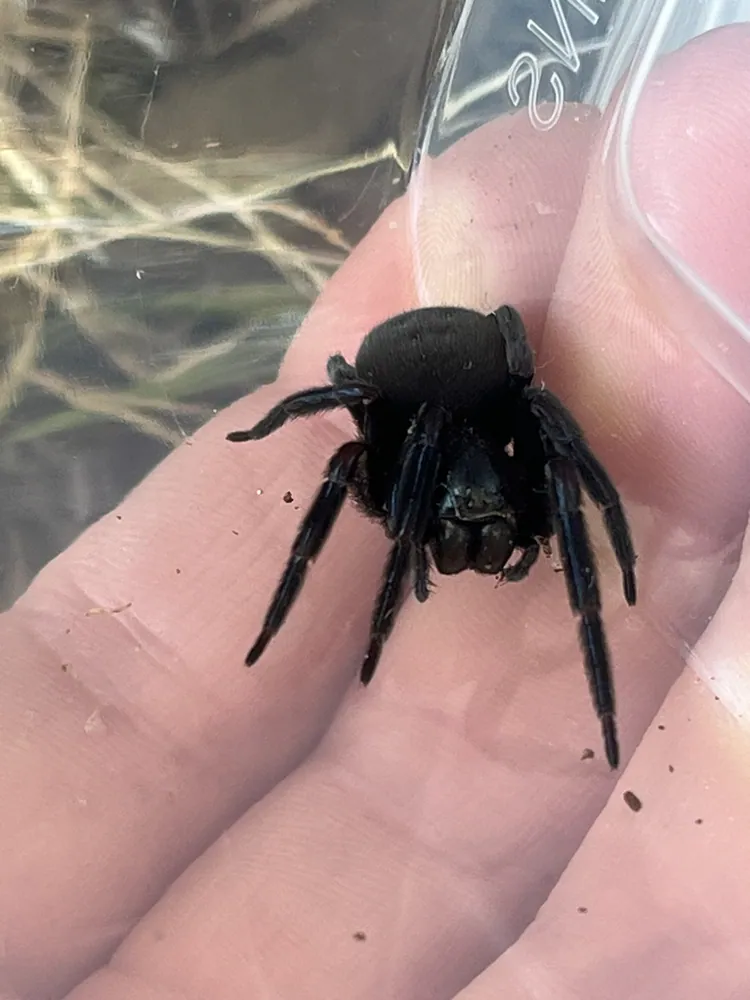
 Engeri y'okukitegeera
- A dark, robust spider. Females have a body up to 18 mm long and a leg span of 30 mm.1
- Males are smaller, about 10 mm long, with longer legs in proportion to their body.1
- The body and legs are dark brown to black. The abdomen (rear part) is charcoal grey, with light markings that are sometimes faint, and it is covered in fine, velvety hair.1
- The web looks messy, with irregular sail-like sheets of silk and a funnel-shaped retreat, usually in the middle or corner of the web.1
Kitera okutabulwa ne: The grey house spider (Badumna longinqua) is similar and has a similar range. It is slightly smaller, at about 14 mm, has a greyish top section (carapace) and black-brown legs. It is more often found outdoors.1
Amaanyi g'obusagwa
Obusagwa buyita mu mannyo gaakyo amawanvu (fangs) oba mu mannyo amalala nga kiruma.
Obusagwa bwakyo bukola ki?
The bite is venomous. It may be excruciatingly painful and cause local swelling. Nausea, vomiting, sweating and dizziness are occasionally recorded. In a few cases, skin lesions (arachnogenic necrosis, damage to the skin and tissue) have developed after several bites.1
Kirina akabi kenkana wa eri abantu?
Akabi eri abantu: Kya bulumiKisobola okuluma ddala, naye kumpi tekiba kya kabi kinene.Black house spiders are venomous but are not considered dangerous. They are timid, and bites from them are infrequent.1
 Bwe kiruma
- Naaza ekifo ekirumiddwa era okiteekeko ayisi olw'obulumi. Funa obuyambi bw'abasawo singa obulumi bungi, busaasaana oba omuntu awulira bubi.
Bulijjo sooka kuba ennamba y'ebigwa bitalaze (112, 000, 911). Buno bulagirizi bwa bujjanjabi obusooka obwa bulijjo, si kuwabula kwa musawo. Obujjanjabi obusooka obw'omusingi
 Weekuume
- Tokwatako, tokwata wadde okusoomooza ensolo ey'omu nsiko, ne bw'eba ntono, era ne bw'eba erabika nga yeebase oba nga efudde.
- Gireke n'ebbanga. Bw'osisinkana emu, beera mukkakkamu, dda emabega mpola era gireke egende mu kkubo lyayo.
- Bw'emu ekuluma: beera mukkakkamu, totambula, kuba ennamba y'ebigwa bitalaze (112, 000, 911) oba tuuka mu ddwaliro mangu. Jjukira bwe yali efaanana, ekifaananyi kiyamba.
Tekikunoonya. Kikozesa obusagwa bwakyo okukwata emmere oba okwekuuma, era kyandisinze kwekweka. Ebirala ku kwekuuma
Wa mu nsi?
Kinene kyenkana wa?
Kiwanvu kyenkana wa?
 kimpi okusinga akagalo ko akatono
Black house spider kinene kyenkana wa bw'ogeraageranya ne GGWE?
Kubala bwokka mu browser yo. Tewali kitterekebwa wadde okusindikibwa wonna.
Kidduka kyenkana wa?


Ebituufu
A male plucks the female's web to attract her attention before he approaches to mate. They may stay together for several days and mate several times.1
The spider rarely moves its web, so old webs become messy, with dust and small objects stuck in them.1
At night, the spider repairs and adds to its web, often by laying new silk over the old.1
The female almost never leaves her web unless she is forced to.1
Predators include the white-tailed spider, as well as parasitic wasps and flies.1
Omumenyi w'enfumo
Enfumo: Black house spiders are dangerous spiders.
Amazima: They are venomous, but they are not considered dangerous. They are timid, and their bites are infrequent.1
Ku bakugu mu busagwa
- Erinnya erya ssaayansi
- Badumna insignis
- Ekibinja
- Nnabbubi
- Amaka
- Desidae2
- Ensengeka
- Araneae
- Ssemazinga
- Awusitureeliya ne Oseyaniya
- Abaana abawere
- The female builds several white silk egg sacs inside the web retreat and stays with the eggs until they hatch. The young may leave or stay in the mother's web for some time.1
- Akabi eri abantu
- 2 / 5: Kya bulumi3
Ebituufu we biva
- Black house spider (Wikipedia (CC BY-SA 4.0))
- Badumna insignis (iNaturalist): amannya n'ensengeka y'ebika.
- Venom Wiki: omutendera gw'akabi, obunene obwa bulijjo n'okuteebereza kw'embiro bibyaffe. Laba engeri gye tubibalamu: Engeri gye tupimamu akabi.
Buli kituufu ku lupapula luno kirina ennamba eraga we kyava. Bwe tuba tukoze ensobi, tusonyiwe, tuli bayagazi ba nsolo, so si magazini ya ssaayansi. Tubuulire ku [email protected] tujja kugitereeza.
 Enjaba erumwa enjala! Venom Wiki pulojekiti ya muntu omu: ya bwereere, tewali birango era tewali bikulondoola. Akasiimo akatono kayamba okugikuuma ku yintaneti.Liisa enjaba
Ebirala okuva mu kibinja kye kimu: Nnabbubi
 Redback spider
 Katipo
 White-tailed spider
 Peacock spider
 Badge huntsman spider
 Eastern white-tailed spider
Era kibeera mu: Awusitureeliya ne Oseyaniya
 Coastal taipanEmisota gy'e AwusitureeliyaKitta
 Common death adderEmisota gy'e AwusitureeliyaKitta
 Eastern brown snakeEmisota gy'e AwusitureeliyaKitta
 Taipani ow'omu bitundu by'omundaEmisota gy'e AwusitureeliyaKitta
 Sydney funnel-web spiderTarantula ne funnel-webKitta
 Omusota tayigaEmisota gy'e AwusitureeliyaKitta