
 Afirika
 Asiya
Asiya Bulaaya
 Amerika ey'Obukiikaddyo
 Awusitureeliya ne Oseyaniya
 Antakitika
 Oseyani ya Pasifiki
 Oseyani ya Atlantiki
 Oseyani y'e Buyindi
 Oseyani ya Arakitiki
 Ennyanja ya Mediterenia
 Ennyanja Emmyufu
 Ennyanja ya Karibiyani
 Ennyanja ya Korali
 Ennyanja ya China ey'Obukiikaddyo
 Ennyanja ya Bufilipino
 Ennyanja ya Andaman
 Ennyanja ey'Obukiikakkono (North Sea)
 Ennyanja ya Timor ne Arafura
 Ekikono kya Bengal
 Ekikono kya Kalifoniya
White-tailed spider
 Kiruma
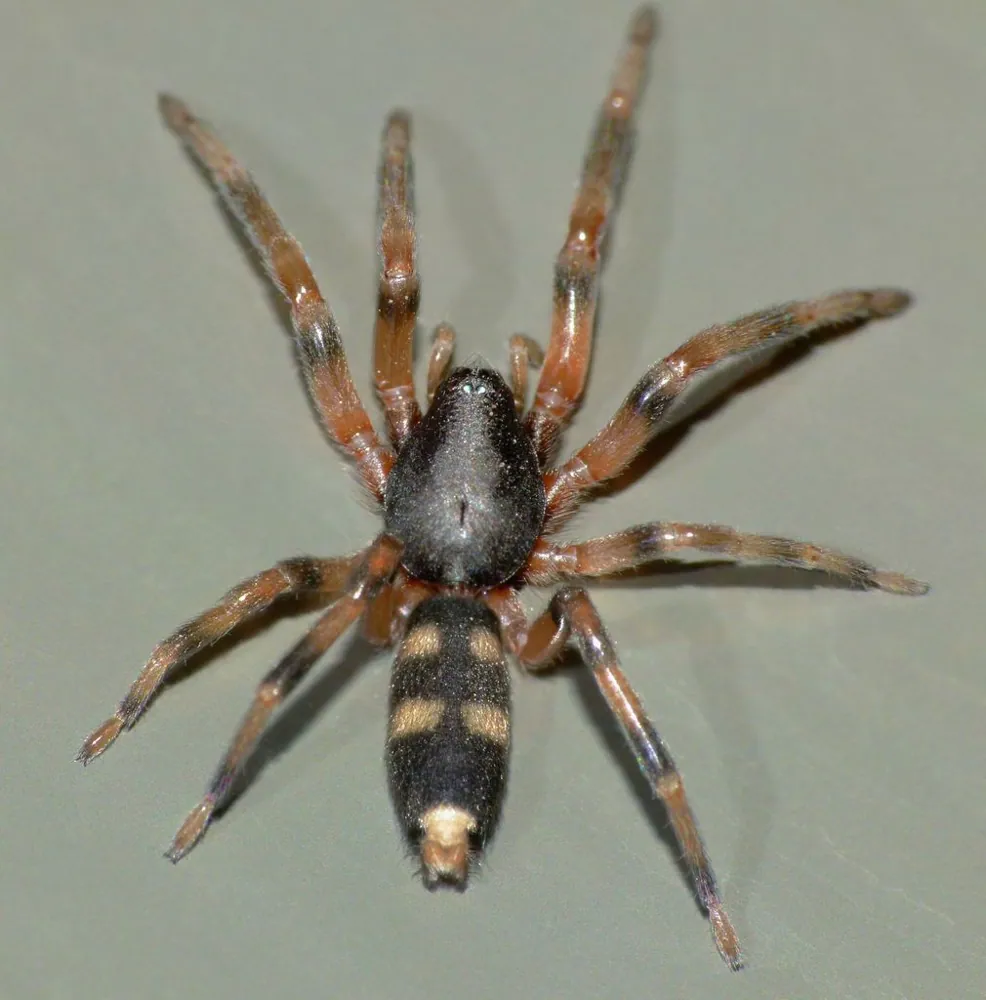
The white-tailed spider is a slim, long-legged spider that lives in southern and eastern Australia. It gets its name from the whitish tip at the end of its abdomen. It hunts other spiders at night rather than spinning a web, and it can bite people.1

 Engeri y'okukitegeera
- Slender spider with a dark reddish to grey, cigar-shaped body1
- Dark orange-brown legs with bands1
- Grey abdomen with two pairs of faint white spots1
- Usually a distinct white spot at the tip of the abdomen, just above the spinnerets (the silk-producing organs)1
- Does not build a web1
Kitera okutabulwa ne: Lampona murina is very similar to Lampona cylindrata. The two are not easily told apart without microscopic examination. Several other spider species also have a white mark at the end of the abdomen and are called white-tails.1
Amaanyi g'obusagwa
Obusagwa buyita mu mannyo gaakyo amawanvu (fangs) oba mu mannyo amalala nga kiruma.
Obusagwa bwakyo bukola ki?
The bite injects venom. Typical effects are a small red or discoloured bump that burns or itches, along with local pain and swelling. Rarely, the bite causes nausea, vomiting, malaise (a general feeling of being unwell) or headache. These symptoms are generally mild and go away over time.1
Kirina akabi kenkana wa eri abantu?
Akabi eri abantu: Kya bulumiKisobola okuluma ddala, naye kumpi tekiba kya kabi kinene.Bites are generally mild. In a study of 130 confirmed white-tailed spider bites, there were no necrotic ulcers (areas of dead tissue) and no confirmed infections. The effects were mainly local, such as pain, a red mark, swelling and itching.1
 Bwe kiruma
- Naaza ekifo ekirumiddwa era okiteekeko ayisi olw'obulumi. Funa obuyambi bw'abasawo singa obulumi bungi, busaasaana oba omuntu awulira bubi.
Bulijjo sooka kuba ennamba y'ebigwa bitalaze (112, 000, 911). Buno bulagirizi bwa bujjanjabi obusooka obwa bulijjo, si kuwabula kwa musawo. Obujjanjabi obusooka obw'omusingi
 Weekuume
- Tokwatako, tokwata wadde okusoomooza ensolo ey'omu nsiko, ne bw'eba ntono, era ne bw'eba erabika nga yeebase oba nga efudde.
- Gireke n'ebbanga. Bw'osisinkana emu, beera mukkakkamu, dda emabega mpola era gireke egende mu kkubo lyayo.
- Bw'emu ekuluma: beera mukkakkamu, totambula, kuba ennamba y'ebigwa bitalaze (112, 000, 911) oba tuuka mu ddwaliro mangu. Jjukira bwe yali efaanana, ekifaananyi kiyamba.
Tekikunoonya. Kikozesa obusagwa bwakyo okukwata emmere oba okwekuuma, era kyandisinze kwekweka. Ebirala ku kwekuuma
Wa mu nsi?
Kinene kyenkana wa?
Kiwanvu kyenkana wa?
 kimpi okusinga akagalo ko akatono
White-tailed spider kinene kyenkana wa bw'ogeraageranya ne GGWE?
Kubala bwokka mu browser yo. Tewali kitterekebwa wadde okusindikibwa wonna.
Kidduka kyenkana wa?


Ebituufu
Ulcers and tissue death were once blamed on white-tailed spider bites, but studies found other causes, mostly infections.1
In reported bite cases, more than 60% of people said the spider had got into their clothing, towels or bed.1
The two common species look so alike that people once thought there was only one kind of white-tailed spider.1
The white tail marking stays into adulthood, while other markings fade with each moult.1
Lampona murina has lived on New Zealand's North Island for over a hundred years.1
Omumenyi w'enfumo
Enfumo: White-tailed spider bites cause ulcers and necrosis (dead tissue).
Amazima: A study of 130 bites found no necrotic ulcers or confirmed infections. Ulcers blamed on these spiders were shown to have other causes, mostly infections.1
Ku bakugu mu busagwa
- Erinnya erya ssaayansi
- Lampona cylindrata
- Ekibinja
- Nnabbubi
- Amaka
- Lamponidae2
- Ensengeka
- Araneae
- Ssemazinga
- Awusitureeliya ne Oseyaniya
- Abaana abawere
- Females of Lampona cylindrata lay pinkish eggs enclosed in a flattened silk capsule, and the female guards them until they hatch.1
- Akabi eri abantu
- 2 / 5: Kya bulumi3
Ebituufu we biva
- White-tailed spider (Wikipedia (CC BY-SA 4.0))
- Lampona cylindrata (iNaturalist): amannya n'ensengeka y'ebika.
- Venom Wiki: omutendera gw'akabi, obunene obwa bulijjo n'okuteebereza kw'embiro bibyaffe. Laba engeri gye tubibalamu: Engeri gye tupimamu akabi.
Buli kituufu ku lupapula luno kirina ennamba eraga we kyava. Bwe tuba tukoze ensobi, tusonyiwe, tuli bayagazi ba nsolo, so si magazini ya ssaayansi. Tubuulire ku [email protected] tujja kugitereeza.
 Enjaba erumwa enjala! Venom Wiki pulojekiti ya muntu omu: ya bwereere, tewali birango era tewali bikulondoola. Akasiimo akatono kayamba okugikuuma ku yintaneti.Liisa enjaba
Ebirala okuva mu kibinja kye kimu: Nnabbubi
 Redback spider
 Katipo
 Peacock spider
 Badge huntsman spider
 Black house spider
 Eastern white-tailed spider
Era kibeera mu: Awusitureeliya ne Oseyaniya
 Coastal taipanEmisota gy'e AwusitureeliyaKitta
 Common death adderEmisota gy'e AwusitureeliyaKitta
 Eastern brown snakeEmisota gy'e AwusitureeliyaKitta
 Taipani ow'omu bitundu by'omundaEmisota gy'e AwusitureeliyaKitta
 Sydney funnel-web spiderTarantula ne funnel-webKitta
 Omusota tayigaEmisota gy'e AwusitureeliyaKitta