
 Afirika
 Asiya
Asiya Bulaaya
 Amerika ey'Obukiikaddyo
 Awusitureeliya ne Oseyaniya
 Antakitika
 Oseyani ya Pasifiki
 Oseyani ya Atlantiki
 Oseyani y'e Buyindi
 Oseyani ya Arakitiki
 Ennyanja ya Mediterenia
 Ennyanja Emmyufu
 Ennyanja ya Karibiyani
 Ennyanja ya Korali
 Ennyanja ya China ey'Obukiikaddyo
 Ennyanja ya Bufilipino
 Ennyanja ya Andaman
 Ennyanja ey'Obukiikakkono (North Sea)
 Ennyanja ya Timor ne Arafura
 Ekikono kya Bengal
 Ekikono kya Kalifoniya
Bobbit worm
 Kiruma
The bobbit worm is a long, slim sea worm that hides in the sand or mud on the ocean floor. It waits with its whole body buried, then strikes passing fish and other prey with sharp jaws. It lives in warm seas, mainly in the Atlantic and the Indo-Pacific, and can grow to nearly 3 metres long.1


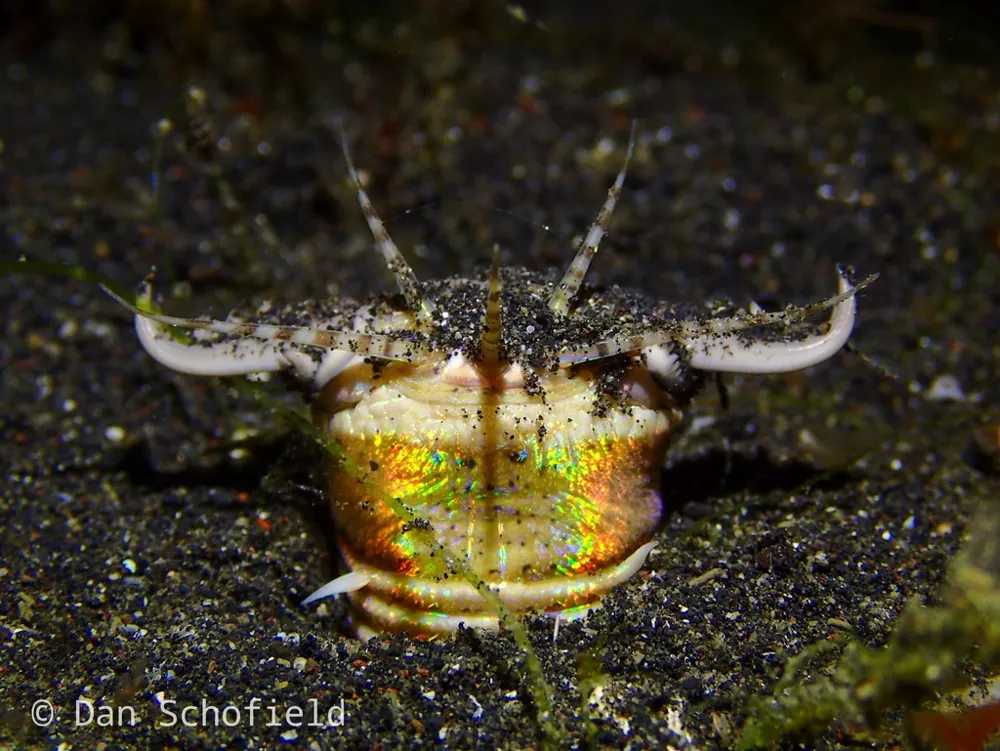
 Engeri y'okukitegeera
Amaanyi g'obusagwa
Obusagwa buyita mu mannyo gaakyo amawanvu (fangs) oba mu mannyo amalala nga kiruma.
Kirina akabi kenkana wa eri abantu?
Akabi eri abantu: Kya bulumiKisobola okuluma ddala, naye kumpi tekiba kya kabi kinene. Bwe kiruma
- Teeka ekiwundu mu mazzi agookya, agookya nga omuntu bw'asobola okugumiikiriza nga tegamwokya, era funa obuyambi bw'abasawo okuggyamu amaggwa. Togasimamu ggwe kennyini.
Bulijjo sooka kuba ennamba y'ebigwa bitalaze (112, 000, 911). Buno bulagirizi bwa bujjanjabi obusooka obwa bulijjo, si kuwabula kwa musawo. Obujjanjabi obusooka obw'omusingi
 Weekuume
- Tokwatako, tokwata wadde okusoomooza ensolo ey'omu nsiko, ne bw'eba ntono, era ne bw'eba erabika nga yeebase oba nga efudde.
- Gireke n'ebbanga. Bw'osisinkana emu, beera mukkakkamu, dda emabega mpola era gireke egende mu kkubo lyayo.
- Bw'emu ekuluma: beera mukkakkamu, totambula, kuba ennamba y'ebigwa bitalaze (112, 000, 911) oba tuuka mu ddwaliro mangu. Jjukira bwe yali efaanana, ekifaananyi kiyamba.
Tekikunoonya. Kikozesa obusagwa bwakyo okukwata emmere oba okwekuuma, era kyandisinze kwekweka. Ebirala ku kwekuuma
Wa mu nsi?
Kinene kyenkana wa?
Kiwanvu kyenkana wa?
 kiwanvu nga mbwa 3 okuva ku nnyindo okutuuka ku mukira
 kiwanvu nga ndiizi 17 eziteekeddwa mu lunyiriri
Bobbit worm kinene kyenkana wa bw'ogeraageranya ne GGWE?
Kubala bwokka mu browser yo. Tewali kitterekebwa wadde okusindikibwa wonna.
Kidduka kyenkana wa?


Ebituufu
It is the longest known member of the polychaete class of bristle worms, with the largest specimen on record reaching 299 cm.1
Some fish mob the worm by directing jets of water into its burrow to disorient it.1
It hunts by burrowing its whole body into soft sediment and waiting until its antennae detect prey.1
Fossil burrows from Miocene rocks in northeastern Taiwan, about 20 million years old, have been linked to this species.1
Despite its length, its body is only about 25.5 mm wide.1
Omumenyi w'enfumo
Enfumo: The worm can reproduce by splitting into several pieces.
Amazima: There is no scientific evidence that it reproduces this way. Reports of this appear to come from misreading movement in dead or injured worms. It can regenerate its rear segments, but it reproduces sexually.1
Ku bakugu mu busagwa
- Erinnya erya ssaayansi
- Eunice aphroditois
- Ekibinja
- Sea urchin, sea star ne fireworm
- Amaka
- Eunicidae2
- Ensengeka
- Eunicida
- Ssemazinga
- Oseyani ya Pasifiki, Oseyani y'e Buyindi, Oseyani ya Atlantiki, Ennyanja Emmyufu, Ennyanja ya Mediterenia, Ennyanja ya Karibiyani, Ennyanja ya Timor ne Arafura, Oseyani
- Abaana abawere
- It releases sperm and eggs into the water, where fertilisation happens outside the body, and the young drift as larvae before settling and growing into juvenile worms.1
- Akabi eri abantu
- 2 / 5: Kya bulumi3
Ebituufu we biva
- Eunice aphroditois (Wikipedia (CC BY-SA 4.0))
- Eunice aphroditois (iNaturalist): amannya n'ensengeka y'ebika.
- Venom Wiki: omutendera gw'akabi, obunene obwa bulijjo n'okuteebereza kw'embiro bibyaffe. Laba engeri gye tubibalamu: Engeri gye tupimamu akabi.
Buli kituufu ku lupapula luno kirina ennamba eraga we kyava. Bwe tuba tukoze ensobi, tusonyiwe, tuli bayagazi ba nsolo, so si magazini ya ssaayansi. Tubuulire ku [email protected] tujja kugitereeza.
 Enjaba erumwa enjala! Venom Wiki pulojekiti ya muntu omu: ya bwereere, tewali birango era tewali bikulondoola. Akasiimo akatono kayamba okugikuuma ku yintaneti.Liisa enjaba
Ebirala okuva mu kibinja kye kimu: Sea urchin, sea star ne fireworm
 Crown-of-thorns starfishSea urchin, sea star ne firewormKyetaaga omusawoTokwatako
 Flower urchinSea urchin, sea star ne firewormKisobola okutta
 Fire urchinSea urchin, sea star ne firewormKyetaaga omusawoTokwatako
 Bearded firewormSea urchin, sea star ne firewormKiruma bwokkaTokwatako
 Black long-spined urchinSea urchin, sea star ne firewormKiruma bwokkaTokwatako
 BloodwormSea urchin, sea star ne firewormKiruma bwokka
Era kibeera mu: Oseyani ya Pasifiki
 Australian box jellyfishJellyfish n'ebibojja eby'ennyanjaKittaTokwatako
 Geography coneCone snail ne octopusKitta
 Greater blue-ringed octopusCone snail ne octopusKitta
 Japanese pufferfishEnsolo endala ez'obutwaKitta
 Southern blue-ringed octopusCone snail ne octopusKitta
 Hawksbill sea turtleEnsolo endala ez'obutwaKisobola okutta