
 Africa
 Asia
Asia Ulaya
Ulaya Amereka ya Kumwera
 Australia ndi Oceania
 Antarctica
 Nyanja ya Pacific
 Nyanja ya Atlantic
 Nyanja ya Indian
 Nyanja ya Arctic
 Nyanja ya Mediterranean
 Nyanja Yofiira
 Nyanja ya Caribbean
 Nyanja ya Coral
 Nyanja ya South China
 Nyanja ya Philippine
 Nyanja ya Andaman
 Nyanja ya Kumpoto (North Sea)
 Nyanja ya Timor ndi Arafura
 Nyanja ya Bengal
 Gulf ya California
Brazilian yellow scorpion
 Imalasa
The Brazilian yellow scorpion is a small scorpion that lives in Brazil, often in towns and cities. Its venom is extremely toxic, and it is the most dangerous scorpion in South America.1

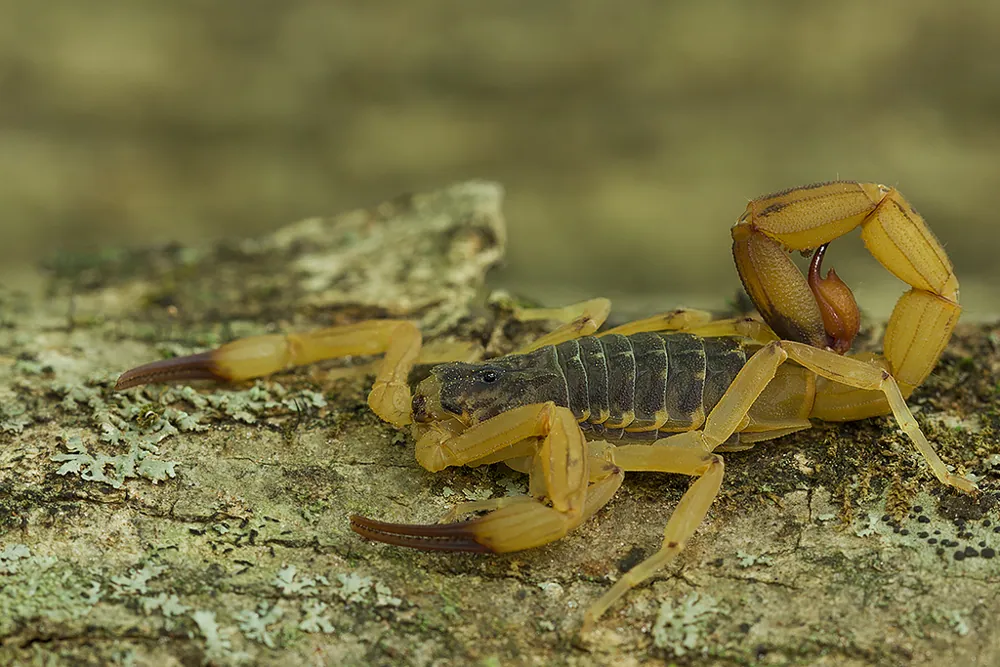
 Mmene ungaizindikirire
- Adults are usually 5 to 7 cm long.1
- Legs and pedipalps are pale yellow, while the body and the tip of the tail are a darker yellowish brown.1
- The tail is bulbous and segmented, with prominent ridges and serrations, and is often carried curved forward over the back.1
- The tail ends in a venom-injecting barb.1
Mphamvu ya ululu
Ululu umatuluka kudzera mu mbola.
Ululu wake umachita chiyani?
Its venom contains an excitatory neurotoxin, which attacks the nerves that control involuntary body functions and releases adrenaline and related chemicals. Mild cases cause mainly localised pain, while more serious cases can bring fever, sweating, tremors, vomiting, agitation, a fast heartbeat and inflammation of the pancreas. Deaths can occur within 1 to 6 hours, or 12 to 14 hours, depending on age, health and the amount of venom injected.1
Ndi yoopsa bwanji kwa anthu?
Ngozi kwa anthu: Yoopsa kwambiriIngathe kupha munthu amene sanalandire chithandizo.It is responsible for more medically significant accidents than any other scorpion in Brazil, and most of the country's fatal scorpion cases. Mortality rates are 1.0 to 2.0% among children and elderly people. In a nationwide study from 2000 to 2012, Brazil recorded 482,616 scorpion accidents and 728 deaths, and this species was believed to cause most of those deaths.1
Imachita chiyani ikachita mantha?
It uses its tail barb to deliver defensive strikes.1
 Ikalasa
- Ziziritsa pamene walasidwa ndi paketi ya ayezi ndipo munthuyo akhale chete osasuntha. Peza thandizo la dokotala mwachangu, makamaka kwa ana: zinkhanira zina zimapha ana.
Nthawi zonse yamba wayimbira nambala yadzidzidzi (112, 000, 911). Awa ndi malangizo wamba a chithandizo choyamba, osati malangizo a dokotala. Zoyambira za chithandizo choyamba
 Khala wotetezeka
- Usakhudze, kugwira kapena kuseweretsa nyama yakuthengo, ngakhale yaing'ono, ndipo ngakhale ikuoneka ngati yagona kapena yafa.
- Ipatse malo. Ukakumana nayo, khala chete, bwerera m'mbuyo pang'onopang'ono ndipo uilole ipite njira yake.
- Ikakulasa: khala chete, usasunthe, imbira nambala yadzidzidzi (112, 000, 911) kapena pita kuchipatala mwachangu. Kumbukira m'mene inkaonekera, chithunzi chimathandiza.
Sikufuna kukuvulaza. Imagwiritsa ntchito ululu wake kugwira chakudya kapena kudziteteza, ndipo imakonda kwambiri kubisala. Zambiri za kukhala wotetezeka
Kuti padziko lapansi?
Ndi yaikulu bwanji?
Ndi yaitali bwanji?
 yaitali ngati zidutswa zomangira zoseweretsa 2 pamzere
 ingathamange mamita 100 m'masekondi 260 (munthu wothamanga kwambiri amafunika 9.6)
Brazilian yellow scorpion ndi yaikulu bwanji poyerekeza ndi IWE?
Ndi masamu chabe mu msakatuli wako. Palibe chomwe chimasungidwa kapena kutumizidwa kwina.
Imathamanga bwanji?


Mfundo
Reported scorpion stings in Brazil rose from 12,000 in 2000 to 140,000 by 2018.1
It has a low metabolic rate, so it can survive for months without eating.1
Scorpion numbers have grown in Brazilian cities, helped by plenty of cockroaches to eat and few predators.1
Its venom varies by region. Scorpions from Distrito Federal have an LD50 of 51.6 μg/kg, compared with 26 μg/kg for those from Minas Gerais. LD50 is the dose that kills half of the animals tested.1
Its tail is bulbous and segmented, with ridges and serrations, and it often curls forward over its back.1
Kumene mfundo zimachokera
- Tityus serrulatus (Wikipedia (CC BY-SA 4.0))
- Tityus serrulatus (iNaturalist): mayina ndi magulu a sayansi.
- Venom Wiki: mlingo wa ngozi, kukula wamba ndi kuyerekeza kwa liwiro ndi zathu. Ona mmene timazipezera: Mmene timayezera ngozi.
Mfundo iliyonse patsamba lino ili ndi nambala yosonyeza kochokera. Ngati talakwitsa, pepani, ndife okonda nyama, osati magazini a sayansi. Tiuze pa [email protected] ndipo tikonza.
 Chinkhanira chili ndi njala! Venom Wiki ndi ntchito ya munthu mmodzi: yaulere, yopanda zotsatsa ndi zokutsatira. Mphatso yaing'ono imathandiza kuti ikhalebe pa intaneti.Dyetsa chinkhanira
Zina za gulu lomwelo: Zinkhanira
 Amazonian black scorpion
 Caracas scorpion
 Panamanian black scorpion
 Zulia scorpion
 Amazon forest scorpion
 Argentine striped scorpion
Imakhalanso ku: Amereka ya Kumwera
 Golden poison frogAchule a poizoni, achule a mphini (toads) ndi ma newtYakuphaUsakhudze
 TerciopeloNjoka za pit viperYakupha
 Brazilian wandering spiderAkangaudeIngathe kupha
 Eyelash viperNjoka za pit viperIngathe kupha
 Golden lanceheadNjoka za pit viperIngathe kupha
 South American bushmasterNjoka za pit viperIngathe kupha