
 Africa
 Asia
Asia Ulaya
Ulaya Amereka ya Kumwera
 Australia ndi Oceania
 Antarctica
 Nyanja ya Pacific
 Nyanja ya Atlantic
 Nyanja ya Indian
 Nyanja ya Arctic
 Nyanja ya Mediterranean
 Nyanja Yofiira
 Nyanja ya Caribbean
 Nyanja ya Coral
 Nyanja ya South China
 Nyanja ya Philippine
 Nyanja ya Andaman
 Nyanja ya Kumpoto (North Sea)
 Nyanja ya Timor ndi Arafura
 Nyanja ya Bengal
 Gulf ya California
Colorado River toad
 Poizoni pakhungu lakeImadya: NyamaYa poizoni, si yaululu
The Colorado River toad is a large toad of the deserts of the southwestern United States and northwestern Mexico. It is famous for the toxic, mind-altering secretions it releases from glands in its skin when threatened. These secretions can be deadly if swallowed, so it should be left alone.1


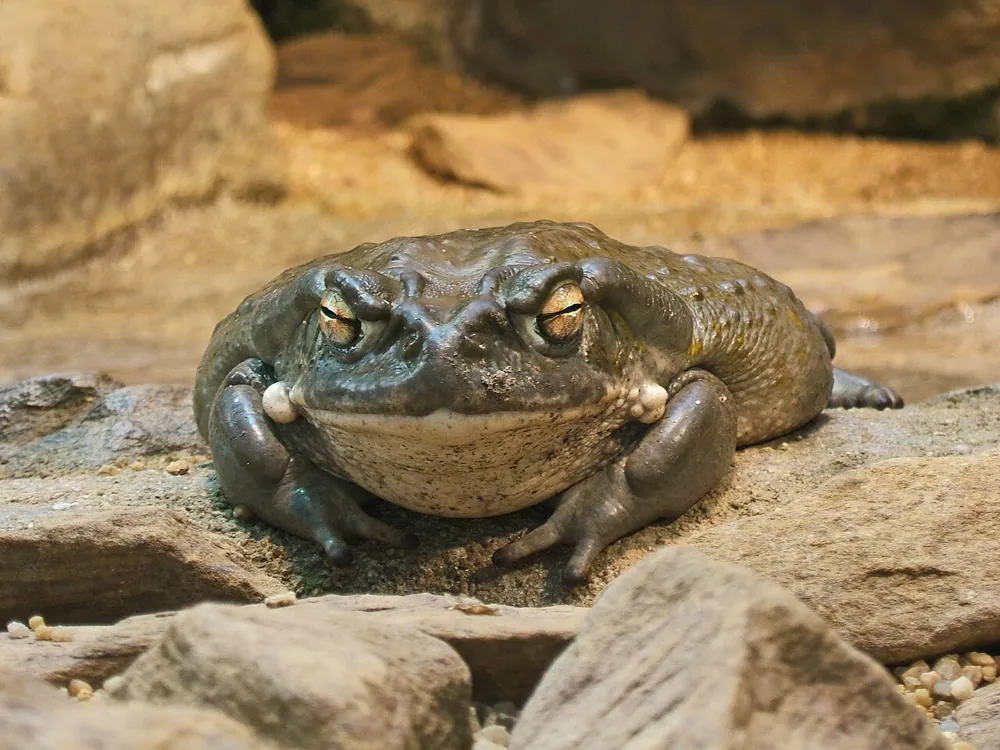
 Mmene ungaizindikirire
Mphamvu ya poizoni
Khungu lake lili ndi poizoni. Ndi yoopsa kuikhudza, kuinyambita kapena kuidya.
Poizoni wake umachita chiyani?
The toad releases poison from glands in its skin, including the large parotoid glands behind the eyes. The poison contains psychoactive compounds, including 5-MeO-DMT and bufotenin, which affect the brain. It also contains digoxin-like cardiac glycosides, which act on the heart, and ingesting the poison can be fatal. In one reported case, a young woman who drank a tea made from toad preparation began vomiting and had difficulty breathing soon after, and died about two and a half hours later.1
Ndi yoopsa bwanji kwa anthu?
Ngozi kwa anthu: YoopsaMunthu akaikhudza kapena kuidya, pita kwa dokotala. Imfa ndi zosowa kwambiri.The poison is potent enough to kill a grown dog, and dogs that attack toads have been paralysed or killed. Several cases of human poisoning from swallowing toad secretions or eggs have been reported, and at least one death from the ch'an su preparation has been recorded. The toad has also been linked to poisoning and at least one death from the use of related toad preparations as street drugs.1
Imachita chiyani ikachita mantha?
When threatened, it releases toxins from glands in its skin.1
 Ngati munthu waikhudza kapena waidya
- Ngati munthu wakhudza imodzi: sambitsa m'manja bwino ndipo usakhudze maso kapena pakamwa. Ngati mwana kapena chiweto chanyambita kapena chadya imodzi: imbira malo othandiza pa za poizoni kapena nambala yadzidzidzi.
Nthawi zonse yamba wayimbira nambala yadzidzidzi (112, 000, 911). Awa ndi malangizo wamba a chithandizo choyamba, osati malangizo a dokotala. Zoyambira za chithandizo choyamba
 Khala wotetezeka
- Usakhudze, kugwira kapena kuseweretsa nyama yakuthengo, ngakhale yaing'ono, ndipo ngakhale ikuoneka ngati yagona kapena yafa.
- Ipatse malo. Ukakumana nayo, khala chete, bwerera m'mbuyo pang'onopang'ono ndipo uilole ipite njira yake.
- Ngati unaikhudza kapena kuidya: usasisite maso kapena pakamwa, sambitsa m'manja ndipo peza thandizo la dokotala.
Sikufuna kukuvulaza. Poizoni wake ulipo kuti pasapezeke choidya. Zambiri za kukhala wotetezeka
Kuti padziko lapansi?
Ndi yaikulu bwanji?
Ndi yaitali bwanji?
 yaitali ngati zidutswa zomangira zoseweretsa 6 pamzere
 ingathamange mamita 100 m'masekondi 180 (munthu wothamanga kwambiri amafunika 9.6)
Colorado River toad ndi yaikulu bwanji poyerekeza ndi IWE?
Ndi masamu chabe mu msakatuli wako. Palibe chomwe chimasungidwa kapena kutumizidwa kwina.
Imathamanga bwanji?


Mfundo
It is the only toad species in which bufotenin is present in large enough amounts to have a psychoactive effect.1
Raccoons have learned to pull a toad away from water by its back leg, turn it over and feed on its belly, which keeps them away from the poison glands.1
Unlike most vertebrates, it gets most of its water by absorbing it across its belly through a special area of skin called the seat patch.1
A female can lay up to 8,000 eggs.1
It is the largest toad in the United States, apart from the non-native cane toad.1
Kuthetsa nthano zabodza
Nthano yabodza: Licking or smoking the toad's secretions is a safe way to get high or to treat illness.
Zoona: Swallowing the secretions has caused poisonings and deaths. Claims about its therapeutic use are unverified, and the US National Park Service has warned people not to handle or lick the toad.1
Za akatswiri a ululu
- Dzina la sayansi
- Incilius alvarius
- Gulu
- Achule a poizoni, achule a mphini (toads) ndi ma newt
- Banja
- Bufonidae2
- Dongosolo
- Anura
- Makontinenti
- Amereka ya Kumpoto
- Ana akhanda
- Females lay eggs in ponds, slow-moving streams, temporary pools or man-made structures that hold water, and can lay up to 8,000 eggs in a long tube of jelly.1
- Mmene ilili kuthengo
- Listed as threatened in New Mexico and California. A June 2025 study found that persistent trapping in Mexico has decimated several populations and put the species at risk of extinction.1
- Ngozi kwa anthu
- 3 / 5: Yoopsa3
Kumene mfundo zimachokera
- Colorado River toad (Wikipedia (CC BY-SA 4.0))
- Incilius alvarius (iNaturalist): mayina ndi magulu a sayansi.
- Venom Wiki: mlingo wa ngozi, kukula wamba ndi kuyerekeza kwa liwiro ndi zathu. Ona mmene timazipezera: Mmene timayezera ngozi.
Mfundo iliyonse patsamba lino ili ndi nambala yosonyeza kochokera. Ngati talakwitsa, pepani, ndife okonda nyama, osati magazini a sayansi. Tiuze pa [email protected] ndipo tikonza.
 Chinkhanira chili ndi njala! Venom Wiki ndi ntchito ya munthu mmodzi: yaulere, yopanda zotsatsa ndi zokutsatira. Mphatso yaing'ono imathandiza kuti ikhalebe pa intaneti.Dyetsa chinkhanira
Zina za gulu lomwelo: Achule a poizoni, achule a mphini (toads) ndi ma newt
 Cane toadAchule a poizoni, achule a mphini (toads) ndi ma newtIkufuna dokotalaUsakhudze
 Strawberry poison-dart frogAchule a poizoni, achule a mphini (toads) ndi ma newtImangopwetekaUsakhudze
 California newtAchule a poizoni, achule a mphini (toads) ndi ma newtIngathe kuphaUsakhudze
 Rough-skinned newtAchule a poizoni, achule a mphini (toads) ndi ma newtIngathe kuphaUsakhudze
 Panamanian golden frogAchule a poizoni, achule a mphini (toads) ndi ma newtIkufuna dokotalaUsakhudze
 Eastern newtAchule a poizoni, achule a mphini (toads) ndi ma newtImangopwetekaUsakhudze
Imakhalanso ku: Amereka ya Kumpoto
 TerciopeloNjoka za pit viperYakupha
 Eastern coral snakeNjoka za coralIngathe kupha
 Eastern diamondback rattlesnakeNjoka za rattlesnakeIngathe kupha
 Eyelash viperNjoka za pit viperIngathe kupha
 Timber rattlesnakeNjoka za rattlesnakeIngathe kupha
 Western diamondback rattlesnakeNjoka za rattlesnakeIngathe kupha