
 Africa
 Asia
Asia Ulaya
Ulaya Amereka ya Kumwera
 Australia ndi Oceania
 Antarctica
 Nyanja ya Pacific
 Nyanja ya Atlantic
 Nyanja ya Indian
 Nyanja ya Arctic
 Nyanja ya Mediterranean
 Nyanja Yofiira
 Nyanja ya Caribbean
 Nyanja ya Coral
 Nyanja ya South China
 Nyanja ya Philippine
 Nyanja ya Andaman
 Nyanja ya Kumpoto (North Sea)
 Nyanja ya Timor ndi Arafura
 Nyanja ya Bengal
 Gulf ya California
Eastern white-tailed spider
 Imaluma
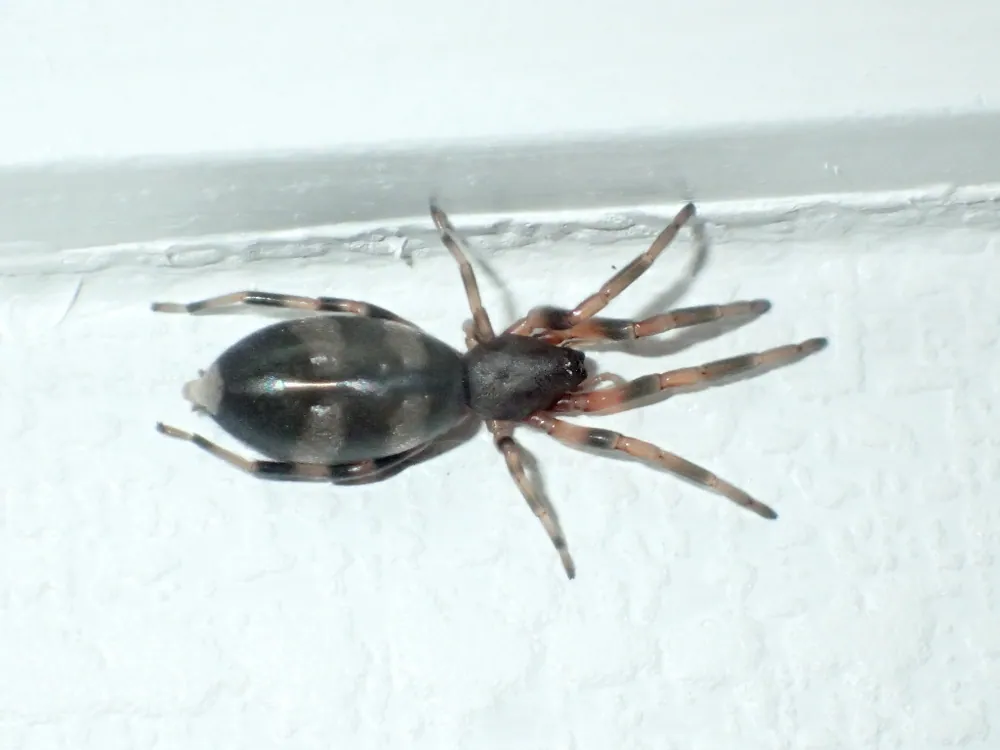
The Eastern white-tailed spider is a slender hunting spider from southern and eastern Australia. It has also spread to New Zealand. It does not spin a web. Instead, it roams, mostly at night, hunting other spiders.1

 Mmene ungaizindikirire
- Slender, cigar-shaped body that is dark reddish to grey.1
- Dark orange-brown legs with bands.1
- Grey abdomen with two pairs of faint white spots.1
- Usually, but not always, a distinct white spot at the tip of the abdomen, just above the spinnerets.1
- Body length up to 18 mm, with a leg span of about 28 mm.1
Nthawi zambiri imasokonezedwa ndi: Two common species, Lampona cylindrata and Lampona murina, look very similar and are not easily told apart without a microscope. The name 'white-tail' is also applied to several other spider species that have a white mark at the end of the abdomen.1
Mphamvu ya ululu
Ululu umatuluka kudzera m'mano ake ikaluma.
Ululu wake umachita chiyani?
Their venom is used to subdue prey. In people, a bite usually causes a small red or discoloured bump, with pain, local swelling and itchiness. Rarely, it causes nausea, vomiting, malaise (a general feeling of being unwell) or headache. These symptoms are generally mild and resolve over time.1
Ndi yoopsa bwanji kwa anthu?
Ngozi kwa anthu: YopwetekaIngathe kupweteka kwambiri, koma pafupifupi nthawi zonse si vuto lalikulu.Bites are reported in people, but studies found the effects are usually local and mild. A study of 130 confirmed bites found no necrotic ulcers (tissue death) and no confirmed infections. No deaths are mentioned.1
 Ikaluma
- Sambitsa polumidwapo ndipo ikapo paketi ya ayezi kuti uchepetse kupweteka. Peza thandizo la dokotala ngati kupweteka kuli kwakukulu, kukufalikira kapena munthuyo sakumva bwino.
Nthawi zonse yamba wayimbira nambala yadzidzidzi (112, 000, 911). Awa ndi malangizo wamba a chithandizo choyamba, osati malangizo a dokotala. Zoyambira za chithandizo choyamba
 Khala wotetezeka
- Usakhudze, kugwira kapena kuseweretsa nyama yakuthengo, ngakhale yaing'ono, ndipo ngakhale ikuoneka ngati yagona kapena yafa.
- Ipatse malo. Ukakumana nayo, khala chete, bwerera m'mbuyo pang'onopang'ono ndipo uilole ipite njira yake.
- Ikakuluma: khala chete, usasunthe, imbira nambala yadzidzidzi (112, 000, 911) kapena pita kuchipatala mwachangu. Kumbukira m'mene inkaonekera, chithunzi chimathandiza.
Sikufuna kukuvulaza. Imagwiritsa ntchito ululu wake kugwira chakudya kapena kudziteteza, ndipo imakonda kwambiri kubisala. Zambiri za kukhala wotetezeka
Kuti padziko lapansi?
Ndi yaikulu bwanji?
Ndi yaitali bwanji?
 yaifupi kuposa chala chako chaching'ono
Eastern white-tailed spider ndi yaikulu bwanji poyerekeza ndi IWE?
Ndi masamu chabe mu msakatuli wako. Palibe chomwe chimasungidwa kapena kutumizidwa kwina.
Imathamanga bwanji?


Mfundo
The necrotic ulcers once blamed on these spiders were not confirmed. A scientific study found other causes, mostly infections.1
White-tailed spiders do not build webs. They hunt actively, often at night.1
The white tail marking remains into adulthood, while other markings fade with each moult.1
Many people think there is only one white-tailed spider species, but the two common species look so alike that more species may still be unidentified.1
Both common species have been introduced to New Zealand, where Lampona cylindrata has spread across the South Island since 1980.1
Kuthetsa nthano zabodza
Nthano yabodza: White-tailed spider bites cause flesh-eating ulcers (necrosis).
Zoona: A study of 130 confirmed bites found no necrotic ulcers or confirmed infections. Symptoms are usually mild, with a red mark, pain, swelling and itchiness.1
Kumene mfundo zimachokera
- White-tailed spider (Wikipedia (CC BY-SA 4.0))
- Lampona murina (iNaturalist): mayina ndi magulu a sayansi.
- Venom Wiki: mlingo wa ngozi, kukula wamba ndi kuyerekeza kwa liwiro ndi zathu. Ona mmene timazipezera: Mmene timayezera ngozi.
Mfundo iliyonse patsamba lino ili ndi nambala yosonyeza kochokera. Ngati talakwitsa, pepani, ndife okonda nyama, osati magazini a sayansi. Tiuze pa [email protected] ndipo tikonza.
 Chinkhanira chili ndi njala! Venom Wiki ndi ntchito ya munthu mmodzi: yaulere, yopanda zotsatsa ndi zokutsatira. Mphatso yaing'ono imathandiza kuti ikhalebe pa intaneti.Dyetsa chinkhanira
 Redback spider
 Katipo
 White-tailed spider
 Peacock spider
 Badge huntsman spider
 Black house spider
 Coastal taipan
 Common death adder
 Eastern brown snake
 Taipani wa kumtunda
 Sydney funnel-web spider
 Njoka ya mizere ngati nyalugwe