
 Africa
 Asia
Asia Ulaya
Ulaya Amereka ya Kumwera
 Australia ndi Oceania
 Antarctica
 Nyanja ya Pacific
 Nyanja ya Atlantic
 Nyanja ya Indian
 Nyanja ya Arctic
 Nyanja ya Mediterranean
 Nyanja Yofiira
 Nyanja ya Caribbean
 Nyanja ya Coral
 Nyanja ya South China
 Nyanja ya Philippine
 Nyanja ya Andaman
 Nyanja ya Kumpoto (North Sea)
 Nyanja ya Timor ndi Arafura
 Nyanja ya Bengal
 Gulf ya California
Peacock spider
 Imaluma
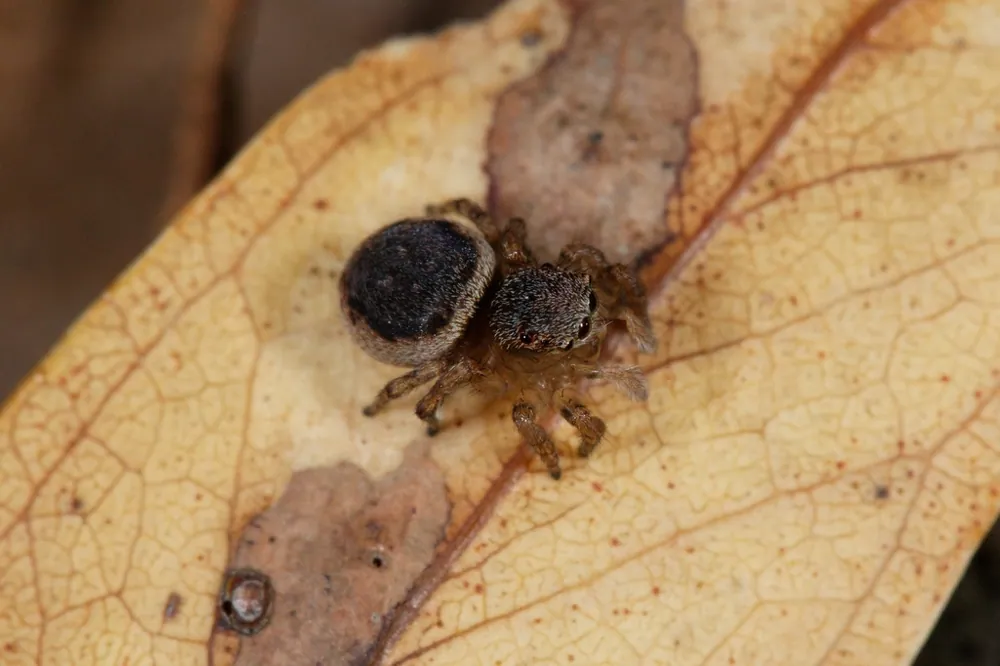
The peacock spider is a tiny jumping spider from Australia. Males are brightly coloured, and they show off with a fan of flaps on their abdomen and a dance to win a female. Its eyesight is so good that it can see ultraviolet light, which helps it hunt.1

 Mmene ungaizindikirire
- Males are red, blue and black, with flap-like extensions on the abdomen that have white hairs and can be folded down.1
- Females and young spiders are brown, with colour patterns that set them apart from related species.1
- Both sexes reach about 5 mm in body length.1
- The males raise their abdomen and spread the flaps into a white-fringed, circular field of colour during courtship.1
Mphamvu ya ululu
Ululu umatuluka kudzera m'mano ake ikaluma.
Ndi yoopsa bwanji kwa anthu?
Ngozi kwa anthu: YofatsaNgati kulasidwa ndi njuchi kapena pang'ono kuposa pamenepo. Pafupifupi yosavulaza anthu. Ikaluma
- Sambitsa polumidwapo ndipo ikapo paketi ya ayezi kuti uchepetse kupweteka. Peza thandizo la dokotala ngati kupweteka kuli kwakukulu, kukufalikira kapena munthuyo sakumva bwino.
Nthawi zonse yamba wayimbira nambala yadzidzidzi (112, 000, 911). Awa ndi malangizo wamba a chithandizo choyamba, osati malangizo a dokotala. Zoyambira za chithandizo choyamba
 Khala wotetezeka
- Usakhudze, kugwira kapena kuseweretsa nyama yakuthengo, ngakhale yaing'ono, ndipo ngakhale ikuoneka ngati yagona kapena yafa.
- Ipatse malo. Ukakumana nayo, khala chete, bwerera m'mbuyo pang'onopang'ono ndipo uilole ipite njira yake.
- Ikakuluma: khala chete, usasunthe, imbira nambala yadzidzidzi (112, 000, 911) kapena pita kuchipatala mwachangu. Kumbukira m'mene inkaonekera, chithunzi chimathandiza.
Sikufuna kukuvulaza. Imagwiritsa ntchito ululu wake kugwira chakudya kapena kudziteteza, ndipo imakonda kwambiri kubisala. Zambiri za kukhala wotetezeka
Kuti padziko lapansi?
Ndi yaikulu bwanji?
Ndi yaitali bwanji?
 yaing'ono moti ingakhale pa chikhadabo chako
Peacock spider ndi yaikulu bwanji poyerekeza ndi IWE?
Ndi masamu chabe mu msakatuli wako. Palibe chomwe chimasungidwa kapena kutumizidwa kwina.
Imathamanga bwanji?


Mfundo
Some males can change their scale colours from red to green to violet with slight movements, because their scales reflect light in a special way.1
Peacock spiders can jump up to 40 times their own body length.1
They have eight eyes and can see ultraviolet light as well as the full visible spectrum.1
Males dance and vibrate their abdomen for an average of about 24 minutes to win a female, and the dance can last from 6 to 50 minutes.1
Females of this species are thought to mate only once.1
Kuthetsa nthano zabodza
Nthano yabodza: The male spider uses its colourful flaps as wings to help it glide or sustain its leaps.
Zoona: This belief has been debunked by the Australasian Arachnological Society.1
Za akatswiri a ululu
- Dzina la sayansi
- Maratus volans
- Gulu
- Akangaude
- Banja
- Salticidae2
- Dongosolo
- Araneae
- Makontinenti
- Australia ndi Oceania
- Ana akhanda
- Females dig nests underground in December and lay between 6 and 15 eggs per clutch. Some females have several broods in a season.1
- Kutalika kwa moyo
- pafupifupi zaka 11
- Ngozi kwa anthu
- 1 / 5: Yofatsa3
Kumene mfundo zimachokera
- Maratus volans (Wikipedia (CC BY-SA 4.0))
- Maratus volans (iNaturalist): mayina ndi magulu a sayansi.
- Venom Wiki: mlingo wa ngozi, kukula wamba ndi kuyerekeza kwa liwiro ndi zathu. Ona mmene timazipezera: Mmene timayezera ngozi.
Mfundo iliyonse patsamba lino ili ndi nambala yosonyeza kochokera. Ngati talakwitsa, pepani, ndife okonda nyama, osati magazini a sayansi. Tiuze pa [email protected] ndipo tikonza.
 Chinkhanira chili ndi njala! Venom Wiki ndi ntchito ya munthu mmodzi: yaulere, yopanda zotsatsa ndi zokutsatira. Mphatso yaing'ono imathandiza kuti ikhalebe pa intaneti.Dyetsa chinkhanira
 Redback spider
 Katipo
 White-tailed spider
 Badge huntsman spider
 Black house spider
 Eastern white-tailed spider
 Coastal taipan
 Common death adder
 Eastern brown snake
 Taipani wa kumtunda
 Sydney funnel-web spider
 Njoka ya mizere ngati nyalugwe