
 Africa
 Asia
Asia Ulaya
Ulaya Amereka ya Kumwera
 Australia ndi Oceania
 Antarctica
 Nyanja ya Pacific
 Nyanja ya Atlantic
 Nyanja ya Indian
 Nyanja ya Arctic
 Nyanja ya Mediterranean
 Nyanja Yofiira
 Nyanja ya Caribbean
 Nyanja ya Coral
 Nyanja ya South China
 Nyanja ya Philippine
 Nyanja ya Andaman
 Nyanja ya Kumpoto (North Sea)
 Nyanja ya Timor ndi Arafura
 Nyanja ya Bengal
 Gulf ya California
Mitchell's water monitor
 Imaluma
Mitchell's water monitor is a large, slender lizard that lives in the northern rivers, swamps and lagoons of Australia. It spends much of its time near water and can climb trees. It is on the IUCN Red List as Critically Endangered, so it matters a great deal to protect it.1



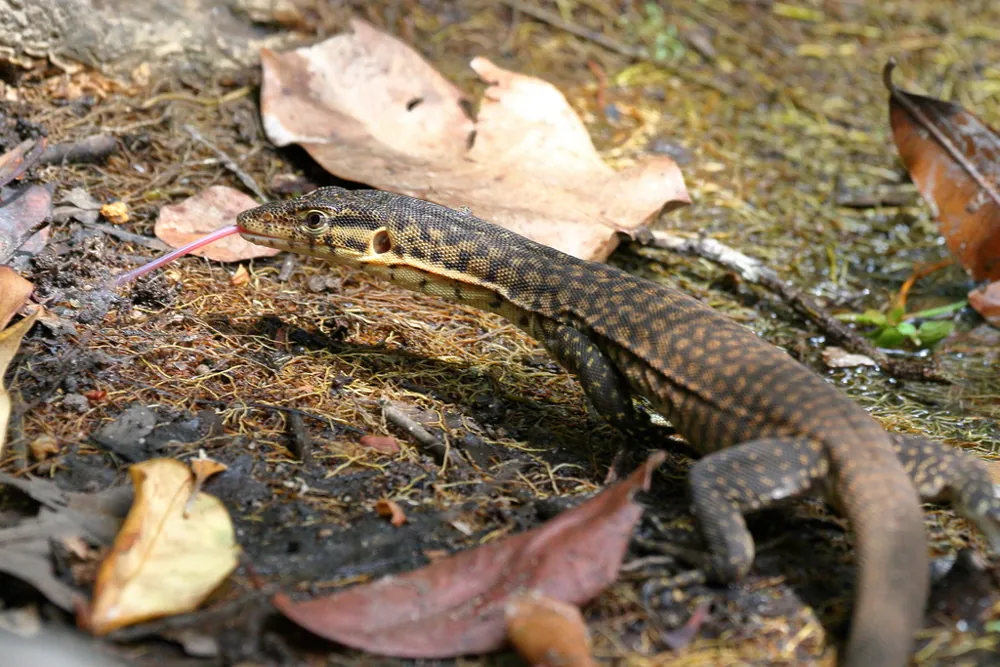
 Mmene ungaizindikirire
Mphamvu ya ululu
Ululu umatuluka kudzera m'mano ake ikaluma.
Ndi yoopsa bwanji kwa anthu?
Ngozi kwa anthu: YofatsaNgati kulasidwa ndi njuchi kapena pang'ono kuposa pamenepo. Pafupifupi yosavulaza anthu.Imachita chiyani ikachita mantha?
If disturbed, it heads for the water. It is described as nervous and shy.1
 Ikaluma
- Sambitsa bala, munthuyo akhale wodekha ndipo peza thandizo la dokotala.
Nthawi zonse yamba wayimbira nambala yadzidzidzi (112, 000, 911). Awa ndi malangizo wamba a chithandizo choyamba, osati malangizo a dokotala. Zoyambira za chithandizo choyamba
 Khala wotetezeka
- Usakhudze, kugwira kapena kuseweretsa nyama yakuthengo, ngakhale yaing'ono, ndipo ngakhale ikuoneka ngati yagona kapena yafa.
- Ipatse malo. Ukakumana nayo, khala chete, bwerera m'mbuyo pang'onopang'ono ndipo uilole ipite njira yake.
- Ikakuluma: khala chete, usasunthe, imbira nambala yadzidzidzi (112, 000, 911) kapena pita kuchipatala mwachangu. Kumbukira m'mene inkaonekera, chithunzi chimathandiza.
Sikufuna kukuvulaza. Imagwiritsa ntchito ululu wake kugwira chakudya kapena kudziteteza, ndipo imakonda kwambiri kubisala. Zambiri za kukhala wotetezeka
Kuti padziko lapansi?
Ndi yaikulu bwanji?
Ndi yaitali bwanji?
 yaitali ngati nthochi 4 zoyalidwa motsatizana
 ingathamange mamita 100 m'masekondi 30 (munthu wothamanga kwambiri amafunika 9.6)
Mitchell's water monitor ndi yaikulu bwanji poyerekeza ndi IWE?
Ndi masamu chabe mu msakatuli wako. Palibe chomwe chimasungidwa kapena kutumizidwa kwina.
Imathamanga bwanji?

Mfundo
Where cane toads arrived at Kakadu National Park, almost the entire population of this lizard was wiped out. Its numbers have been estimated to have dropped by as much as 97% within three years.1
Its eyesight is excellent, but it is night blind because its retinas have no rods, the cells used for night vision.1
The biggest threat to this lizard is the cane toad. Cane toads are poisonous to it, and it can eat the larger toads, which carry lethal doses of poison.1
The Australian name 'goanna' probably comes from 'iguana', because the first European settlers thought these lizards looked like the iguanas of South America.1
Za akatswiri a ululu
- Dzina la sayansi
- Varanus mitchelli
- Gulu
- Abuluzi aululu
- Banja
- Varanidae2
- Dongosolo
- Squamata
- Makontinenti
- Australia ndi Oceania
- Ana akhanda
- It lays eggs (it is oviparous). Females lay between April and June in the dry season, with clutches of 3 to 12 eggs.1
- Kutalika kwa moyo
- pafupifupi zaka 101
- Mmene ilili kuthengo
- Critically Endangered1
- Ngozi kwa anthu
- 1 / 5: Yofatsa3
Kumene mfundo zimachokera
- Mitchell's water monitor (Wikipedia (CC BY-SA 4.0))
- Varanus mitchelli (iNaturalist): mayina ndi magulu a sayansi.
- Venom Wiki: mlingo wa ngozi, kukula wamba ndi kuyerekeza kwa liwiro ndi zathu. Ona mmene timazipezera: Mmene timayezera ngozi.
Mfundo iliyonse patsamba lino ili ndi nambala yosonyeza kochokera. Ngati talakwitsa, pepani, ndife okonda nyama, osati magazini a sayansi. Tiuze pa [email protected] ndipo tikonza.
 Chinkhanira chili ndi njala! Venom Wiki ndi ntchito ya munthu mmodzi: yaulere, yopanda zotsatsa ndi zokutsatira. Mphatso yaing'ono imathandiza kuti ikhalebe pa intaneti.Dyetsa chinkhanira
 Lace monitor
 Perentie
 Spiny-tailed monitor
 Yellow-spotted monitor
 Komodo dragon
 Gila monster
 Coastal taipan
 Common death adder
 Eastern brown snake
 Taipani wa kumtunda
 Sydney funnel-web spider
 Njoka ya mizere ngati nyalugwe