
 Africa
 Asia
Asia Ulaya
Ulaya Amereka ya Kumwera
 Australia ndi Oceania
 Antarctica
 Nyanja ya Pacific
 Nyanja ya Atlantic
 Nyanja ya Indian
 Nyanja ya Arctic
 Nyanja ya Mediterranean
 Nyanja Yofiira
 Nyanja ya Caribbean
 Nyanja ya Coral
 Nyanja ya South China
 Nyanja ya Philippine
 Nyanja ya Andaman
 Nyanja ya Kumpoto (North Sea)
 Nyanja ya Timor ndi Arafura
 Nyanja ya Bengal
 Gulf ya California
Variable harlequin toad
 Poizoni pakhungu lakeImadya: TizilomboYa poizoni, si yaululu
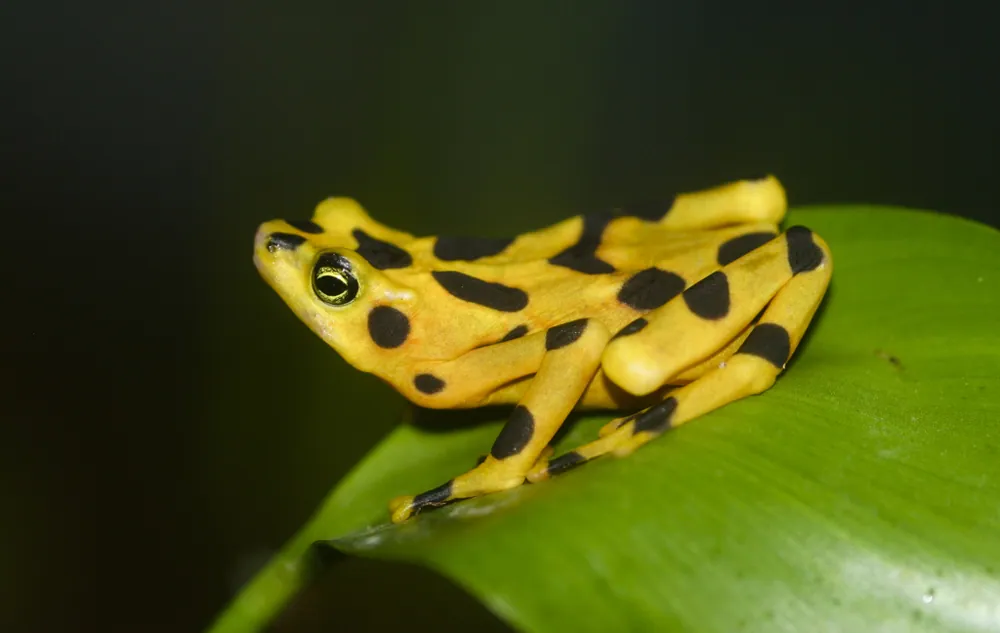
The variable harlequin toad is a small, brightly coloured toad from the forests of Central America. It lives on rocks and in crevices beside streams. It is critically endangered, which means it is at very high risk of disappearing from the wild.1
 Mmene ungaizindikirire
Mphamvu ya poizoni
Khungu lake lili ndi poizoni. Ndi yoopsa kuikhudza, kuinyambita kapena kuidya.
Poizoni wake umachita chiyani?
This animal is poisonous rather than venomous, so it does not bite or sting. Its skin contains tetrodotoxin, a potent neurotoxin (a poison that attacks the nerves).1
Ndi yoopsa bwanji kwa anthu?
Ngozi kwa anthu: YopwetekaIngathe kupweteka kwambiri, koma pafupifupi nthawi zonse si vuto lalikulu.Imachita chiyani ikachita mantha?
Its bright, conspicuous colours warn predators that its skin is toxic.1
 Ngati munthu waikhudza kapena waidya
- Ngati munthu wakhudza imodzi: sambitsa m'manja bwino ndipo usakhudze maso kapena pakamwa. Ngati mwana kapena chiweto chanyambita kapena chadya imodzi: imbira malo othandiza pa za poizoni kapena nambala yadzidzidzi.
Nthawi zonse yamba wayimbira nambala yadzidzidzi (112, 000, 911). Awa ndi malangizo wamba a chithandizo choyamba, osati malangizo a dokotala. Zoyambira za chithandizo choyamba
 Khala wotetezeka
- Usakhudze, kugwira kapena kuseweretsa nyama yakuthengo, ngakhale yaing'ono, ndipo ngakhale ikuoneka ngati yagona kapena yafa.
- Ipatse malo. Ukakumana nayo, khala chete, bwerera m'mbuyo pang'onopang'ono ndipo uilole ipite njira yake.
- Ngati unaikhudza kapena kuidya: usasisite maso kapena pakamwa, sambitsa m'manja ndipo peza thandizo la dokotala.
Sikufuna kukuvulaza. Poizoni wake ulipo kuti pasapezeke choidya. Zambiri za kukhala wotetezeka
Kuti padziko lapansi?
Ndi yaikulu bwanji?
Ndi yaitali bwanji?
 yaitali pafupifupi ngati kachitsulo komangira mapepala
 ingathamange mamita 100 m'masekondi 180 (munthu wothamanga kwambiri amafunika 9.6)
Variable harlequin toad ndi yaikulu bwanji poyerekeza ndi IWE?
Ndi masamu chabe mu msakatuli wako. Palibe chomwe chimasungidwa kapena kutumizidwa kwina.
Imathamanga bwanji?


Mfundo
Its only known predator is a parasitic fly, Notochaeta bufonivora. The fly lays larvae on the frog's thigh, and the larvae burrow inside and eat the frog from within.1
A census between 1990 and 1992 near Monteverde, Costa Rica, found zero individuals where the population had once peaked at 751 adults.1
By 1996 it was believed to be extinct throughout Costa Rica, but a 2019 assessment found two subpopulations in the country.1
It was rediscovered near Quepos, Costa Rica, in 2003.1
The chytrid fungus Batrachochytrium dendrobatidis can spread between individuals through shed skin cells and harms the skin, which affects breathing and the balance of water and salts in the body.1
In March 2021 the species was bred in captivity outside Panama for the first time.1
Kumene mfundo zimachokera
- Atelopus varius (Wikipedia (CC BY-SA 4.0))
- Atelopus varius (iNaturalist): mayina ndi magulu a sayansi.
- Venom Wiki: mlingo wa ngozi, kukula wamba ndi kuyerekeza kwa liwiro ndi zathu. Ona mmene timazipezera: Mmene timayezera ngozi.
Mfundo iliyonse patsamba lino ili ndi nambala yosonyeza kochokera. Ngati talakwitsa, pepani, ndife okonda nyama, osati magazini a sayansi. Tiuze pa [email protected] ndipo tikonza.
 Chinkhanira chili ndi njala! Venom Wiki ndi ntchito ya munthu mmodzi: yaulere, yopanda zotsatsa ndi zokutsatira. Mphatso yaing'ono imathandiza kuti ikhalebe pa intaneti.Dyetsa chinkhanira
Zina za gulu lomwelo: Achule a poizoni, achule a mphini (toads) ndi ma newt
 Cane toadAchule a poizoni, achule a mphini (toads) ndi ma newtIkufuna dokotalaUsakhudze
 Strawberry poison-dart frogAchule a poizoni, achule a mphini (toads) ndi ma newtImangopwetekaUsakhudze
 California newtAchule a poizoni, achule a mphini (toads) ndi ma newtIngathe kuphaUsakhudze
 Rough-skinned newtAchule a poizoni, achule a mphini (toads) ndi ma newtIngathe kuphaUsakhudze
 Colorado River toadAchule a poizoni, achule a mphini (toads) ndi ma newtIkufuna dokotalaUsakhudze
 Panamanian golden frogAchule a poizoni, achule a mphini (toads) ndi ma newtIkufuna dokotalaUsakhudze
Imakhalanso ku: Amereka ya Kumpoto
 TerciopeloNjoka za pit viperYakupha
 Eastern coral snakeNjoka za coralIngathe kupha
 Eastern diamondback rattlesnakeNjoka za rattlesnakeIngathe kupha
 Eyelash viperNjoka za pit viperIngathe kupha
 Timber rattlesnakeNjoka za rattlesnakeIngathe kupha
 Western diamondback rattlesnakeNjoka za rattlesnakeIngathe kupha